
Last updated November 2, 2026
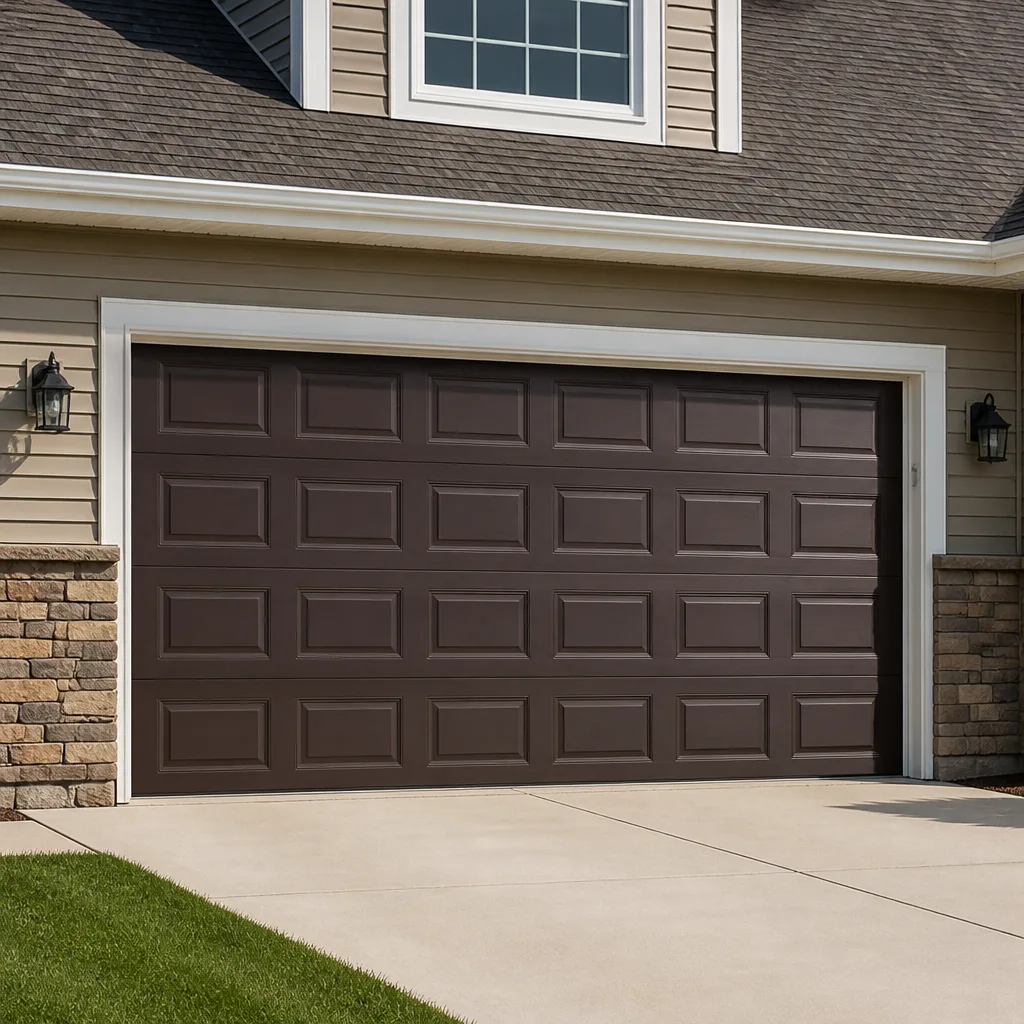 Raised-panel steel
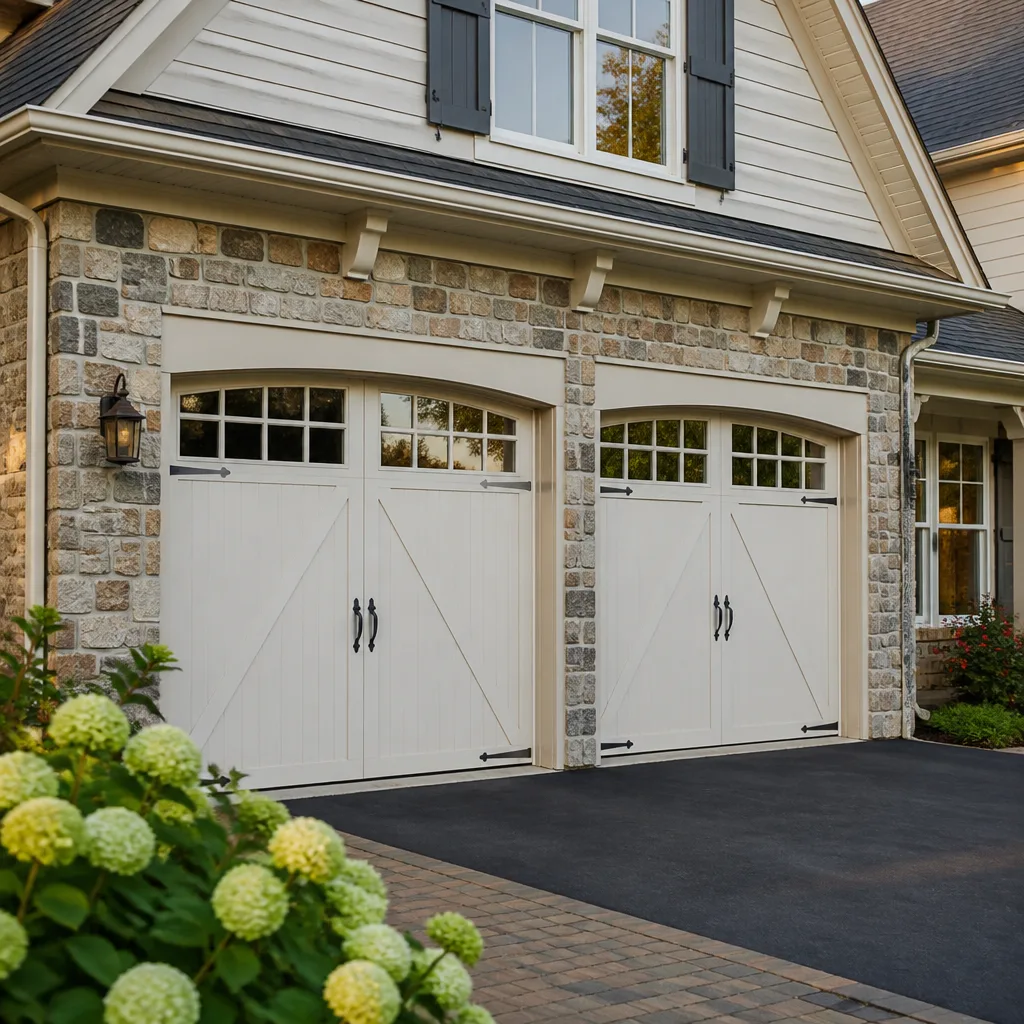 Carriage house
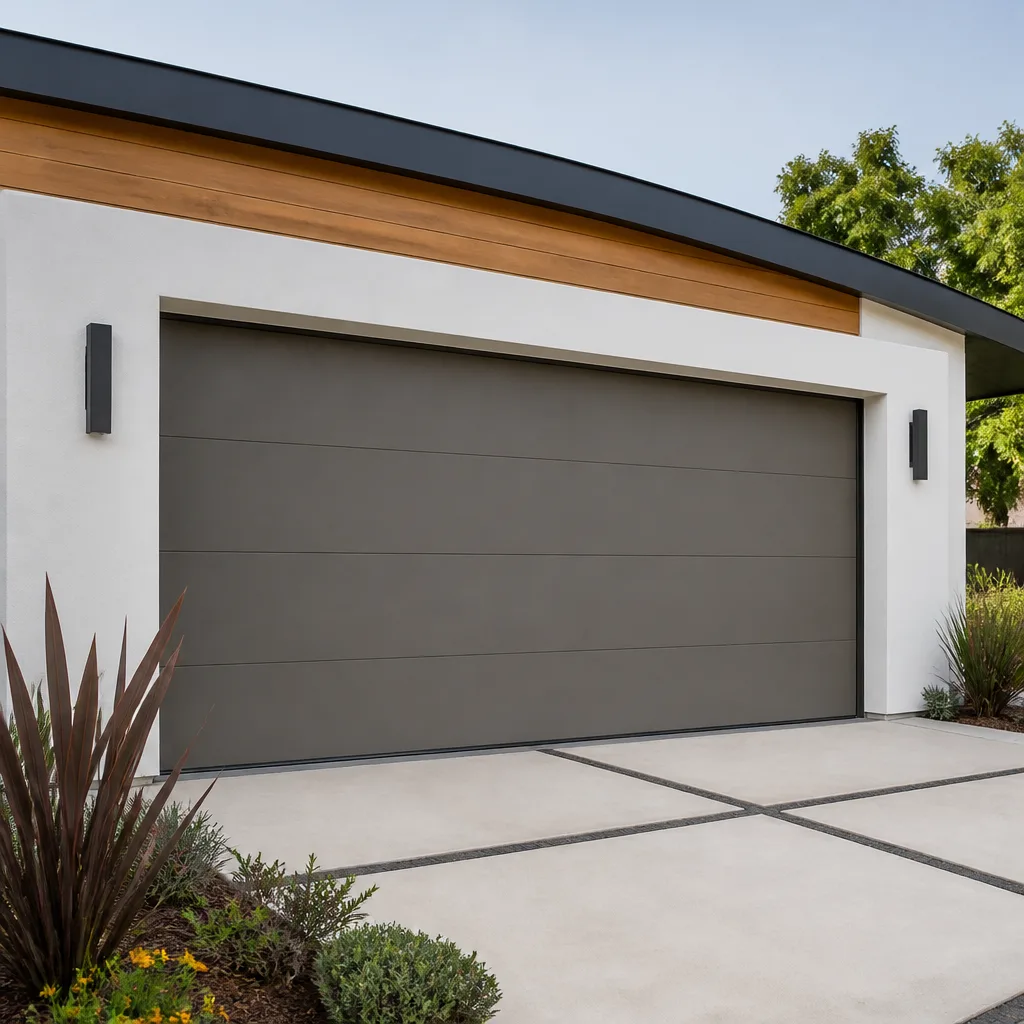 Modern flush
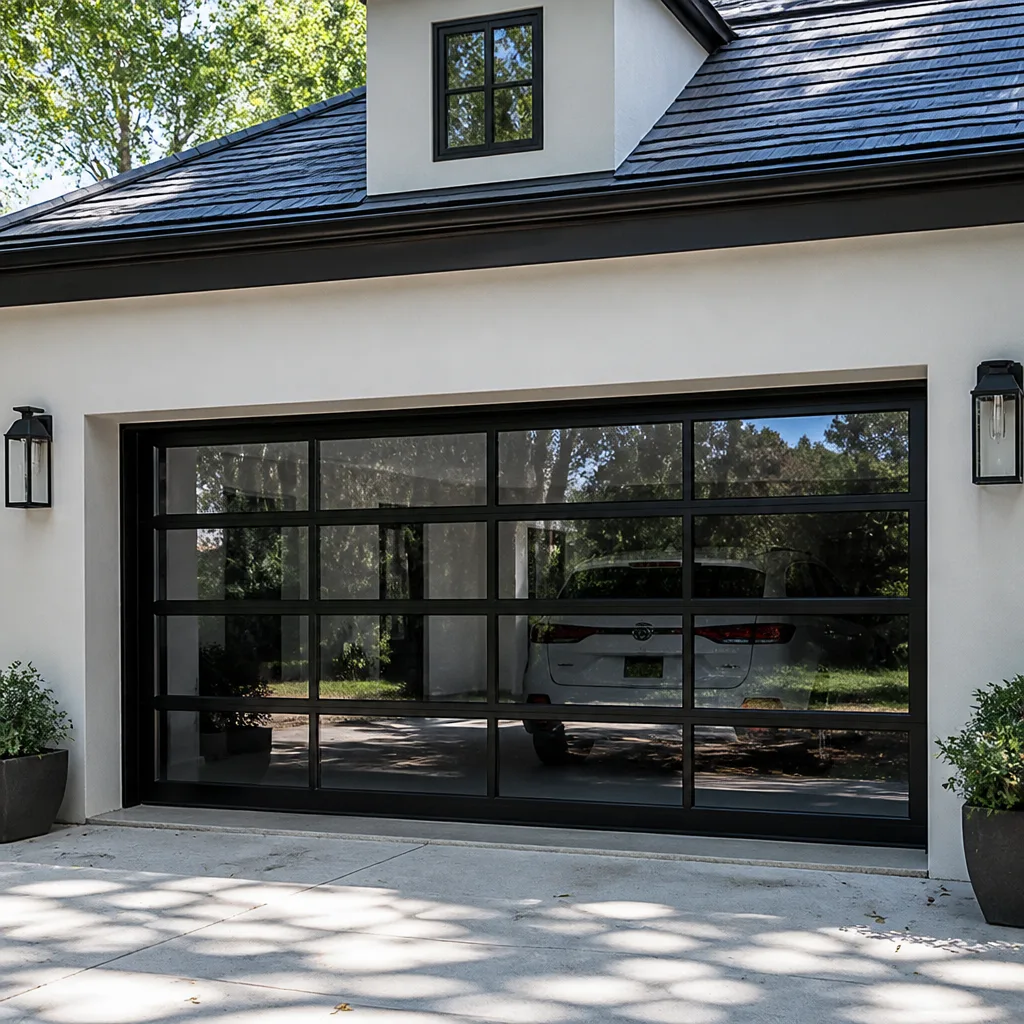 Full-view glass
 LiftMaster openers
 Chamberlain openers
Full 25-point door and opener safety check with every visit - springs, cables, rollers, tracks, and your LiftMaster or Chamberlain opener included
You get a price before we start. It does not change when the truck arrives.
Get your free estimateDIY vs Professional Garage Door: The Folsom Homeowner’s Decision Guide
YouTube hosts roughly 50,000 videos showing how to replace a garage door spring. California emergency rooms treat about 30,000 garage door injuries every year. Those two numbers are connected, and they explain why the DIY-versus-professional question for garage doors in Folsom isn’t a simple yes or no. What follows is a practical breakdown of which jobs you can reasonably handle, which ones belong in a professional’s truck, and how to tell the difference before you’re standing in the garage holding a socket wrench and wondering what went wrong.
Styles & brands we work with
- Raised-panel steel
- Carriage house
- Modern flush
- Full-view glass
- LiftMaster openers
- Chamberlain openers
Quick Answer
Most garage door work in Folsom falls into one of four categories: aesthetic upkeep (safe for DIY), mechanical adjustments (doable if you understand the system), spring and cable work (professional-only, and we’ll explain the physics below), and opener or electrical issues (professional-only for code and diagnostic reasons). You can save money on paint, weatherstripping, and lubrication. You can seriously injure yourself or turn a $200 fix into a $900 replacement on springs, cables, and openers. The honest answer: do the surface work yourself, and let a specialist who knows your specific brand handle anything under tension or behind a circuit board.
Table of Contents
- The Four Categories of Garage Door Work
- Category 1: Aesthetic and Surface Maintenance (DIY-Appropriate)
- Category 2: Mechanical Adjustments (Skill-Dependent)
- Category 3: Spring and Cable Work (Professional-Only, With Physics)
- Category 4: Opener and Electrical Work (Code-Dependent)
- What California Law Actually Says About DIY Garage Door Work
- The Real Time-and-Tool Cost of Common DIY Attempts
- The Three DIY Jobs That Turn Into Bigger Repairs
- Common Mistakes to Avoid
- When to Call a Professional
- Frequently Asked Questions
- The Bottom Line
The Four Categories of Garage Door Work
Every garage door task you’ll ever face in your Folsom home fits into one of four buckets. The mistake most homeowners make is treating all four buckets as equally approachable. They aren’t. A can of exterior paint and a torsion spring are both “garage door materials,” but one of them can be bought at any hardware store and the other stores enough energy to lift a 160-pound door roughly 10,000 times before it fails. Understanding which bucket your problem falls into is the entire decision.
Bucket One: Aesthetic and surface maintenance. Painting the door, replacing weatherstripping, cleaning the tracks, tightening visible bolts. No tension, no electricity, no calibration. This is genuinely DIY territory.
Bucket Two: Mechanical adjustments. Realigning a door that’s slightly off-track, adjusting the close-force setting, replacing rollers. These require understanding how the system works as a system. Skill-dependent, and where DIY projects start going sideways in Folsom garages.
Bucket Three: Spring and cable work. Torsion springs, extension springs, lift cables, bottom brackets. This is professional-only, and not because we’re protecting our business. The physics section below makes that clear.
Bucket Four: Opener and electrical work. Logic boards, motors, safety sensors, wiring. Professional-only for diagnostic and code reasons. Modern openers are computers with a motor attached, not motors with a switch attached.
If you’re looking at a door that won’t open at all, or a spring that’s visibly broken, you’re in Bucket Three or Four, and the rest of this guide will save you from an expensive learning experience. Our garage door repair in Folsom covers all four buckets, but the honest advice below tells you which ones you should attempt first.
Category 1: Aesthetic and Surface Maintenance (DIY-Appropriate)
Start here if you want to save money without risking anything. These are the jobs where a homeowner in any Folsom neighborhood, from Broadstone to Natoma Station, can do professional-quality work with basic tools and patience. The door is not under tension, the opener is unplugged or irrelevant, and the worst realistic outcome is having to redo the work.
Painting a steel or aluminum door. Folsom summers hit sustained temperatures in the high 90s and low 100s. Paint on a west-facing garage door takes a beating from UV and heat that doors in coastal California never see. Repainting every five to seven years is realistic, and it’s a weekend project. Clean the surface with a degreaser, light sanding, prime bare spots, and use an exterior acrylic latex rated for metal. Expect to spend $80 to $150 on materials and four to six hours including dry time.
Replacing bottom weatherstripping. The rubber seal along the bottom edge hardens and cracks in Folsom’s dry heat. You’ll notice leaves, dust, and insects in the garage, or a visible gap of daylight under the door. A replacement seal costs $25 to $50 at any hardware store and takes under an hour. Slide the old one out of the channel, slide the new one in. No tension involved.
Cleaning and inspecting the track system. Use a dry cloth or mild degreaser to wipe the vertical and horizontal tracks. While you’re there, check for loose bolts, rust, or any visible gap between the track and the wall. Tighten what’s accessible. Do not, under any circumstances, attempt to bend or re-shape a track that’s visibly out of alignment. That’s Bucket Two at best, and often Bucket Three.
Lubricating moving parts. A lithium-based grease on the torsion spring coil (the spring itself, not the parts under tension) and a silicone spray on hinges, rollers, and the opener rail. Folsom’s dry, dusty climate means moving parts collect grit faster than humid climates. A $12 can of silicone lubricant every six months keeps the door noticeably quieter and extends hardware life. This is the single most valuable 15-minute maintenance habit you can form.
Garage Door Service Folsom home deals with the full lifecycle, but these surface maintenance jobs are ones we’d rather you do yourself regularly than pay us for annually.
Category 2: Mechanical Adjustments (Skill-Dependent)
These are the jobs where honest self-assessment matters. A mechanically inclined homeowner who understands how the system works as a whole can handle some of these. A homeowner who last used a socket wrench in 2004 should not. The difference between Bucket One and Bucket Two is that errors here don’t just look bad; they cause the door to malfunction, which causes other components to wear faster or fail.
Adjusting the close-force setting. This is the dial or screw on the opener that controls how much resistance the motor expects before it reverses. If your door closes and then immediately reopens, or if it doesn’t reverse when you block it with a 2×4, the setting is off. This adjustment takes five minutes and a screwdriver. But it requires understanding that the door is a counterbalanced system: too much force means the opener is fighting itself, and the problem will migrate to the motor or the gear. Before you adjust this, verify the door’s balance is correct (see next item).
Door balance testing and correction. Pull the release handle with the door closed, then lift the door manually. It should stay in place at roughly waist height without drifting up or down. If it falls, the springs are losing tension and you should not adjust the opener settings to compensate. That’s treating a symptom. If it rises, the springs are over-tensioned. Either way, you’ve now identified a Bucket Three issue, and the correct action is to close this page, leave the door alone, and call a professional. Adjusting spring tension is not a DIY adjustment.
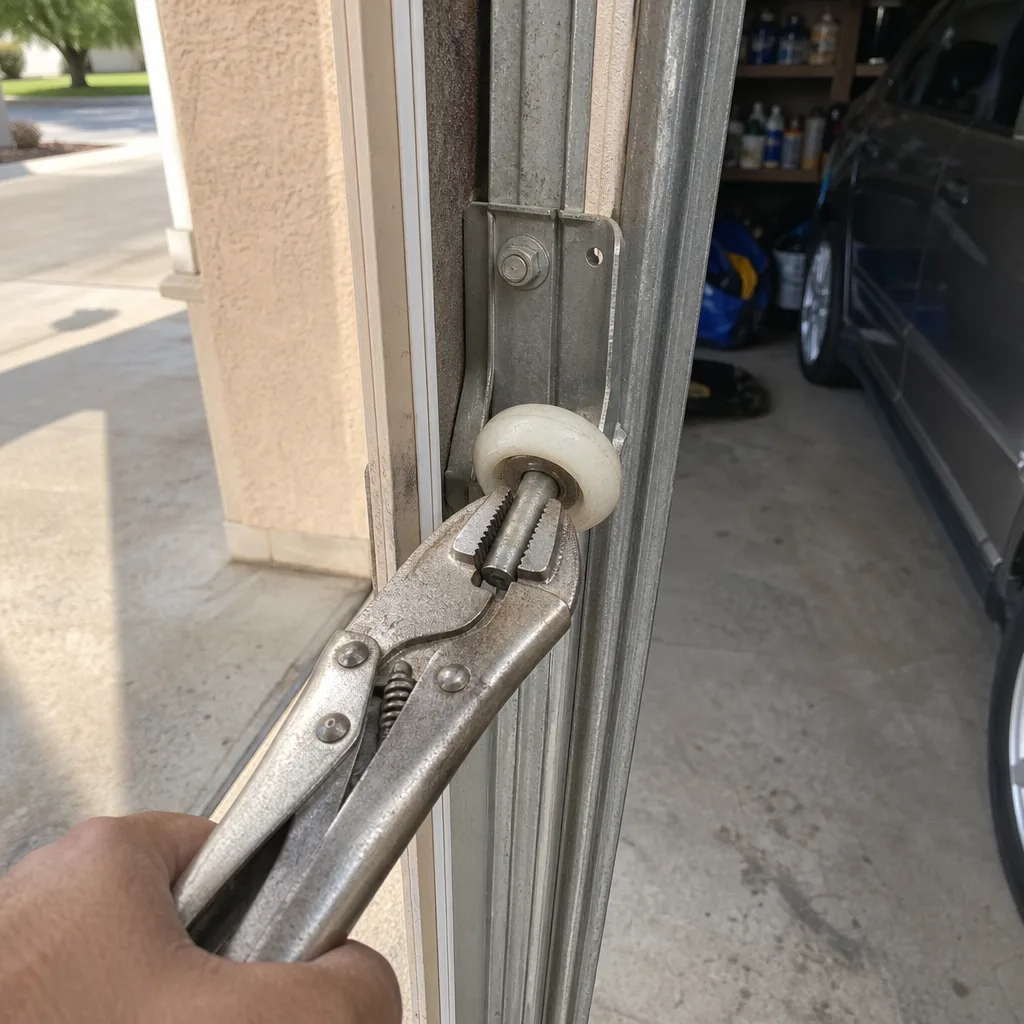
Replacing rollers. Hinged rollers on the side of each panel wear out. Nylon rollers from the factory last 7 to 10 years in Folsom’s climate; steel rollers with bearings last longer but run louder. Replacing a bottom roller involves the bottom bracket, which is under tension from the lift cables. You can replace top and middle rollers safely with the door down and the opener disengaged. Replacing bottom rollers safely requires the spring tension to be released first, which means this job straddles Bucket Two and Bucket Three. Since we don’t want you to get hurt, we’ll be direct: on most Folsom homes, roller replacement is a professional’s job, and it’s a quick one. Brand matters here too. A Clopay door and an Amarr door have different roller profiles and bracket designs, and the wrong roller will cause premature wear on the track.
Track realignment (minor). If a panel or roller has come slightly out of the track and the track itself is undamaged, you may be able to work it back into place with the door fully open and the opener disengaged. This assumes you can identify why it came out, which is usually a loose track bracket or a worn roller. If the track itself is bent, that’s beyond DIY territory. A bent track on a door under tension is a system-level problem.
Here’s our honest guidance: if you’ve done maintenance on your own car, if you can read a manual and understand how parts interact, the close-force adjustment and roller inspection are reasonable. If any of these descriptions sounded like a foreign language, call someone. The garage door opener repair in Folsom side of our business sees a steady stream of openers that were adjusted incorrectly by well-meaning homeowners after a spring lost tension.
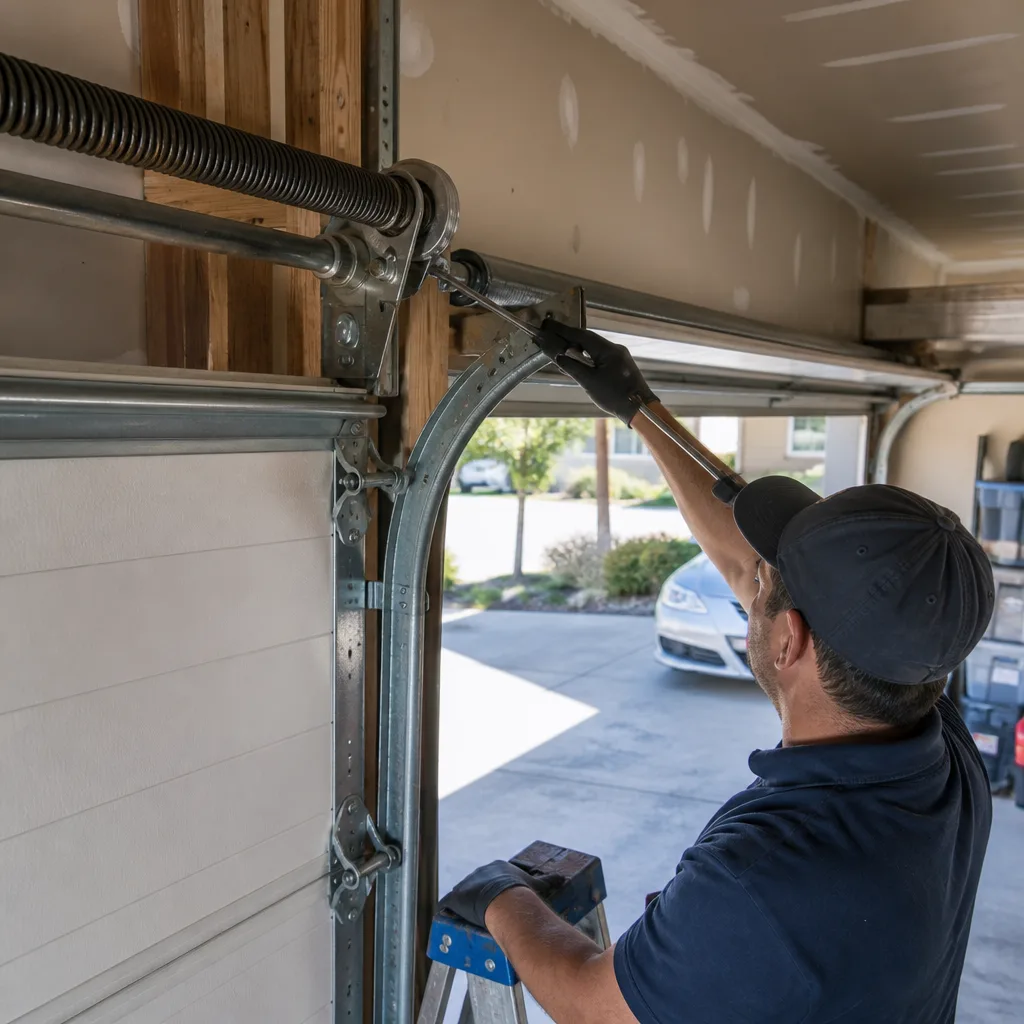
Category 3: Spring and Cable Work (Professional-Only, With Physics)
Now we get to the part where YouTube is actively dangerous. The reason torsion spring work is in a category by itself isn’t liability paranoia; it’s a matter of stored energy that most people have never calculated. Here’s the math that matters.
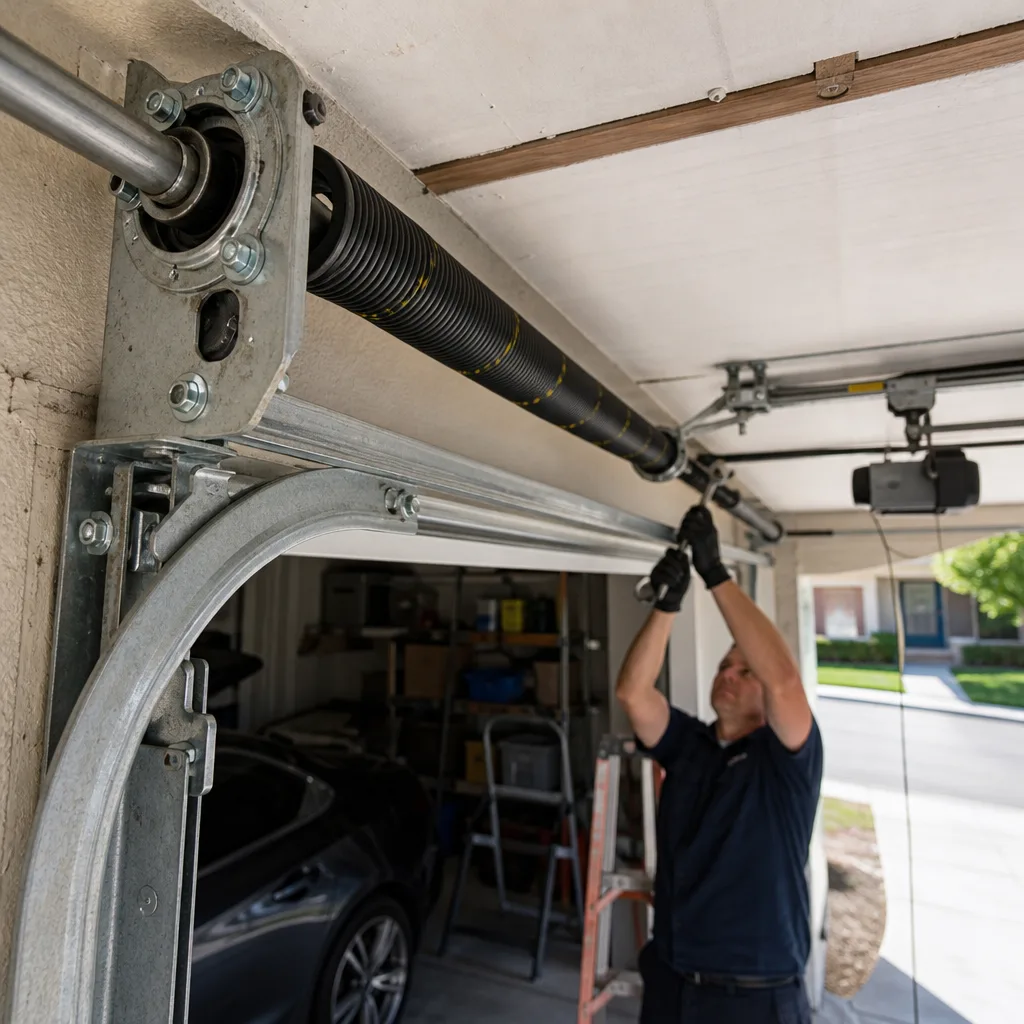
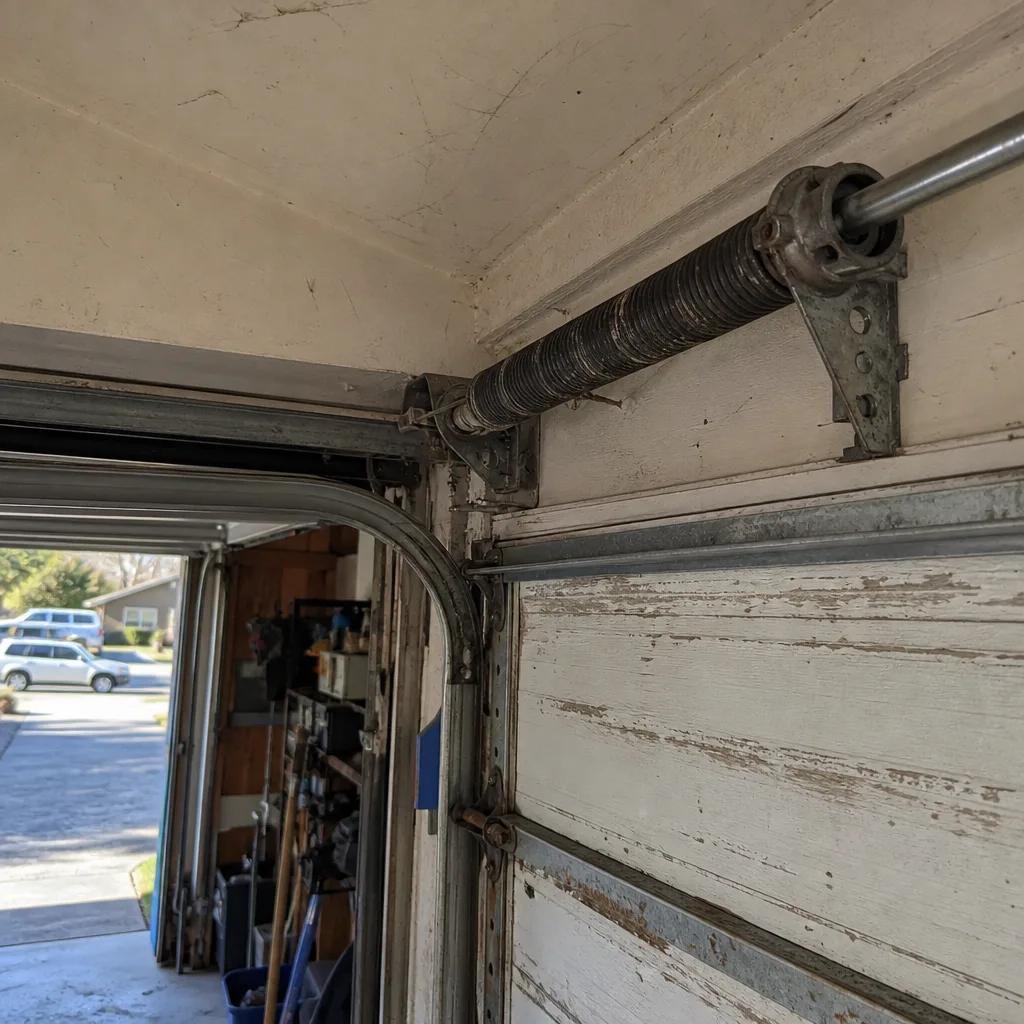
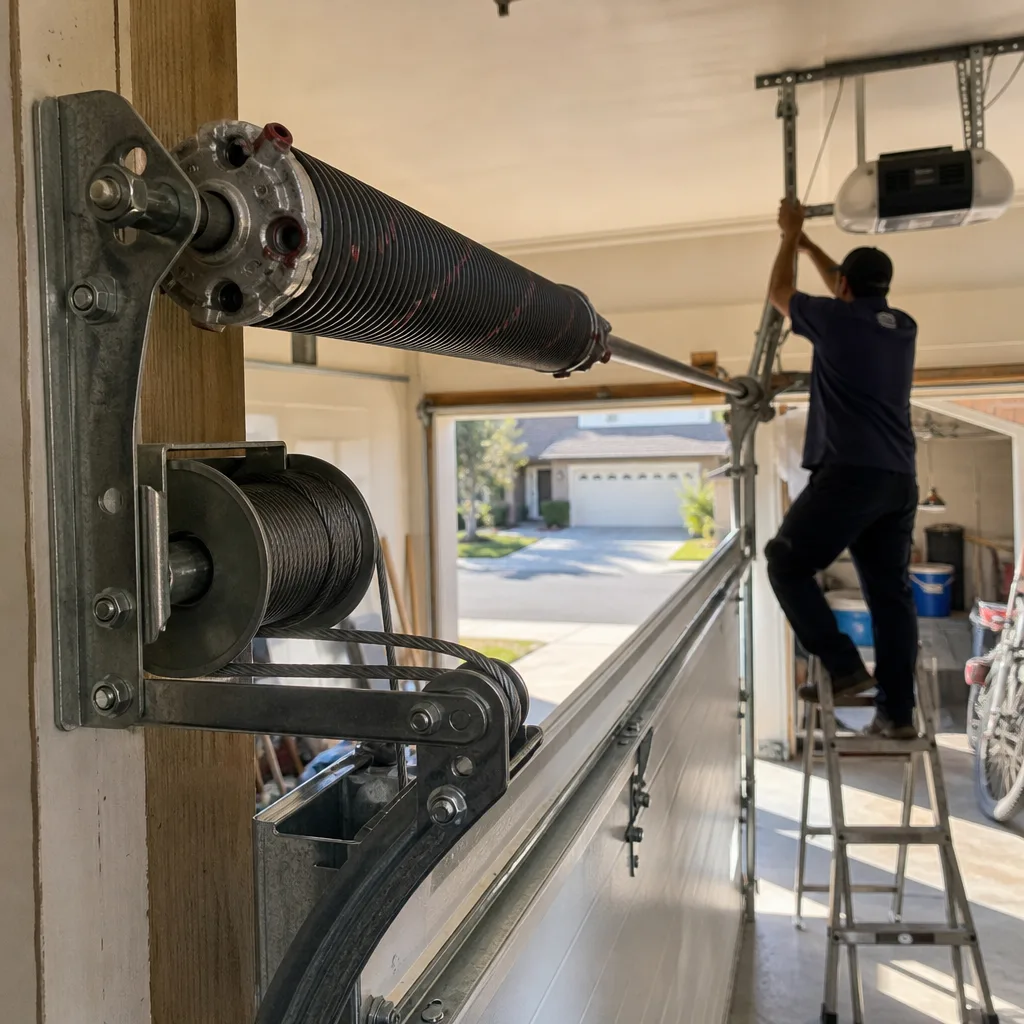
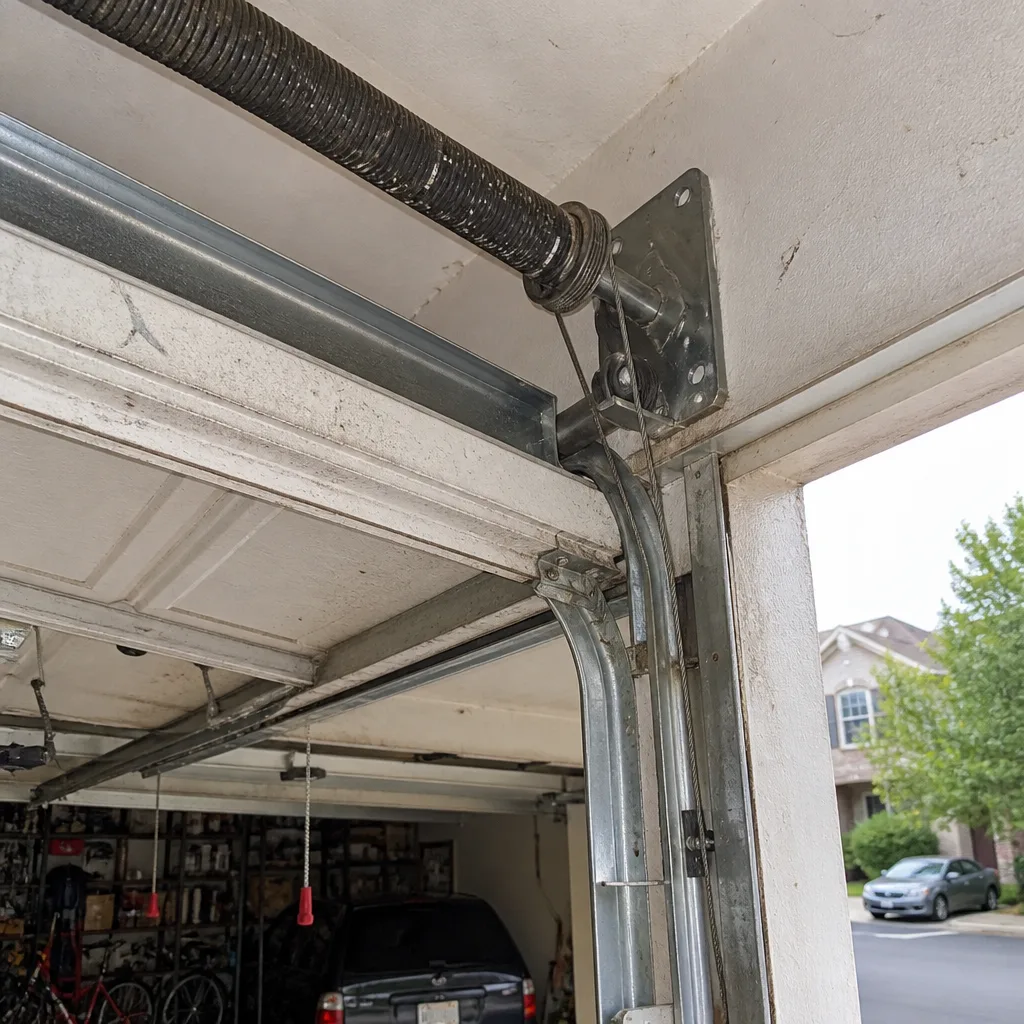
A standard residential garage door in a Folsom home weighs between 130 and 180 pounds, depending on insulation and material. The torsion spring system that lifts that door stores an equivalent amount of energy: when the door is down and the spring is wound, the spring is holding roughly 150 foot-pounds of torque. When that spring breaks, that energy is released, which is why a break sounds like a gunshot inside the garage. When the spring is being wound during installation or repair, the technician is actively inputting that energy with a winding bar. A slip at the wrong moment means the bar becomes a projectile moving at roughly the speed of a baseball pitch, and the spring unwinds with enough force to shatter bone.
Extension springs (the kind on older doors that stretch along the horizontal track) are less concentrated in their danger but not safer overall. They store energy by stretching, and when they break, the end of the spring travels along the cable line. Without a safety cable running through the spring, that broken piece becomes a metal whip.
This is not a risk that practice mitigates. The danger isn’t inexperience; it’s the nature of the component. A professional’s advantage isn’t just technique; it’s the right tools (two solid winding bars, not screwdrivers or Allen wrenches), the right sequence (winding in quarter turns, locking the set screws each time), and the judgment to know when a spring is close to failure and should be replaced as a pair. Springs are rated for a specific number of cycles, typically 10,000, and on a Folsom home that gets daily use, that’s roughly 10 to 12 years. When one spring breaks, the other is nearly always near its end of life. Replacing one and not the other means another service call within a year. That’s not an upsell; it’s the manufacturer’s own guidance, and it applies to Genie, Chamberlain, Clopay, Amarr, and every other brand we work on.
Lift cables and bottom brackets are part of the same system. The cable routes the spring’s force to the bottom of the door. When a cable frays or breaks, the door becomes loaded unevenly, and the remaining cable takes the full load. Working on cables requires the spring tension to be released or the door raised and secured. The same physics applies.
For the Folsom homeowner, the summary is uncompromising: springs and cables are not a cost-saving opportunity. They are a safety boundary, and the boundary exists for a reason that has nothing to do with profit margins. The stored energy in a wound torsion spring is not a matter of opinion. When we say a job is professional-only, we’re describing a physical fact. Our garage door repair in Folsom service handles spring replacement the same day it’s requested, with the tools and technique that keep everyone in the garage safe.
Category 4: Opener and Electrical Work (Code-Dependent)
Modern garage door openers stopped being simple electric motors years ago. A Chamberlain or Genie opener from the last decade is a networked, logic-board-driven device with safety sensors, force monitoring, and in many cases Wi-Fi connectivity. That changes the DIY calculus in ways most homeowners don’t see coming.
The first thing to understand is the safety reversal system, which is mandated by federal law under UL 325. The opener must reverse if it encounters a specific amount of resistance, and it must reverse if the photo-eye safety sensors at the bottom of the door detect an obstruction. Testing this system is a homeowner responsibility (place a 2×4 on the ground under the door and confirm the door reverses before touching it). Diagnosing why the system is malfunctioning is not. A Genie opener that reverses for no reason, a Chamberlain opener that runs but doesn’t move the door, or a Craftsman unit that trips its breaker intermittently: each of these symptoms can point to a motor, a gear, a logic board, a capacitor, or a sensor. Most homeowners don’t have the equipment to distinguish among those, and the cost of replacing parts by trial and error often exceeds the service call.
Code considerations for Folsom. Garage door openers installed in California are subject to the California Electrical Code (CEC), which incorporates the National Electrical Code (NEC). Any hardwired electrical work on the opener circuit requires a permit and inspection if you’re not the homeowner doing the work on your own residence. The homeowner exemption exists, but it doesn’t exempt you from doing the work correctly. Improper wiring on an opener is a fire hazard and a door-operation hazard. If you’re not confident reading a wiring diagram, this is not the place to learn.
There’s also the battery backup conversation, which is especially relevant in Folsom during fire season. Many newer openers include a DC motor with battery backup so the door operates during a PG&E outage. Installing or replacing the battery on a Chamberlain or Genie unit is often straightforward, but troubleshooting a charging circuit is not. And if your community requires a specific battery-backed model as part of a fire evacuation route, you want the work done correctly.
Our garage door opener repair in Folsom covers the motor, the logic board, and the drive system under one specialist. The reason we emphasize brand-specific diagnostic ability is that a Chamberlain logic board doesn’t diagnose the same way a Genie one does, and a technician who doesn’t know the difference is doing guesswork at your expense. When we say “we know this system,” it’s because we’re trained on the specific systems, not because we’ve watched a few videos on the general concept.
What California Law Actually Says About DIY Garage Door Work
Homeowners in California have a legal right to perform work on their own property without hiring a licensed contractor, provided the work is on a building they own and occupy. That’s the broad homeowner exemption under the California Business and Professions Code, and it applies to garage door work as much as it applies to painting or re-tiling a bathroom. You are legally allowed to replace your own garage door springs, install your own opener, or rebuild your own door system.
What the law doesn’t do is excuse you from the consequences of doing the work incorrectly. Here’s what California homeowners in Folsom should know:
- Building permits. A garage door replacement on an attached garage is treated as part of the building envelope. In most California jurisdictions, including the City of Folsom, replacing a garage door does not require a building permit, but structural modifications do. If you’re enlarging the opening, changing the header, or altering the fire rating of the door, you need a permit, and that work must meet Title 24 energy standards. A professional installer knows which neighborhoods in Folsom have HOA-level requirements that go beyond city code, and which door types meet the energy efficiency standards that Sacramento County enforces.
- Electrical permits. Installing a new garage door opener outlet, or wiring an opener without an existing outlet within reach, requires an electrical permit in most Folsom jurisdictions if the work is performed by someone other than the homeowner. Doing it yourself as the homeowner is legal, but the work must still meet code, and if it causes a fire, your insurance company will investigate whether the work was the cause.
- Insurance implications. Homeowners insurance in California covers damage from garage door failures, but if the damage resulted from work you performed yourself and the insurer determines the work was negligent, the claim can be denied. This isn’t a legal prohibition; it’s a financial risk that most homeowners don’t price into their DIY savings.
- HOA restrictions. Many Folsom communities, particularly newer developments and gated communities around Empire Ranch or the Parkway, have architectural review requirements for garage door replacements. The HOA can require specific colors, materials, or panel patterns. A door that matches your house but violates the HOA’s design standards can result in a forced replacement at your expense. Professional installers working in Folsom deal with these approvals regularly.
The practical reading: you have the legal right to do most garage door work yourself. You also have the legal responsibility for the outcome. The question isn’t whether you can; it’s whether you should.
The Real Time-and-Tool Cost of Common DIY Attempts
Let’s put actual numbers on the DIY comparison, because most YouTube videos conveniently omit the tool purchases, the second trip to the hardware store, and the hours of trial and error. These are realistic figures for Folsom homeowners, based on what we see when we arrive to finish a job that started as a weekend project.
Weatherstripping replacement.
- Materials: $25 to $50
- Tools needed: none beyond what’s in a standard household toolbox
- Time: 45 to 90 minutes
- DIY verdict: clearly worth it. You save a $150 to $200 service call, and the failure risk is minimal.
Painting a garage door.
- Materials: $80 to $150
- Tools needed: drop cloth, painter’s tape, brush or roller, degreaser, sandpaper
- Time: 5 to 7 hours including prep and drying
- DIY verdict: worth it if you have the time. A professional paint job runs $400 to $600, but professional results on a door are hard to distinguish from careful DIY.
Roller replacement (top and middle rollers only).
- Materials: $25 to $60 for a set of nylon rollers
- Tools needed: socket set, pliers, step ladder, patience
- Time: 1 to 2 hours if everything goes smoothly
- DIY verdict: borderline. If you’re mechanically comfortable, it’s a legitimate savings of $150 to $250. If you’re not, the cost of a stripped bracket or a misaligned roller is more than the service call.
Torsion spring replacement.
- Materials: $80 to $150 for a pair of springs from a retail supplier
- Tools needed: two winding bars ($30 to $50), socket set, safety glasses, and the knowledge of the correct winding sequence
- Time: 3 to 5 hours for a first-timer, assuming no mistakes
- Professional cost in Folsom: $250 to $400 including springs, labor, and warranty
- DIY verdict: not worth it. The tools, the time, and the very real risk of serious injury make this the clearest “call a professional” decision in the entire guide. And a professional carries the exact spring your door needs; a retail store has a best guess.
Opener installation.
- Materials: $250 to $450 for a quality Chamberlain or Genie opener with battery backup
- Tools needed: ladder, drill, socket set, level, and in some cases electrical knowledge
- Time: 4 to 8 hours for a first-timer, plus the time to program remotes and safety sensors
- Professional installation in Folsom: typically $100 to $200 over the unit cost when bundled with the unit or existing service
- DIY verdict: the math is closer than most people expect. If you’re replacing an existing opener with a similar model from the same brand, it’s a realistic DIY project. If you’re upgrading from an older unit to a modern smart opener, the programming and sensor alignment are where DIY projects stall. A professional garage door installation in Folsom includes the mounting, the wiring, the programming, and the balance check, and the price difference is smaller than the time difference for most homeowners.
The honest pattern: on the low-risk jobs, DIY savings are real. On the high-risk jobs, the savings shrink or invert once you factor in tools, time, and the cost of fixing mistakes.
The Three DIY Jobs That Turn Into Bigger Repairs
We see these three scenarios in Folsom garages regularly enough that they’re worth naming specifically. Each of them starts as a well-intentioned weekend project and ends as a repair that costs more than the original job would have.
1. Adjusting the opener force setting instead of calling about a broken spring. The homeowner notices the door isn’t lifting smoothly or the opener is straining. They find the force-adjustment dial on the opener and crank it up. The opener now fights the door harder, which works for a few weeks until the motor burns out or the gear strips. The original problem (a failing torsion spring) is now joined by a destroyed opener. The repair goes from a $250 spring replacement to a $500 to $700 combined job. The tell: if you ever need to increase the force setting to make the door work, the spring is already failing. The opener is not the problem.
2. Replacing a bottom roller without releasing spring tension. This is the one that sends people to urgent care. The bottom roller is mounted in a bracket that carries the full load of the door through the lift cable. Removing that bracket without releasing the spring tension means the door’s weight is suddenly unopposed. The bracket becomes a projectile, or the door drops, or both. The injury risk is severe, and the damage to the door, cable, and track typically exceeds $400. The tell: any job that involves removing a bolt near the bottom corner of the door while the door is down is a spring-tension job, not a roller job.
3. Installing a new opener without checking door balance. This one is less dangerous and more expensive. The homeowner installs a new Chamberlain or Genie opener, programs it, and everything works for a month. Then the door starts acting erratically and the new opener is making strange noises. The problem: the door’s balance was already off, and the new opener has been compensating for it. The motor wears prematurely. Within a year, the homeowner is paying for opener repair on a unit that ought to last a decade. The tell: always test door balance before installing an opener. If the door doesn’t hold position at waist height, fix the springs before the opener.
What all three share is a misdiagnosis. The homeowner treated the symptom (opener behavior) instead of the cause (spring condition). That’s the core value of brand-specific diagnosis: a technician who knows what a Genie opener sounds like when it’s fighting a bad spring doesn’t need a second visit to find the root cause.
Common Mistakes to Avoid
- Using the wrong tools on spring work. Screwdrivers, Allen wrenches, and pry bars are for other jobs. Winding bars are the only correct tool for winding a torsion spring, and they cost less than the emergency room copay. If your plan involves a tool that wasn’t designed for the job, stop.
- Replacing only one spring. Torsion springs are rated for a specific lifespan in cycles. When one breaks, the other is at the end of its rated life. Replacing only the broken spring means paying for another service call within a year and living with an unbalanced door in the meantime.
- Ignoring door balance after a new opener installation. A new opener will mask a failing spring for a while. Test the balance manually before and after any opener work. If the door doesn’t hold position, the springs need attention regardless of what the opener is doing.
- Buying replacement parts without confirming the door brand. A Clopay spring and an Amarr spring are not interchangeable. Neither are their rollers, brackets, or cables. Buying parts by guesswork from a retail store and hoping they fit is a fast way to waste a Saturday and a trip back to the store.
- Treating a noisy door with more lubricant instead of diagnosis. Lubricant is maintenance; it is not repair. A door that grinds, squeals, or pops after lubrication has a mechanical issue. Continuing to lubricate it while the problem worsens is a way of deferring a $200 repair into a $600 one.
- Attempting opener electrical work without confirming the circuit. Openers in older Folsom homes are sometimes wired to shared circuits or older outlets that don’t meet current code. Connecting a modern opener to an undersized circuit is a fire risk. If you’re not certain about the circuit, don’t guess.
- Underestimating Folsom’s heat on rubber and plastic components. Weatherstripping, rollers, and belt drives age faster in sustained high heat. What looks like premature failure is often normal aging in this climate. If a part fails in August, the fix is the same, but the expectation should be different: some components simply have shorter lives in Folsom than they do in cooler climates.
When to Call a Professional
Call a professional when the job involves spring tension, lift cables, bottom brackets, opener logic boards, or any electrical wiring. Call a professional when the door is visibly off-track, when the opener runs but the door doesn’t move, when the door drops quickly instead of lowering smoothly, or when you’ve already made one attempt and the problem persists. Call a professional when you don’t know which brand of door or opener you have, because the part you need depends on that answer. Garage Door Service Folsom offers free estimates in Folsom. We work on Chamberlain, Genie, Clopay, and Amarr systems specifically, along with four other major brands, and we handle the door and the opener as one system rather than sending you to two different vendors. Call (877) 318-4983 and we’ll tell you honestly whether the job is one you can handle yourself.
Frequently Asked Questions
A typical torsion spring replacement in Folsom runs $250 to $400, including the springs, labor, and a warranty on the parts. The exact price depends on the door weight, spring size, and whether one or both springs are being replaced. We quote the price before any work starts, and the quote doesn’t change once we see the door. Call (877) 318-4983 for a free estimate on your specific spring.
You can, legally, as a homeowner in California, and a same-brand replacement (removing a Chamberlain and installing another Chamberlain, for example) is a realistic DIY job if you’re comfortable with basic wiring and programming. The job gets harder when you’re changing brands or upgrading from an old unit to a modern smart opener, because the mounting points, sensor wiring, and programming differ. If you’re not certain about the electrical circuit, call a professional before you start.
The torsion spring is the most dangerous component by a wide margin. A wound spring stores roughly 150 foot-pounds of torque, and when that energy releases unexpectedly, a winding bar or broken spring fragment becomes a projectile moving at high speed. This is why spring work is professional-only regardless of skill level. The danger is not in handling the spring carefully; it’s in the physics of the component.
This symptom usually points to a failing spring, not an opener problem. When a torsion spring loses tension, the door becomes too heavy for the opener to lift past the point where the spring’s assist gives out. The opener’s safety system then stops the door and reverses it. The correct fix is a spring replacement, not an opener adjustment. Continuing to operate the door in this condition wears out the opener prematurely.
Standard torsion springs are rated for approximately 10,000 cycles, which translates to about 10 to 12 years in a Folsom home where the door opens and closes two to three times daily. High-cycle springs (rated for 25,000 cycles or more) last longer and cost more. Folsom’s heat doesn’t directly shorten spring life the way it affects rubber components, but daily use patterns do.
No. We quote the price before any work begins, and the quote doesn’t change once we’re at the door. If we find an additional issue during the repair, we’ll show you what we found and quote the additional work separately, and you decide whether to proceed before we do anything. The number you approve is the number you pay. Call (877) 318-4983 and we’ll walk through the pricing before anyone drives over.
The Bottom Line
The DIY-versus-professional question for garage doors in Folsom isn’t about how handy you are. It’s about which of the four task categories the job falls into. Paint your door, replace your weatherstripping, and lubricate your rollers yourself; those jobs are straightforward and the savings are real. Leave spring work to professionals because the stored energy doesn’t care about your confidence. Leave opener and electrical work to professionals unless you’re replacing like-for-like and understand the circuit. And when you’re not sure which category you’re in, call someone who can tell you before you touch a tool. Garage Door Service Folsom works on doors and openers together, not as two separate trades, and we’d rather give you honest advice on the phone than fix a DIY job that went wrong. Call (877) 318-4983 for a free estimate, or read more about garage door repair in Folsom.
Written by the team at Garage Door Service Folsom, serving Folsom since 2016.
See the difference
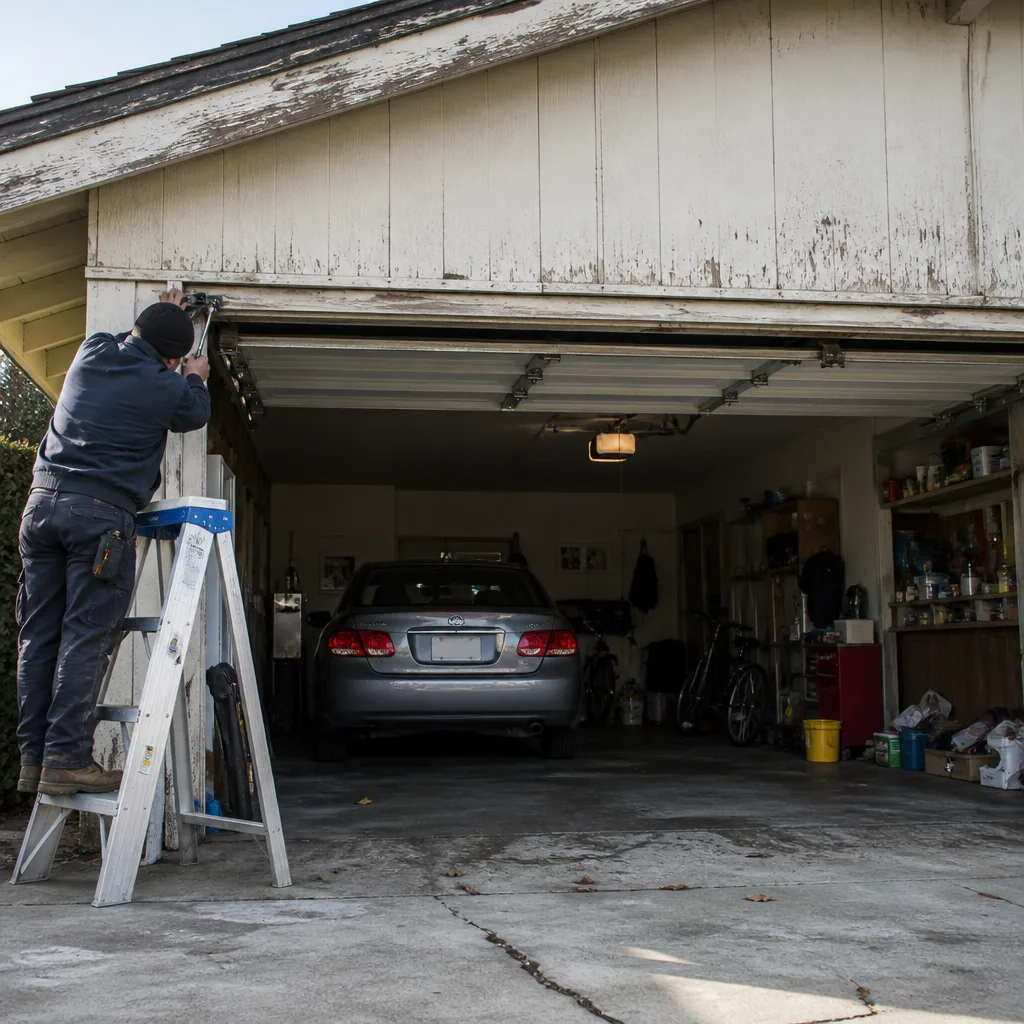 Before
 After
 Before
 After
 Before
 After