
Last updated November 2, 2026
 Raised-panel steel
 Carriage house
 Modern flush
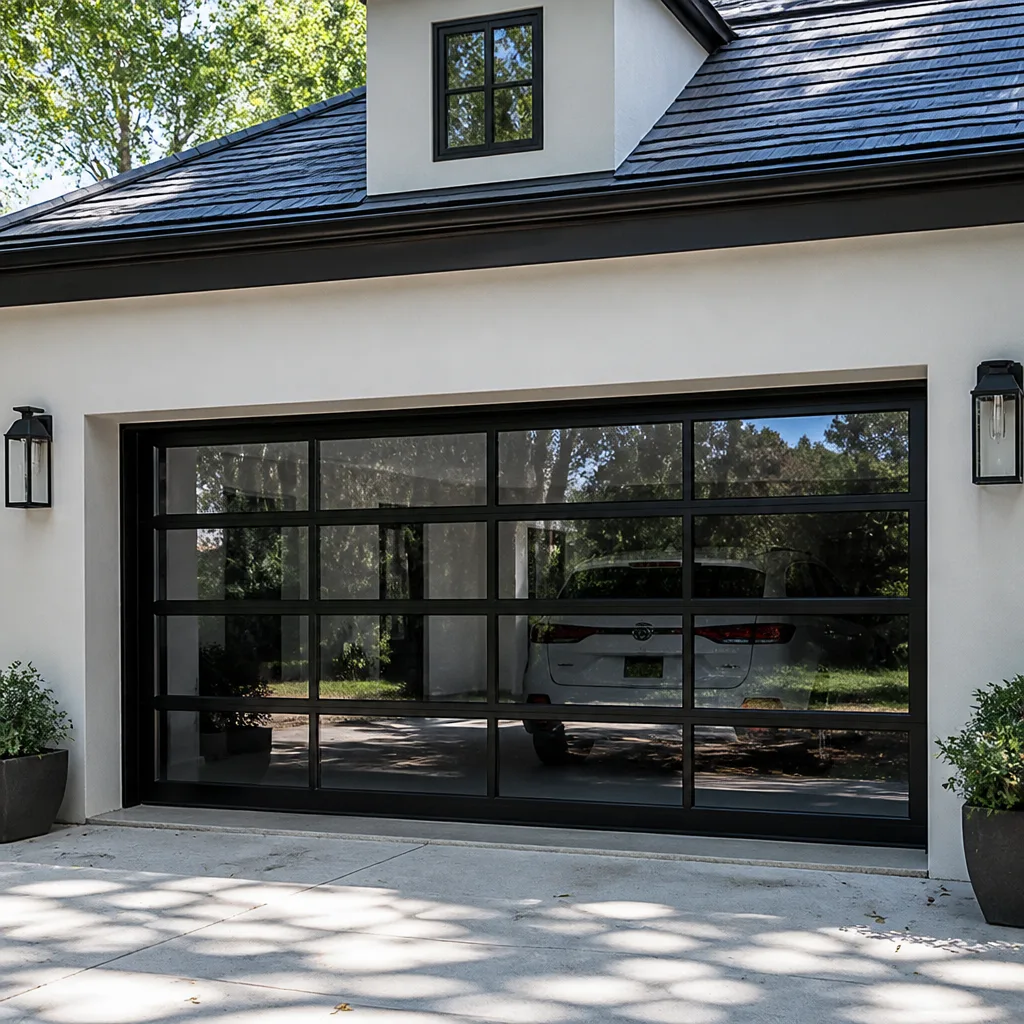 Full-view glass
 LiftMaster openers
 Chamberlain openers
Full 25-point door and opener safety check with every visit - springs, cables, rollers, tracks, and your LiftMaster or Chamberlain opener included
You get a price before we start. It does not change when the truck arrives.
Get your free estimateGarage Door Permits, Codes & Inspections in CA: What You Need to Know
In 2023, a homeowner in Folsom’s American River Canyon neighborhood replaced a tired wooden garage door with a modern steel one. The install took a morning. The problem showed up three years later, when a buyer’s home inspector pulled the permit history and found nothing on file. The sale collapsed over a permit that would have cost $200 and taken two weeks to secure. It’s the classic California garage door story: the regulations aren’t complicated, but the consequences of guessing wrong are brutal. This guide untangles the actual rules around garage door permits, code compliance, and inspections in California, with specific attention to Folsom and Sacramento County. For Garage Door Warning Signs: A Folsom Homeowner’s Reference Guide and related topics, see our other resources. We’ll cover what triggers a permit, what Title 24 demands, why UL 325 matters, and how to avoid the mistakes that surface during escrow.
Quick Answer
In California, replacing an existing garage door with one of the same type (like-for-like, same size and operation) typically does not require a permit. Work that triggers permit requirements includes structural modifications to the opening, adding a door where none existed, converting a carport to a garage, or changing from a swing-out to an overhead roll-up door. Always verify local rules with your city building department, because Folsom and Sacramento County interpret the state code differently on specific details.
Styles & brands we work with
- Raised-panel steel
- Carriage house
- Modern flush
- Full-view glass
- LiftMaster openers
- Chamberlain openers
Table of Contents
- Which Garage Door Work Requires a Permit in California?
- The “Like-for-Like” Replacement Rule Explained
- Folsom and Sacramento County: How Local Rules Differ
- Title 24 Energy Code: What It Means for Your Garage Door
- UL 325 and Opener Safety Standards
- What Happens During a Garage Door Inspection
- HOA Compliance in Folsom’s Master-Planned Communities
- Common Mistakes to Avoid
- When to Call a Professional
- Frequently Asked Questions
Which Garage Door Work Requires a Permit in California?
California’s building code doesn’t specifically list “garage door” as a permit category. Instead, permits hinge on whether the work alters the building’s structure, electrical system, or fire rating. That’s where the confusion starts, and where homeowners over-permit or under-permit with equal frequency.
The state’s Residential Building Code (CBC, Chapter 3) treats garage doors as part of the building envelope. A permit is required when the work changes the dimensions of the opening, modifies the header or jambs, alters the fire separation between garage and living space, or introduces electrical work beyond swapping a cord-and-plug opener. In practice, most garage door replacements fall outside those triggers. But “most” leaves room for expensive error.
Work That Typically Requires a Permit
- Enlarging or reducing the garage door opening size (requires structural framing changes and engineering review)
- Installing a garage door where none previously existed (carport-to-garage conversions are the big one)
- Changing the door type that alters fire rating requirements, such as moving from a solid core to glass, when the garage is attached to living space
- Adding a second garage door opening in a load-bearing wall
- Hardwiring an opener when no existing outlet or circuit serves the garage door area
Work That Typically Does Not Require a Permit
- Replacing an existing sectional roll-up door with another sectional roll-up door of the same dimensions
- Replacing springs, cables, rollers, tracks, hinges, or panels on an existing door
- Swapping a belt-drive opener for a chain-drive or screw-drive opener using the existing plug-in power source
- Replacing weatherstripping, bottom seals, or perimeter trim
- Repainting or refinishing the garage door
The easiest way to think about it: if the hole in the wall stays the same and the power source stays the same, you’re almost certainly looking at a non-permitted replacement or repair. If the hole changes or the wall itself gets touched, call the building department before anyone picks up a saw.
The “Like-for-Like” Replacement Rule Explained
The phrase that governs most garage door work in California is “like-for-like replacement.” Inside the building industry, this means the new component matches the old one in size, function, and structural demand. The building departments across Sacramento County apply this test every day, and it’s the single most useful concept for a homeowner to understand before calling a contractor.
Here’s the practical version of the test: if you removed your current garage door and the new one slid into the exact same tracks, mounted to the same brackets, and connected to the same power source, no permit is needed. The size (width and height), the operation (sectional roll-up, swing-out, slide), and the attachment points stay unchanged. The door’s material can change entirely: wood to steel, non-insulated to insulated. That’s still like-for-like.
What breaks like-for-like status? A height change from 7 feet to 8 feet is the most common one we see in Folsom, especially in older homes near the Sutter Street historic district where ceiling heights were lower. Widening a single door to a double door is another. Switching from a swing-out carriage door to an overhead sectional is a third, since that changes the entire load path on the header.
- Measure your current opening: width, height, and wall depth. Write these down.
- Compare those dimensions to the new door’s requirements. If they match, you’re in like-for-like territory.
- Check the operation type. Same style of door (sectional for sectional, roll-for-roll) is required for the no-permit path.
- Verify the power source. A plug-in opener that replaces another plug-in opener doesn’t move the needle. Hardwiring does.
- When in doubt, email a photo and the measurements to the Folsom Building Division. They’ll answer in plain language, usually same-week.
We should note: “like-for-like” is an administrative label, not a legal citation. Cities use different terms internally. But the underlying logic is consistent across California, and it’s the framework any building inspector will apply when they look at your project.
Folsom and Sacramento County: How Local Rules Differ
Folsom operates its own building division with inspection authority independent from Sacramento County. That’s important because the two jurisdictions answer to the same state code but interpret the like-for-like standard with slightly different levels of scrutiny. In our experience working across both, Folsom’s inspectors tend to ask more questions about overhead door fire ratings on attached garages, while the county’s staff focuses more on structural changes to openings.
The practical difference for a homeowner in Folsom is twofold. First, permit applications go through the City of Folsom Community Development Department, not the county. Second, Folsom’s plan reviewers are quicker to flag any alteration to a garage-to-living-space wall assembly, because so much of the city’s housing stock was built between 1985 and 2005 with fire-rated separation as a major code requirement. A door replacement that touches that wall, even incidentally, invites scrutiny.
Sacramento County, by contrast, has a higher volume of older rural properties where garages are often detached. Detached garages have far fewer fire-rating requirements, which means fewer triggers for permit review. If you live in an unincorporated area near Folsom, like Orangevale or Granite Bay, the county’s rules apply and most garage door replacements won’t need any filing at all.
The safest approach for Folsom residents is a five-minute phone call to the Building Division before scheduling work. Ask one question: “Does replacing my garage door with a same-size sectional door require a permit?” The answer is usually no, but getting it in writing (even in an email) becomes useful documentation when you sell the house later.
Title 24 Energy Code: What It Means for Your Garage Door
California’s Title 24, Part 6 sets energy efficiency standards for building components. Most homeowners don’t realize Title 24 can apply to garage doors, and it doesn’t apply uniformly. The rule that matters: if your garage is heated, cooled, or serves as conditioned living space, the door must meet insulation and air leakage standards. For attached garages that are unconditioned (which describes nearly every standard Folsom home), the Title 24 requirements are minimal and often zero.
But there’s a wrinkle that surprises people. Folsom is in Sacramento Municipal Utility District territory, and SMUD’s energy efficiency programs push harder on garage insulation than the state baseline. Some Folsom neighborhoods, especially those with finished garages used as workshops, gyms, or home offices, fall into a gray zone where Title 24 compliance becomes relevant even if the city doesn’t flag it during a door swap.
Here’s what actually matters for most garage door replacements in Folsom:
- If the garage door separates an unconditioned garage from outdoors, the door’s R-value is not regulated by Title 24. Choose insulation for comfort, not compliance.
- If the garage has a ducted HVAC supply or the garage shares walls and ceiling with conditioned space, the door’s thermal performance feeds into the home’s overall envelope calculation. This is rare in standard Folsom construction.
- If an inspector does look at Title 24 for your replacement, the relevant factor is whether the new door is at least as energy-efficient as the one it replaced. Replacing an insulated door with a non-insulated one could trigger a compliance requirement.
For most readers: a standard garage door replacement on an unconditioned attached garage in Folsom does not trigger Title 24 review. The requirement only bites when the garage is conditioned, which is the exception, not the rule. Brands like Clopay and Amarr offer insulated lines that exceed any reasonable Title 24 demand for those edge cases, and their documentation is accepted by Sacramento-area inspectors without dispute.
UL 325 and Opener Safety Standards: Why California Enforcement Differs
UL 325 is the federal safety standard for automatic garage door openers, but it applies differently in California than in most other states. The standard itself mandates safety features: auto-reverse mechanisms that stop and reverse the door when it hits an obstruction, entrapment sensors (the photo eyes mounted near the floor), and force settings that limit closing pressure. Every major opener brand, including LiftMaster, Chamberlain, Genie, and Craftsman, builds to UL 325.
What makes California different is the state’s additional law: SB 969, enacted in 2005, requires automatic reverse safety devices on all new residential openers and updates the standard when the underlying UL specification changes. Most other states reference UL 325 as an industry standard but don’t write it into state code. California does. The practical result is that building inspectors in Folsom will ask about your opener’s safety compliance during any inspection that touches the garage door, even on non-permitted replacements.
Here’s what the California enforcement difference means on the ground:
- If an inspector enters your garage for any reason (a water heater permit, a panel upgrade, a re-roof inspection), they can flag a missing or disabled opener safety feature even if the door itself was never under review.
- Photo eyes must be present, wired, and functioning. Disabled sensors are the single most common UL 325 violation we see on older Folsom homes.
- Openers manufactured before 1993 are not UL 325 compliant and technically violate California law when in active use. No available retrofit kit fully solves this; replacement is the only code-compliant answer.
- Battery backup is not a UL 325 requirement but is a practical recommendation in Folsom, where winter wind events and summer brownouts both knock out power with some regularity.
For homeowners, the takeaway is simple: if your garage door opener is older than the house’s last major remodel, it likely deserves a safety review. The UL 325 compliance questions come up during home sales inspections with surprising frequency, because real estate inspectors in Folsom are trained to check the photo eyes and auto-reverse on nearly every property they walk. For step-by-step help, see our Garage Door Repair Troubleshooting: Common Problems and How to Fix Them.
What Happens During a Garage Door Inspection
Garage door inspections in Folsom happen in two contexts: a city building inspection tied to a permit, or a buyer’s home inspection during escrow. The two are not the same, and knowing what each one examines changes how you should prepare.
A city garage door inspection, when it occurs, follows a specific checklist. The inspector verifies the door’s size matches the permit (if one was pulled), checks that the framing and attachment are sound, confirms the fire rating on attached garages, and tests any opener safety features if the opener is part of the scope. The inspection takes fifteen to twenty minutes. The inspector is not looking at the door’s aesthetics or its operating smoothness; the focus is code compliance and structural integrity.
A home inspector’s garage review is broader and more consequential for sellers. The inspector will operate the door manually and with the opener, test the auto-reverse function with a block of wood, check the photo eyes, look at spring condition, examine the tracks and rollers, and note any sag in the horizontal rails. They’ll also open and close the door to see if it binds or hesitates. Most importantly, they’ll note whether the door is original or replaced, and if replaced, they may ask whether permits were pulled.
Here’s what both types of inspectors are actually looking for, step by step:
- Does the door balance when disengaged from the opener? An unbalanced door suggests spring wear or installation error.
- Do the safety sensors sit within 6 inches of the floor and respond when interrupted? The 6-inch rule is specific to UL 325 and checked on nearly every inspection.
- Does the auto-reverse trigger with minimal force? A door that resists reversal under light pressure has a force setting problem.
- Are the spring mounting brackets, hinges, and track fasteners tight and free of cracking?
- On attached garages, does the door maintain the required fire rating? This is checked against the original construction type.
- Does the door open and close without excessive scraping, popping, or vibration? Unusual noise suggests track misalignment or roller failure.
We’ve seen clean deals get delayed over a photo eye that was painted over and non-functional. We’ve also seen doors with dented panels and noisy rollers pass inspection without comment because the structural and safety components were solid. The inspection is a safety audit, not a beauty contest. Understanding that distinction saves sellers from unnecessary last-minute fixes.
HOA Compliance in Folsom’s Master-Planned Communities: A Separate Layer
Folsom is a city of master-planned communities. Empire Ranch, Parkway, Lexington Hills, and the developments along Blue Ravine all operate with CC&R sets that govern exterior appearance, including garage doors. HOA compliance is separate from city permitting, and a door that passes the city’s code review can still violate an HOA’s architectural standards.
This is where the Folsom-specific reality diverges from generic California advice. Many Folsom HOAs restrict garage door colors, materials, and styles. Some require panel patterns that match the original developer spec. A few prohibit windows in garage doors entirely, while others require them for curb appeal consistency. The Empire Ranch community, for example, maintains strict palette controls that limit door colors to a handful of earth tones.
The sequence matters: check HOA rules before ordering the door, not after. The order of operations for any Folsom garage door replacement should be:
- Review your CC&Rs and any HOA architectural guidelines for garage door specifications.
- Submit an architectural review request if your HOA requires one. Approval turnaround runs 2 to 6 weeks in most Folsom communities.
- Confirm permit requirements with the Folsom Building Division (usually a none-needed answer for like-for-like).
- Order and schedule the installation. Never order a custom door before HOA approval lands.
Door brands matter here because the same door that satisfies an HOA in one Folsom neighborhood violates an HOA in the next. Wayne Dalton and Amarr both offer wide style ranges that map well to Folsom’s HOA palette expectations, which is one reason they’re common choices in the city’s newer builds. Our Garage Door Installation in Folsom work frequently involves matching HOA specs down to the exact panel profile and color code, because getting it wrong means a compliance letter from the HOA board and a door you can’t return.
Common Mistakes to Avoid
- Over-permitting a simple replacement. Pulling a permit for like-for-like door replacement wastes $200 to $500 and adds 2 to 4 weeks of waiting. It also creates a permit record that can invite scrutiny on unrelated items. We’ve seen homeowners in Folsom pull permits for routine replacements and then get flagged for unrelated garage electrical issues during the inspection.
- Under-permitting a carport-to-garage conversion. This is the reverse mistake, and it’s far more dangerous. Converting a carport to a garage adds square footage the assessor doesn’t know about, and when that discovery happens during a sale (which it will, because square footage drives appraisal), the deal can die. Always permit conversions, no exception.
- Replacing a garage door before checking HOA rules. Folsom HOAs enforce appearance standards strictly. A homeowner who installs a door that violates the palette or style rules faces a compliance order that may require full replacement at their own cost.
- Disabling or bypassing the photo eyes. The sensors at the bottom of the door frame get hit by bikes, yard equipment, and kids. When one gets damaged, the temptation is to wire around it. That’s a UL 325 violation and a huge liability flag that a home inspector will catch.
- Ignoring the fire rating on attached garages. The wall and door separating a garage from living space must maintain its fire rating. Replacing a fire-rated door with a non-rated model is a code violation that city inspectors in Folsom check specifically.
- Waiting until the sale to address compliance. Missing permits can usually be resolved retroactively, but the process takes weeks and costs more than the original permit would have. And in competitive markets, a buyer may simply walk rather than wait for a retroactive permit to process.
- Assuming state rules match local practice. California sets the baseline, but Folsom and Sacramento County interpret details differently. What passes in one jurisdiction can fail in another, and assuming is how five-figure corrections get made.
When to Call a Professional
Garage door work splits into two categories: what you can safely reason through and what requires a specialist who’s already navigated the jurisdiction’s rules. You should call a professional when the door’s structural function is involved, when the springs or cables need work (high-tension components that store enough energy to cause serious injury), when the opener’s logic board or safety sensors are malfunctioning, or when you’re uncertain about whether your replacement crosses the permit threshold. A trained garage door technician can assess the existing setup, tell you in five minutes whether the work is like-for-like, and if it’s not, explain exactly what the permit process looks like. Ask also about our Garage Door Repair Maintenance Checklist for Folsom Homeowners.
Garage Door Service Folsom offers free estimates in Folsom and the surrounding Sacramento County area. We’re a garage-door-only shop, so we live in the permit details of this one trade rather than splitting attention across a dozen services. Call (877) 318-4983 for a straight answer on your replacement or repair, or browse our Garage Door Repair in Folsom page for service details.
Frequently Asked Questions
In most cases, no. A like-for-like replacement (same size, same operation style, no structural changes) does not require a permit in Folsom. Permits are triggered by changing the opening dimensions, modifying the wall framing, or converting a carport to a garage. If you want written confirmation before proceeding, call the Folsom Building Division with your door measurements. For help assessing whether your replacement qualifies, call (877) 318-4983.
When a permit is required, costs vary by jurisdiction. Folsom’s permit fees for residential alterations typically run $150 to $350, while Sacramento County’s range from $200 to $500 depending on scope. Retroactive permits (issued after the fact) cost more, often 1.5 to 2 times the original fee. The exact cost depends on the project’s valuation, which is why getting a pre-work determination from the building department matters before spending anything. For an exact quote on your specific project, call (877) 318-4983.
Yes, and they frequently do. Home inspectors check the garage door’s balance, auto-reverse function, photo eye sensors, spring condition, and track alignment. They also check whether the door has a permit history if it was replaced. A flagged garage door doesn’t necessarily kill a sale, but it can delay closing and give the buyer leverage for a price reduction. The fix is usually straightforward if addressed before the inspection happens.
UL 325 is the national safety standard for automatic garage door openers, and California has written it into state law through SB 969. It applies to every residential opener sold or installed in the state. The standard mandates auto-reverse mechanisms, photo eye sensors, and force limits that prevent the door from closing on people or objects. If your opener predates 1993, it’s not UL 325 compliant and should be replaced. For a safety assessment of your current opener, call (877) 318-4983.
Yes, in most Folsom communities. HOAs in Empire Ranch, Parkway, Lexington Hills, and other master-planned developments maintain architectural standards that specify allowable door colors, materials, styles, and sometimes panel patterns. HOA rules are separate from city permits, and violating them can trigger a compliance order requiring replacement at your expense. Check your CC&Rs before ordering any door, and submit an architectural review request if your HOA requires one.
No, not for standard unconditioned garages. Title 24’s energy requirements apply only when the garage is conditioned, meaning heated, cooled, or served by the home’s HVAC system. That describes a small minority of Folsom homes. If your garage is unconditioned (no heat or AC ducts), replace the door with any insulation level you prefer for comfort. Insulation becomes a compliance issue when a door’s R-value feeds into a conditioned space’s envelope calculation.
The Bottom Line
California’s garage door permit rules boil down to one concept: like-for-like replacement needs no permit, and alterations to the opening or the structure do. Folsom adds two layers on top of the state baseline: a building division that scrutinizes fire-rated assemblies on attached garages, and HOAs that govern appearance across the city’s master-planned communities. UL 325 safety standards apply to every opener in the state regardless of permits, and Title 24 rarely touches standard Folsom garage replacements. The costliest mistakes happen in both directions: over-permitting wastes money and time, while under-permitting surfaces during sales and kills deals. When uncertainty exists, ask the city first and the HOA second. For the rest, start with our Garage Door Service Folsom home page or call for a free estimate.
Written by the team at Garage Door Service Folsom, serving Folsom since 2016. Browse more guides & resources on our blog.
See the difference
 Before
 After
 Before
 After
 Before
 After