
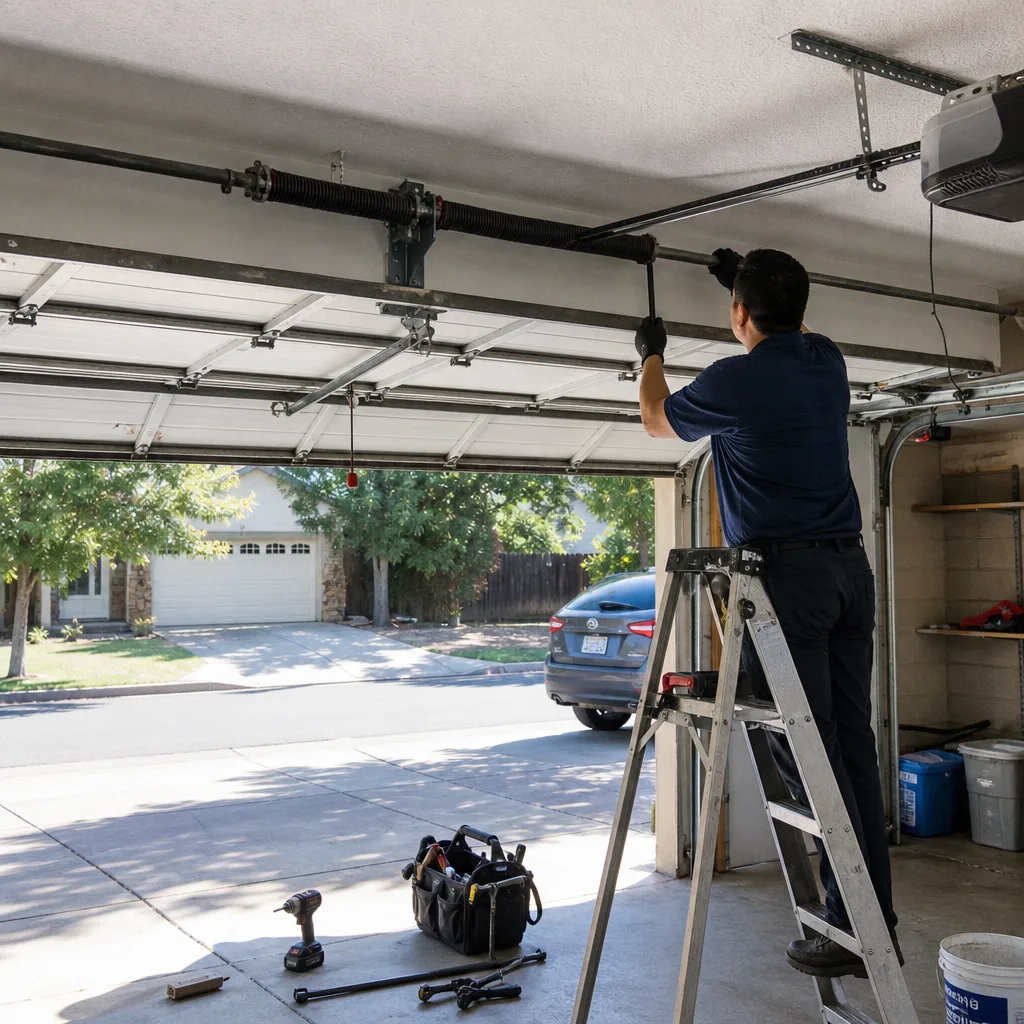
Last updated November 2, 2026
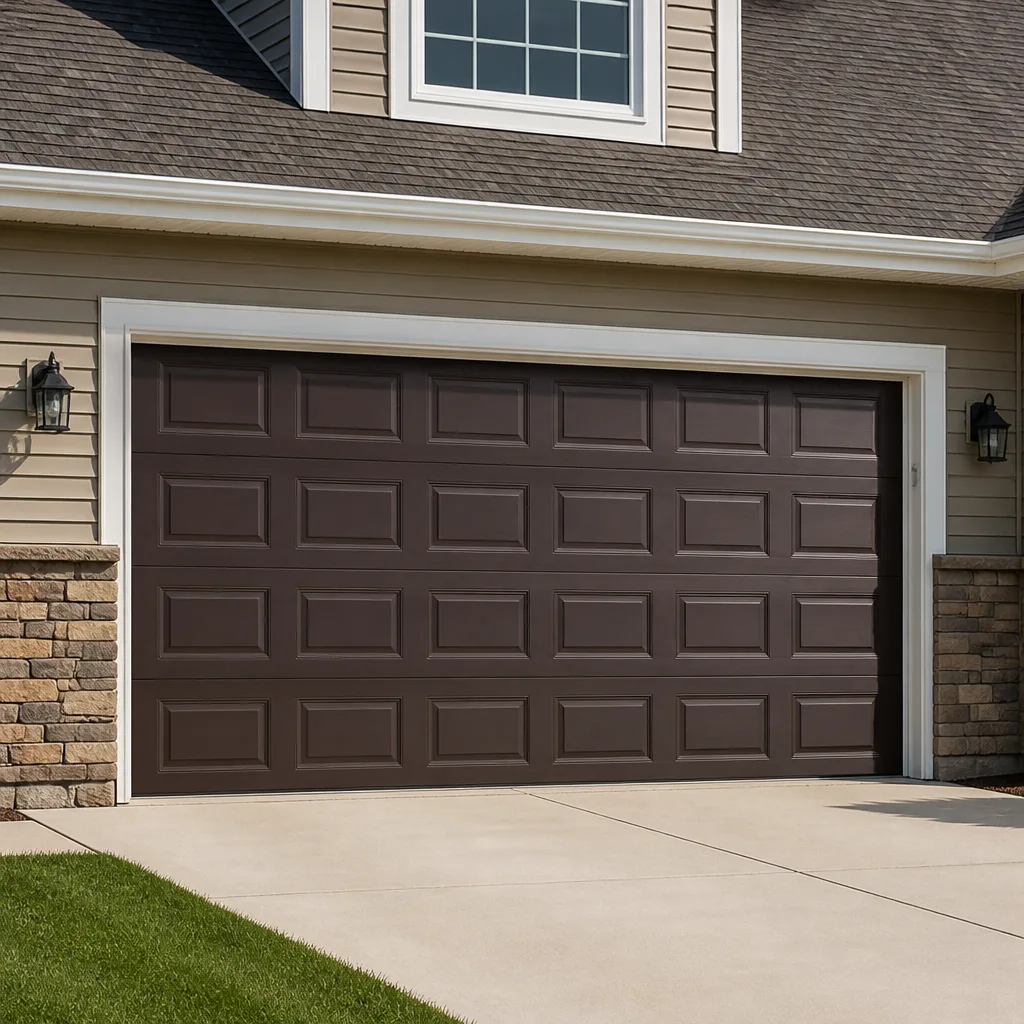 Raised-panel steel
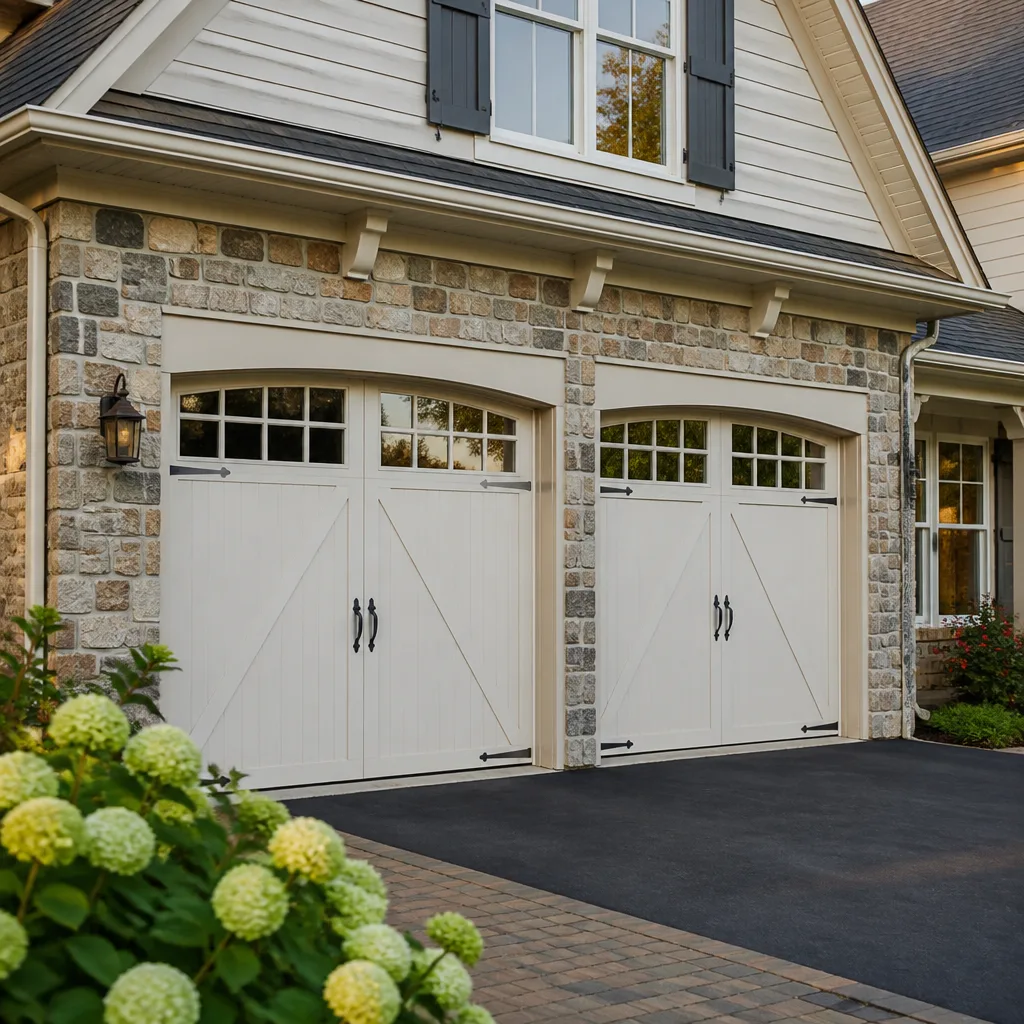 Carriage house
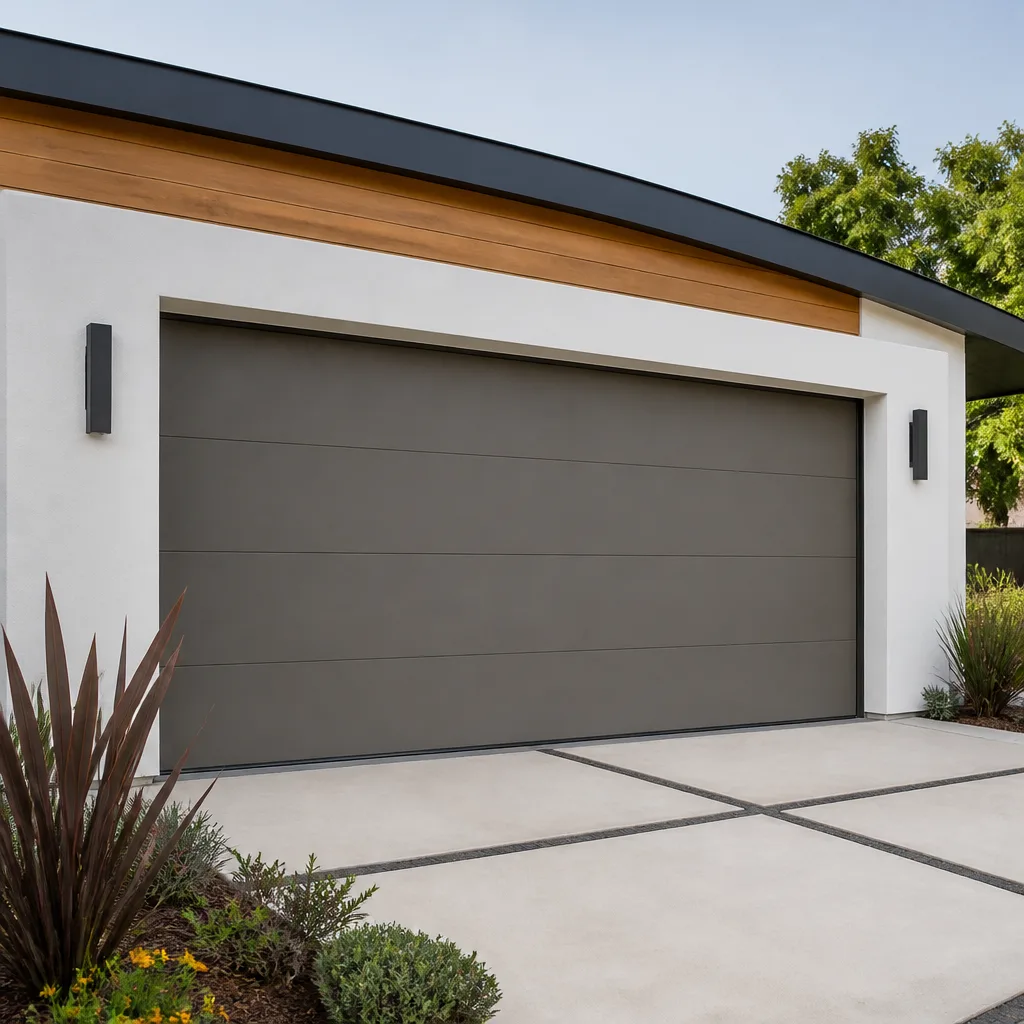 Modern flush
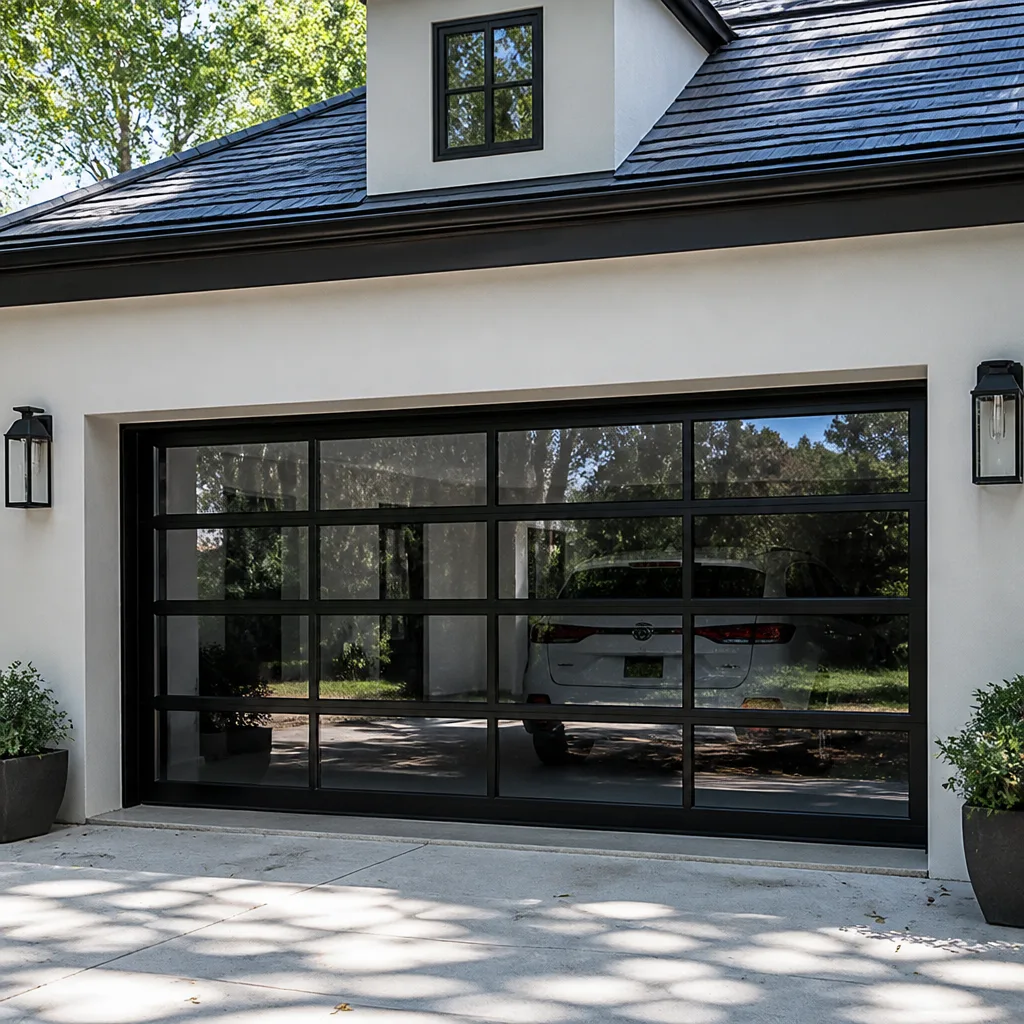 Full-view glass
 LiftMaster openers
 Chamberlain openers
Full 25-point door and opener safety check with every visit - springs, cables, rollers, tracks, and your LiftMaster or Chamberlain opener included
You get a price before we start. It does not change when the truck arrives.
Get your free estimateGarage Door Warning Signs: A Folsom Homeowner’s Reference Guide
Here’s a counterintuitive fact most Folsom homeowners don’t realize: the average garage door opens and closes roughly 1,500 times a year. That’s more cycles than your dishwasher, your washing machine, and your oven combined. And unlike those appliances, when a garage door fails, it rarely just stops working. It usually warns you first, for weeks or sometimes months, through sounds and movements you’ve learned to tune out. This guide separates the noises and quirks that mean a $40 sensor adjustment from the ones that mean a torsion spring is about to let go, and for more guides & resources, see our blog. By the time you finish reading, you’ll know exactly which warning signs in your Folsom garage demand action today, which can wait for scheduled service, and which ones mean you should stop using the door until a technician arrives.
Styles & brands we work with
- Raised-panel steel
- Carriage house
- Modern flush
- Full-view glass
- LiftMaster openers
- Chamberlain openers
Quick Answer
The most serious garage door warning signs in Folsom are a door that hangs crooked when opening, a loud bang followed by the door not moving, cables that look frayed or loose, and a door that reverses before touching the ground. The most common warning signs are grinding or squealing noises, slow or jerky movement, and an opener that runs but doesn’t move the door. Most warning signs fall into three tiers: monitor, repair soon, and stop using immediately, and knowing which tier you’re in determines whether you’re looking at a minor adjustment or a safety hazard.
Table of Contents
- The Three-Tier Warning Sign System
- What That Sound Actually Means: Grinding vs. Popping vs. Squealing
- Visual Checks You Can Safely Do From Ten Feet Away
- Opener Warning Signs Most Guides Ignore
- Warning Signs That Only Appear in Certain Conditions
- Why Folsom’s Climate Creates Specific Warning Patterns
- What These Warning Signs Cost to Fix in Folsom
- Common Mistakes to Avoid
- When to Call a Professional
- Frequently Asked Questions
- The Bottom Line
The Three-Tier Warning Sign System
Every garage door symptom falls into one of three categories, and the category matters more than the symptom itself. Most guides list warning signs as if they’re all equally urgent. They aren’t. A door that’s slightly noisy is annoying. A door with a failing torsion spring is a 200-pound object held up by a component that’s about to break. Here’s the system we use when homeowners in Folsom call us describing what their door is doing.
Tier 1: Monitor (Schedule Service When Convenient)
These signs mean the door is functioning but showing early wear. You have weeks, not days, to address them.
- Light squeaking or squealing when the door moves – usually dry rollers or hinges. Lubrication may help temporarily, but worn rollers will keep making noise until replaced.
- Door slightly out of balance when operated manually – if you pull the release cord and the door drifts up or down a few inches on its own, the springs are losing tension. Not urgent, but worth scheduling.
- Opener remote works intermittently – often a battery issue or minor signal interference, not a motor problem.
- Cosmetic rust on hardware – surface rust on hinges or brackets in a Folsom garage, especially one that gets damp in winter.
Tier 2: Repair Soon (Book Within a Week)
These signs mean a component is actively wearing out. The door still works, but every cycle adds stress to parts that are already compromised.
- Grinding noise without lubrication helping – rollers with flat spots or bearings that have failed.
- Door hesitates or jerks at a specific point in its travel – often a bent track or a worn roller catching.
- Opener runs but labors heavily – the motor is working harder than it should, which shortens its life the longer it goes unaddressed.
- Visible cable wear or minor fraying – not an emergency yet, but cables don’t heal. They only get worse.
- Door makes a popping sound once per cycle – often a roller passing over a dented track section or a hinge pin working loose.
Tier 3: Stop Using the Door Immediately
These signs mean the door is unsafe to operate. Close it if you can, leave it alone, and call for same-day service. In our experience with Garage Door Repair in Folsom, these are the calls where waiting made the problem significantly more expensive.
- Loud bang from inside the garage, door won’t move – a torsion spring has broken. The door may still open via the opener, but the opener is now lifting the full weight of the door alone, which will destroy the motor quickly.
- Door hangs crooked or one side sags – a cable has snapped or come off the drum. Every movement risks the door coming off its tracks entirely.
- Cables visibly frayed with strands sticking out – not a future problem. A present one.
- Door reverses before hitting the ground consistently – this can be a sensor issue (cheap fix), but if the sensors are clean and aligned and it still reverses, the door may be binding on a broken component.
- Any sound like metal under tension creaking or groaning – that’s the spring. It’s not a noise to investigate yourself.
A garage door that reverses before hitting the ground and a garage door with a broken torsion spring are both “not working right,” but one is a sensor adjustment and one is a same-day emergency that can send 200 pounds of steel crashing down. The tier system helps you tell the difference without guessing.
What That Sound Actually Means: Grinding vs. Popping vs. Squealing
Sounds are the most useful diagnostic tool you have, and most homeowners misinterpret them. Here’s what each sound points to, based on the mechanical reality of how garage doors work.
Grinding
Grinding is metal on metal without smooth rotation. The usual culprits are rollers. Nylon rollers wear down until the internal bearings fail, leaving the roller body to drag along the track instead of rolling. Steel rollers can develop flat spots. Either way, the door is scraping its way up and down instead of rolling, and that friction transfers to the opener, the hinges, and the track. On Wayne Dalton and Amarr doors with original factory rollers, grinding often appears first because the factory rollers are built to a price point, not a lifespan. The fix is usually a full roller replacement, which is a same-day job in most Folsom garages.
Popping
A pop or bang that happens once per cycle, at the same point every time, is usually a roller passing over a dented section of track or a hinge that’s binding. It can also come from a panel joint that’s flexing because a strut has come loose. Popping that gets louder over time is the track or hinge problem getting worse. Popping that happens randomly is often loose hardware, easy to fix but worth checking before the vibration works something loose enough to matter.
Squealing
Squealing is friction. In nearly every case, it’s dry metal on metal: rollers without lubrication, hinges that haven’t seen grease in years, or a bearing plate at the end of the torsion bar that’s gone dry. If lubrication quiets the squeal temporarily, that’s your answer. If the squeal returns within days, the component is worn past the point where lubrication helps. On Chamberlain and LiftMaster openers, a squeal from the motor unit itself usually means the drive gear is stripping, which is an opener repair issue rather than a door issue.
The Sound You Should Never Ignore
Torsion springs under load make a distinctive creaking or groaning sound just before they fail. It sounds like a heavy door opening slowly on old hinges. It’s not the spring itself you’re hearing, it’s the metal adjusting at the mounting points as the spring loses integrity. If you hear this, stop using the door. Do not try to inspect the spring yourself. We service Craftsman, Raynor, Clopay, and other major brands throughout Folsom, and every broken spring we’ve replaced that involved an injury started the same way: someone decided to take a closer look at a spring that was already giving audible warnings.
Visual Checks You Can Safely Do From Ten Feet Away
You don’t need to touch anything to learn a lot about your garage door’s health. Here’s what to look for from a safe distance, and here’s what requires a technician.
What You Can Check Yourself
- Cable condition – stand ten feet back and look at the cables running along each side of the door. They should be taut and smooth. If you see individual wire strands poking out anywhere, that’s a Tier 3 sign. If the cable looks slack when the door is closed, that’s also worth a call.
- Track alignment – the vertical tracks on either side should be parallel to the door frame. If one track curves inward or outward visibly, something has shifted.
- Roller condition – with the door closed, look at the rollers in the track. If you can see flat spots, chips, or if a roller is sitting at an angle instead of straight in the track, that’s wear.
- Panel alignment – the door panels should sit flush against each other. Gaps or misalignment between panels usually means a hinge problem.
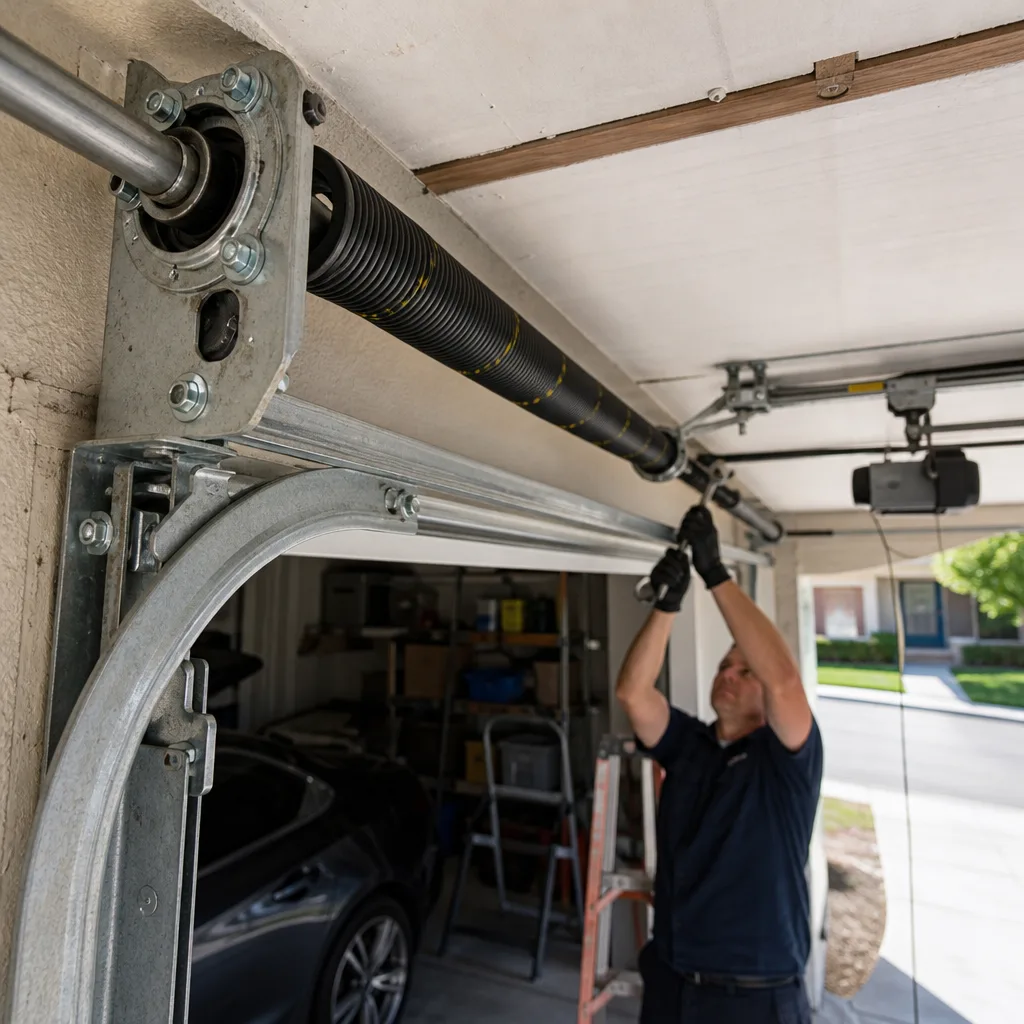
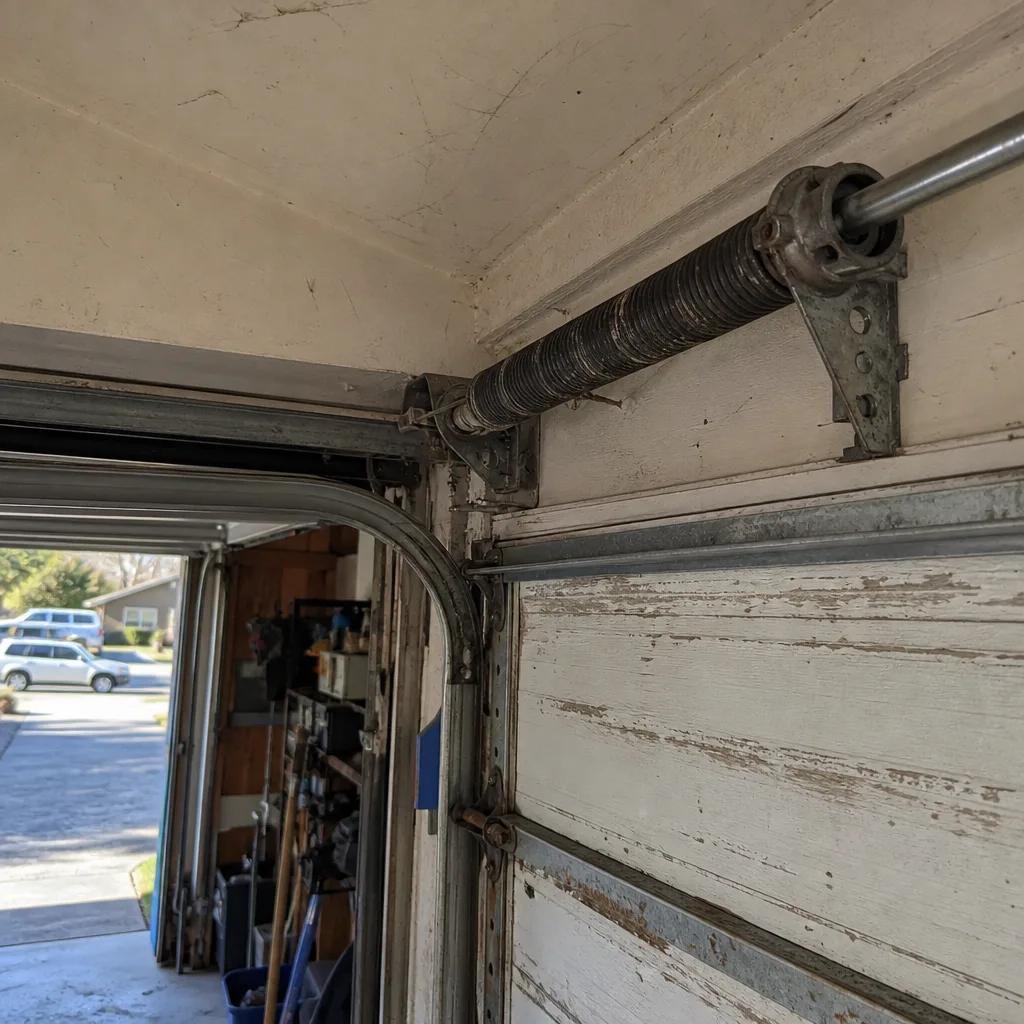
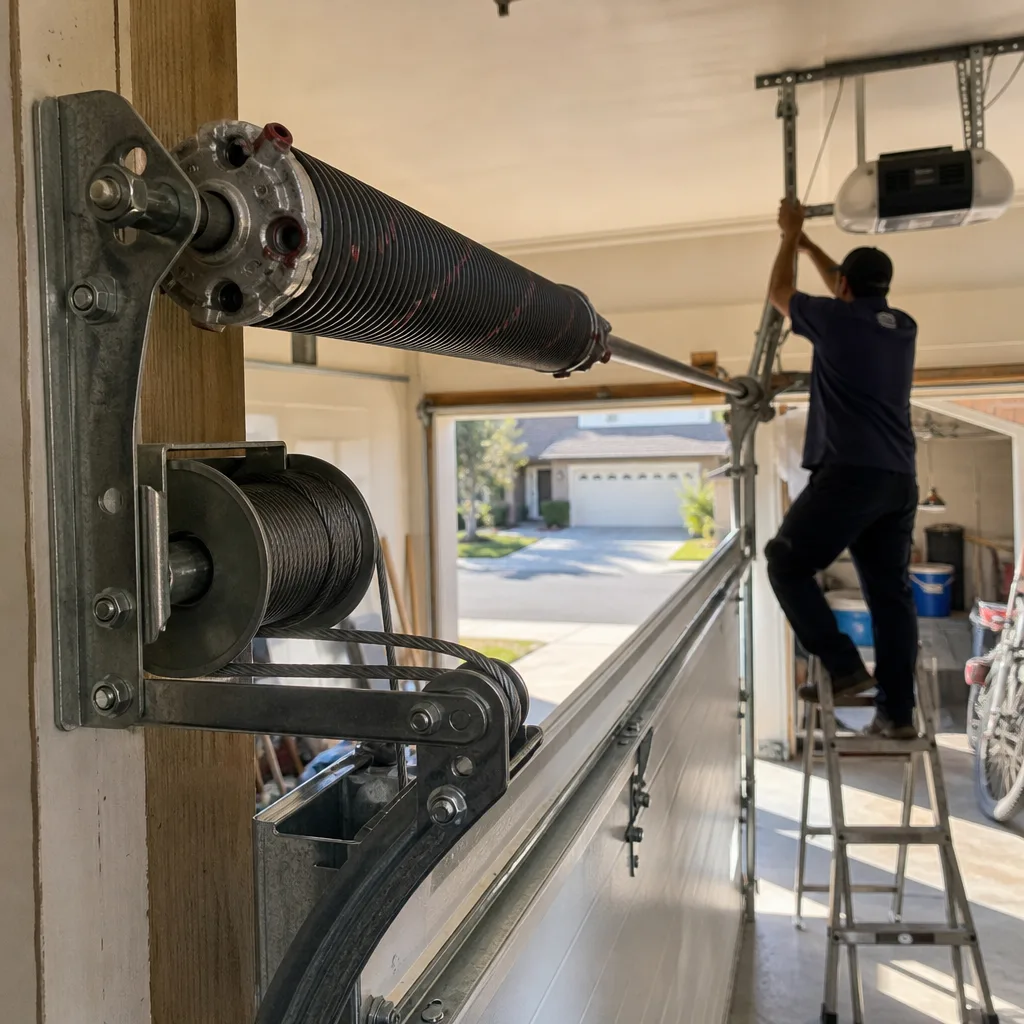
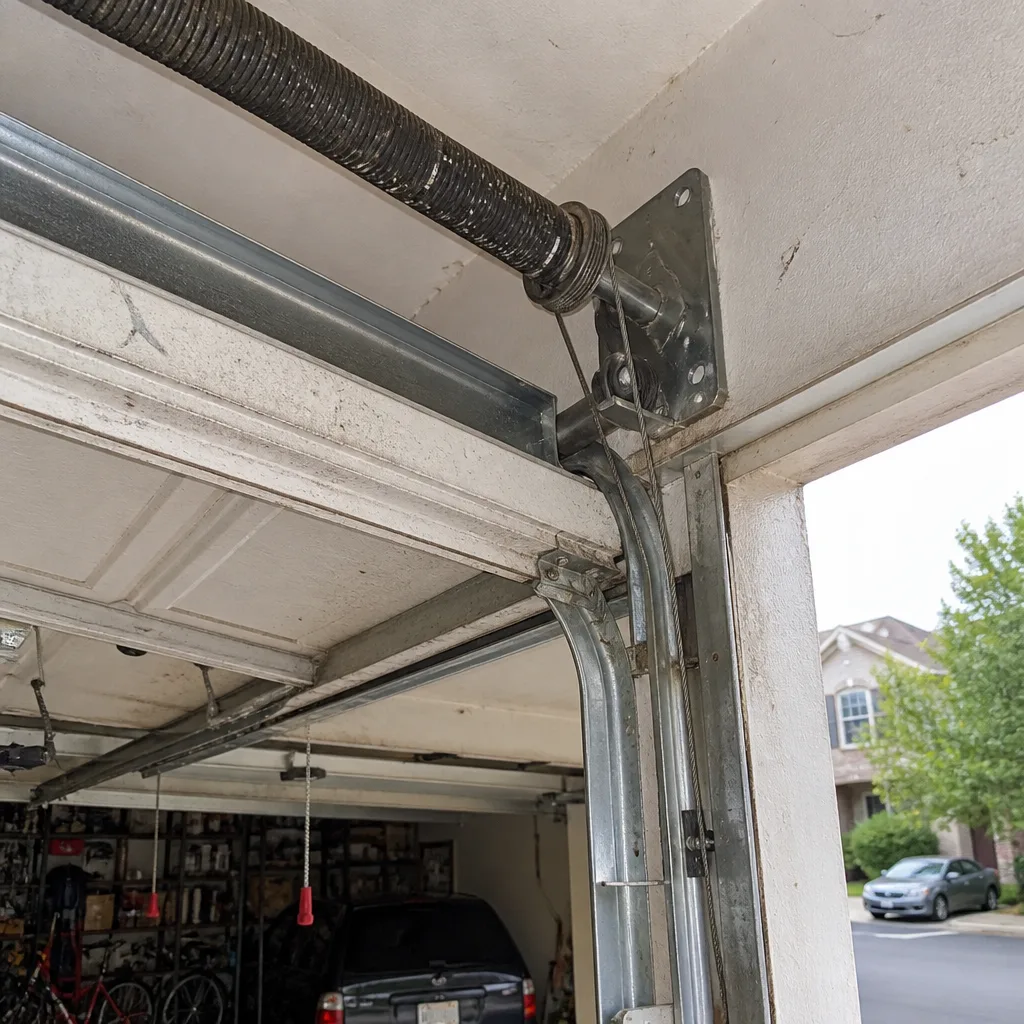
- Spring symmetry – if you have two torsion springs above the door, check whether they look the same. A broken spring has a visible gap in the coil. Don’t look from directly underneath; use a side angle.
- Weatherstripping – the rubber strip along the bottom of the door should be intact and making even contact with the floor across the full width.
What Requires a Technician
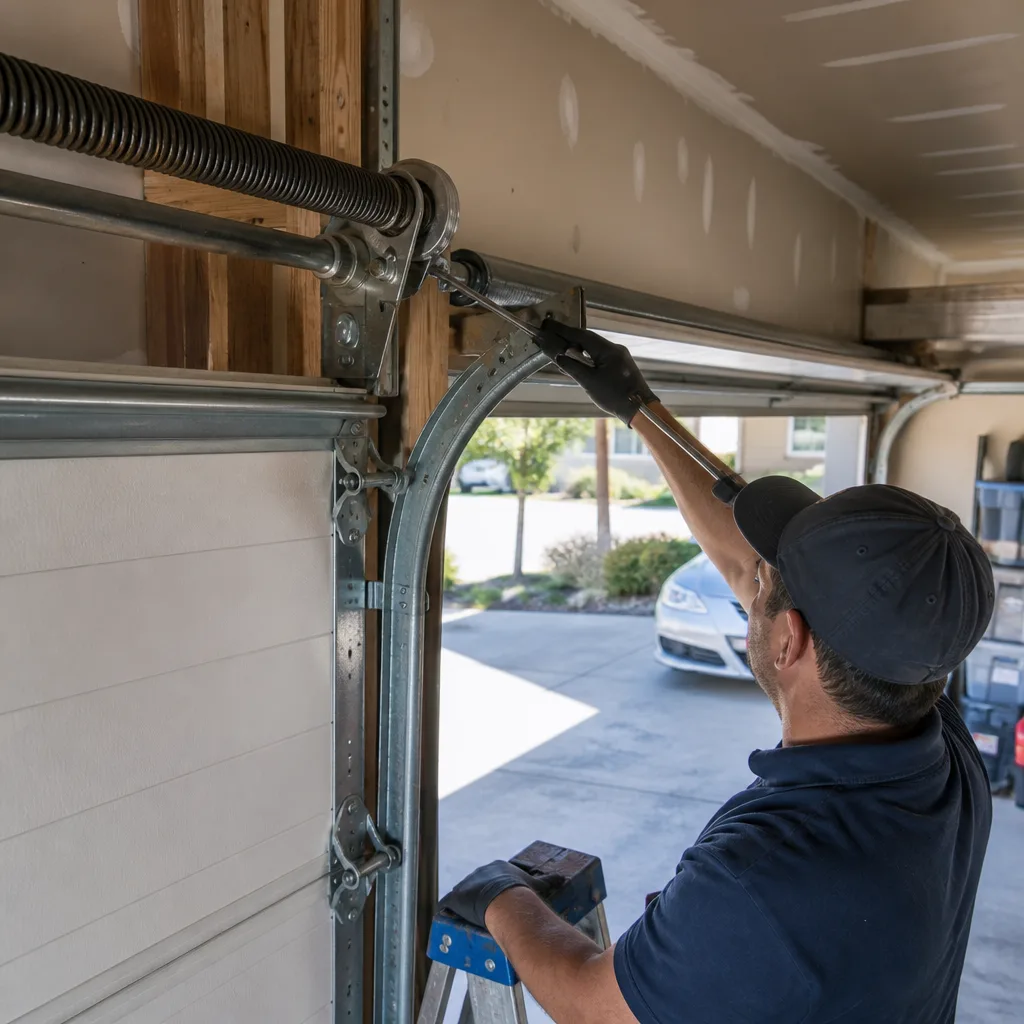
Anything involving the spring system, cables under tension, or the opener’s internal components is a technician job. Torsion springs store enough energy to break bones or worse if they release unexpectedly. Cables under tension can slice. The opener’s logic board and drive system are electrical components that don’t reward amateur inspection. If your visual check from ten feet away raises a question about any of these areas, the answer is a phone call, not a ladder.
Opener Warning Signs Most Guides Ignore
Most garage door warning sign guides stop at the door itself. That’s a problem, because in our experience, roughly a third of “door problems” we see in Folsom are actually opener problems. The motor, logic board, and drive system have their own failure modes, and they’re easy to miss if you’re only listening to the door.
Signs the Opener Is Failing, Not the Door
- The opener runs but the door doesn’t move – the motor turns, but nothing happens. On Genie and older Chamberlain units, this usually means a stripped drive gear or a broken belt. The motor is fine; the connection between the motor and the door has failed.
- The opener reverses immediately after starting to close – if the door goes down six inches, stops, and comes back up, the issue is usually the safety sensors or the close-force setting. If the sensors are clean and aligned, the force setting may need adjustment, which is a technician task on most modern openers.
- The opener makes a humming sound but doesn’t start – the capacitor or the start winding in the motor has failed. This is a component-level repair that’s usually cheaper than a full opener replacement.
- The remote only works from a few feet away – deteriorating receiver sensitivity. Sometimes interference from LED bulbs in the garage, sometimes the receiver board itself is failing.
- The wall button works but remotes don’t – the logic board is likely the issue, not the remotes. If one remote fails, it’s the remote. If all remotes fail while the wall button works, it’s the opener.
- The door opens fully but the opener keeps running for a second or two – the travel limit settings have drifted or the limit switch is failing. This adds unnecessary wear to the motor every single cycle.
Here’s the practical takeaway: if your door makes noise but moves smoothly, the problem is the door. If the door moves erratically, reverses on its own, or the opener unit itself is making sounds, the problem is the opener. We repair both, because a door problem left unaddressed destroys openers, and an opener problem left unaddressed can damage the door. Garage Door Opener Repair in Folsom covers the motor, logic board, and drive systems on every major brand.
Warning Signs That Only Appear in Certain Conditions
Some garage door problems only show up when the conditions are right. If you’ve ever thought “my door is fine, it only acts up sometimes,” this section is for you. Intermittent problems are still problems, and they’re often the ones that turn into expensive failures at the worst possible moment.
Cold Mornings
Metal contracts in cold weather. The tolerances in your track and roller system get tighter. A door that works fine at 2 p.m. but groans or hesitates at 6 a.m. in January is telling you that the track spacing or roller clearance is marginal. Folsom winters are mild compared to the Sierra foothills, but we still get mornings in the 30s, and that’s enough to expose the issue. For more on this, read our Seasonal Garage Door Care for Folsom: Year-Round Homeowner’s Guide. Springs also stiffen in cold weather, which means a spring that’s already losing tension will show it more on cold mornings.
After Rain
Wood composite doors absorb moisture and get heavier. That heavier door puts more load on the springs, opener, and cables. If your door moves slower or labors after a rainy stretch, the system was already marginal and the added weight is pushing it over the edge. Also check the weatherstripping: if water pools inside the garage near the door, the bottom seal is failing, and that moisture accelerates rust on every metal component.
Under Load
A garage with a heavy vehicle parked inside, or a garage that’s used as a workshop with heavy equipment, puts different demands on the door than an empty garage. The safety reversal system has to work harder. The floor may have settled slightly, changing the closed-door position. If your door only hesitates or groans when the garage is full, it’s not your imagination. The system is working under different conditions than it was installed for.
Why Folsom’s Climate Creates Specific Warning Patterns
Folsom has a specific climate profile that affects garage doors in ways that Sacramento, Roseville, or El Dorado Hills don’t experience identically. We’re on the valley floor with hot, dry summers and cool, damp winters. That combination creates predictable failure patterns.
The summer heat is the bigger factor than most homeowners realize. Garage interiors in Folsom regularly exceed 110 degrees in July and August, even when outside air is 95. That heat dries out the lubrication in rollers and hinges faster than in coastal climates. It also causes metal tracks to expand slightly, which means a track that was installed with marginal clearance becomes a binding track in August. We see a spike in roller and hinge failures every July, and it’s not a coincidence.
Winter brings the opposite problem. Cool, damp air from the morning fog means bare metal surfaces, particularly on older steel doors, develop surface rust that no one notices until the rust reaches a hinge pin or a roller bearing. The damp also affects the opener’s circuit boards. Condensation inside the motor unit is rare but not unheard of, and it’s more common in Folsom garages that are poorly insulated or that face north.
If you’re seeing warning signs that seem seasonal, trust what the door is telling you. Seasonal signs are still signs. The component is marginal. The weather is just the variable that exposes it.
What These Warning Signs Cost to Fix in Folsom
Talking about warning signs without talking about cost is only half the conversation. Here’s what Folsom homeowners can expect to pay for the most common repairs, in the current local market. These are the ranges we see for residential work in the Folsom area.
- Roller replacement (all rollers, nylon) – $140 to $220 on most doors. Steel rollers run less. This fixes grinding and most squealing.
- Hinge replacement (one or two hinges) – $80 to $150 depending on the hinge location and door weight.
- Cable replacement (single cable) – $160 to $220. Often recommended as a pair, which brings the total to $240 to $350.
- Torsion spring replacement (single spring) – $220 to $320. Most Folsom homes have two springs; expect $350 to $500 for a pair with labor included.
- Track realignment – $120 to $200 for a standard realignment. If the track is bent and needs replacement, the cost goes up.
- Safety sensor replacement or alignment – $100 to $160. Often the cheapest fix on the list and the most common cause of a door that won’t close.
- Opener drive gear replacement – $180 to $260. Makes sense when the opener is less than 8-10 years old.
- Full opener replacement – $450 to $900 installed, depending on the model and features.
Every price is quoted and agreed before any work starts. You’ll never get a bill that surprises you, and you’ll know the cost before the technician picks up a tool. If you’re in Folsom and seeing any of the warning signs in this guide, Garage Door Service Folsom home offers free estimates on all repair work. Call (877) 318-4983 for an exact quote on your specific door and opener.
Common Mistakes to Avoid
- Ignoring a noisy door because it still works. Noise is the earliest warning sign you’ll get, and it’s the cheapest to address. A squealing roller today is a seized roller next year, and a seized roller damages the track every time the door moves.
- Lubricating the tracks. Garage door tracks should never be lubricated. Lubricant on the tracks attracts dust and grit, which creates a grinding paste that accelerates roller wear. Lubricate the rollers, hinges, and bearings. Leave the tracks alone.
- Continuing to use the door after a loud bang. If a spring breaks and you keep operating the door with the opener, you’re asking the opener to lift the full weight of the door by itself. That’s a $700 opener being destroyed to avoid a $300 spring repair.
- Replacing remotes before checking the opener. If every remote stopped working at the same time, the problem is not the remotes. It’s the receiver in the opener. New remotes won’t fix it.
- Attempting spring repair as a DIY project. Torsion springs are under enough tension to cause serious injury or death. This is the one repair where “I’ll watch a YouTube video” is genuinely dangerous. Every year, homeowners are injured attempting spring work. It’s not worth it.
- Waiting until the door stops working entirely to call. The difference between a $150 roller replacement and a $500 track-and-roller job is usually a few months of ignoring the grinding noise. Same for cables: a frayed cable is a $200 fix. A snapped cable that drops the door on your car is a much bigger problem.
- Assuming a slow door is just old. A garage door is designed to move at a specific speed. Slow movement means resistance somewhere: worn rollers, a failing opener, or a spring that’s lost tension. None of those fix themselves.
When to Call a Professional
If you’re seeing any Tier 3 warning sign, stop using the door and call today. That includes a broken spring, frayed or snapped cables, a door that hangs crooked, or any sound of metal under tension. These are safety issues, not convenience issues. For Tier 2 signs, schedule service within a week to prevent the problem from escalating into a Tier 3 situation. For Tier 1 signs, you have time, but the repair doesn’t get cheaper by waiting. Garage Door Service Folsom offers free estimates in Folsom. Call (877) 318-4983, describe what your door is doing, and we’ll tell you which tier you’re in and what it costs to fix. We work on all eight major brands including Amarr, Wayne Dalton, Craftsman, and Raynor, and we repair both the door and the opener in a single visit.
Frequently Asked Questions
Garage door spring repair in Folsom typically costs $220 to $320 for a single torsion spring and $350 to $500 for a pair, including labor. The exact price depends on your door’s weight, spring size, and whether you have one spring or two. Call (877) 318-4983 for an exact quote. Estimates are free.
Yes, in most cases we can repair your garage door the same day you call, especially for Tier 3 emergencies like broken springs or snapped cables. We carry common springs, rollers, cables, and opener parts on our trucks so we can complete most repairs in a single visit. Call (877) 318-4983 and we’ll tell you when we can be there.
No. The price is quoted and agreed before any work starts, and it does not change unless you approve additional work. If the technician finds something else during the repair, you’ll get a separate quote for that work before anything is done. No surprises.
Yes. Our trucks are stocked with the most common repair parts: springs in the sizes used on most Folsom residential doors, cables, rollers, hinges, safety sensors, and opener components. Most repairs are completed in one visit with no parts-ordering delay.
Noise is the earliest warning sign and the cheapest to fix. A grinding or squealing sound today is usually worn rollers, which cost $140 to $220 to replace. If the rollers seize, they damage the track, and the repair cost can double or triple. Addressing the noise now is cheaper than addressing it later.
We service all eight major residential garage door brands: LiftMaster, Chamberlain, Genie, Clopay, Amarr, Wayne Dalton, Craftsman, and Raynor. That means when we diagnose your door or opener, we’re looking at the actual system you have, not applying a generic fix. Garage Door Installation in Folsom is also available if your door is beyond repair.
The Bottom Line
Your garage door gives you warnings long before it fails. The skill is knowing which warnings matter. Sounds have specific meanings: grinding means rollers, popping means track or hinge, squealing means friction. Visual cues from ten feet away tell you whether cables and springs are healthy without putting you in harm’s way. Opener problems have their own signature. And Folsom’s climate means some warnings show up only in specific seasons. The tier system in this guide is the practical takeaway: monitor, repair soon, or stop using the door. If you’re not sure which tier you’re in, describe the symptom over the phone and we’ll tell you. Call (877) 318-4983. Garage doors only. We know this system.
Written by the team at Garage Door Service Folsom, serving Folsom since 2016.
See the difference
 Before
 After
 Before
 After
 Before
 After