
Last updated November 3, 2026
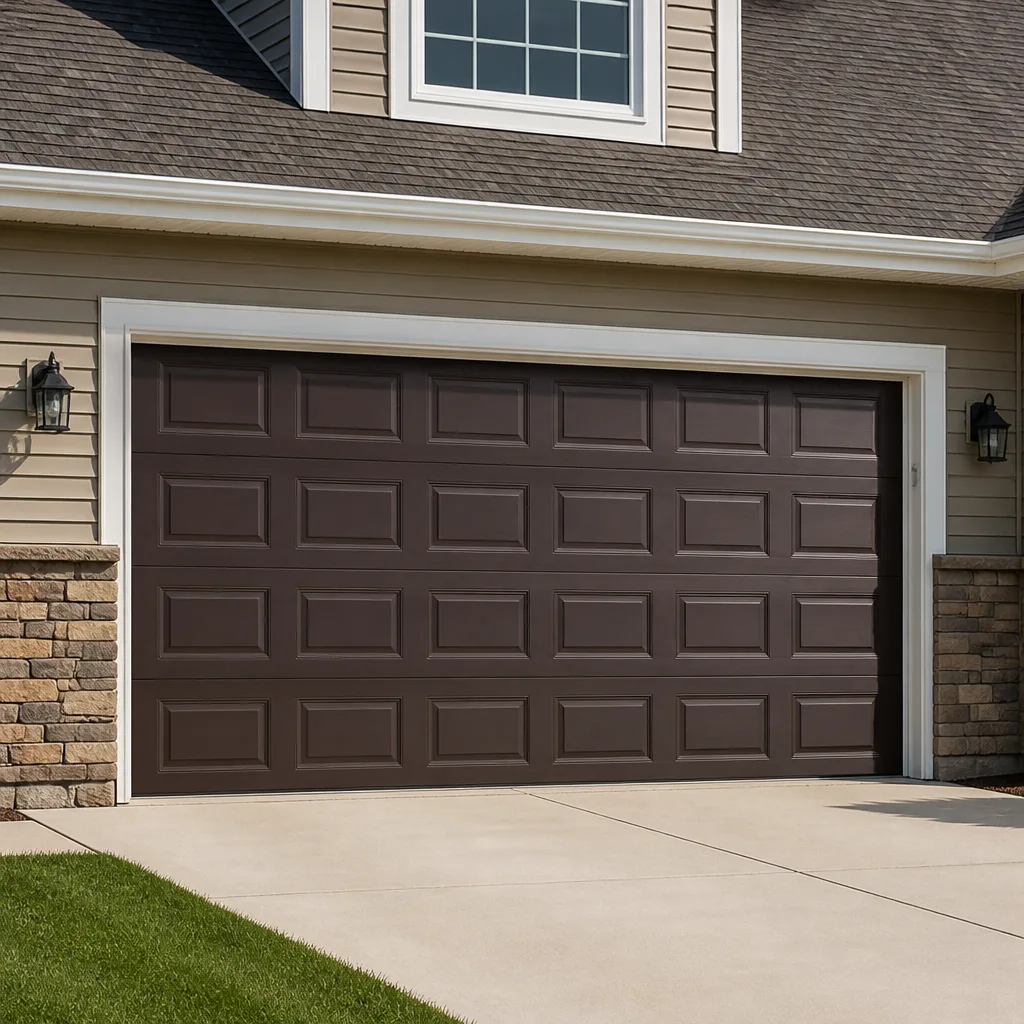 Raised-panel steel
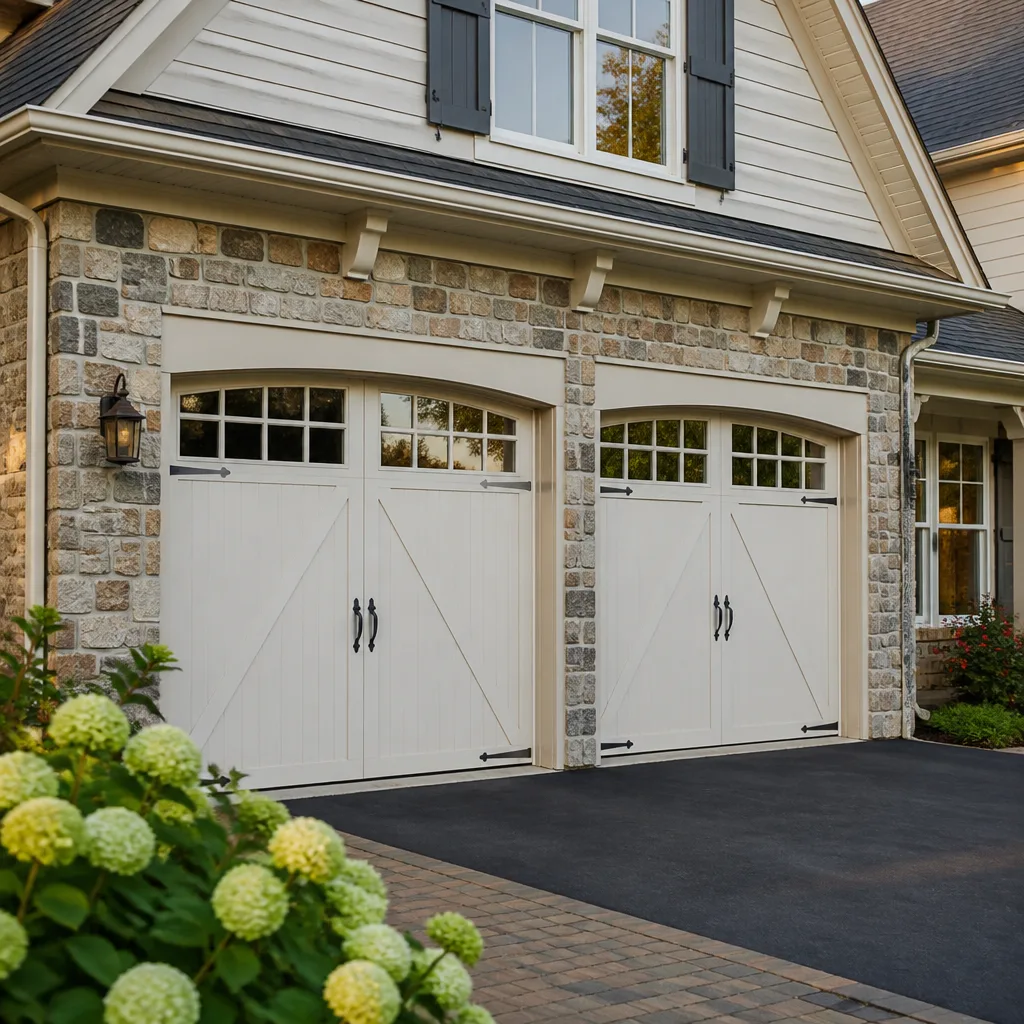 Carriage house
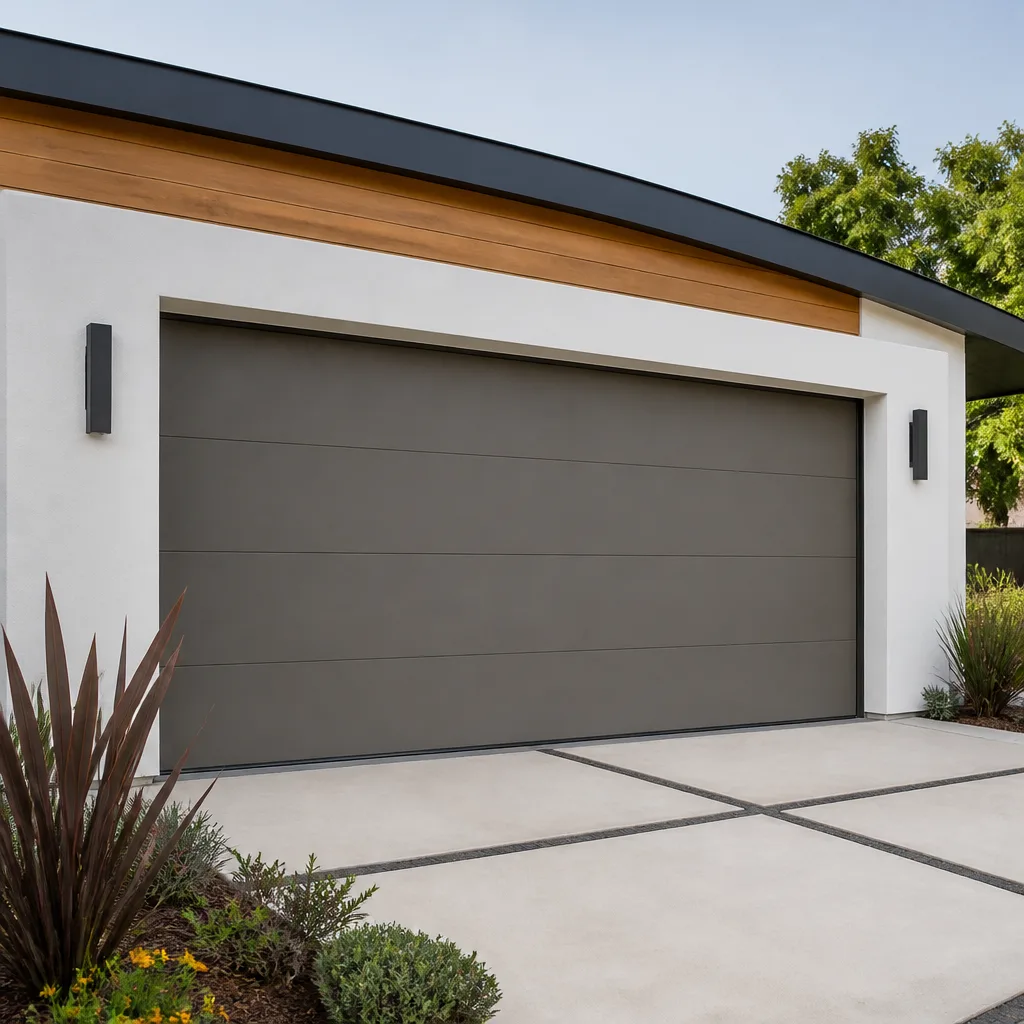 Modern flush
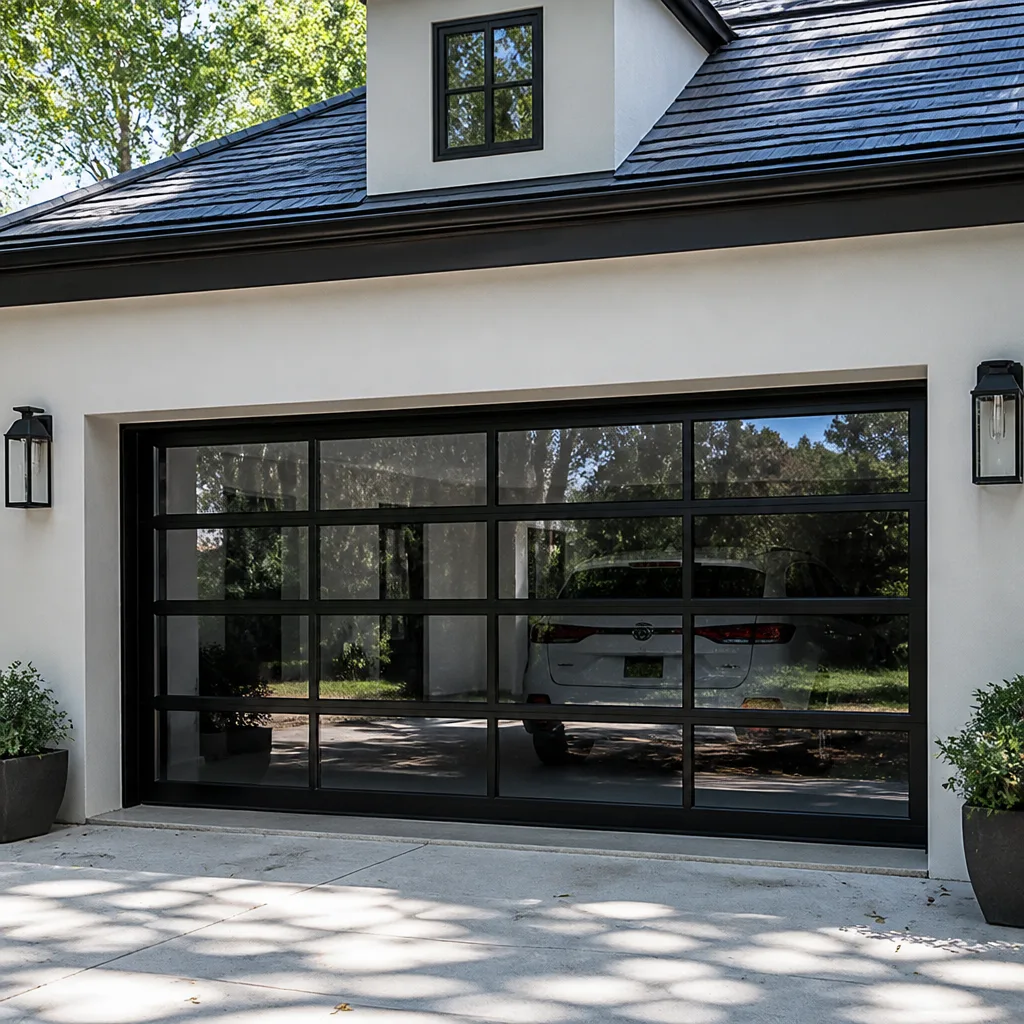 Full-view glass
 LiftMaster openers
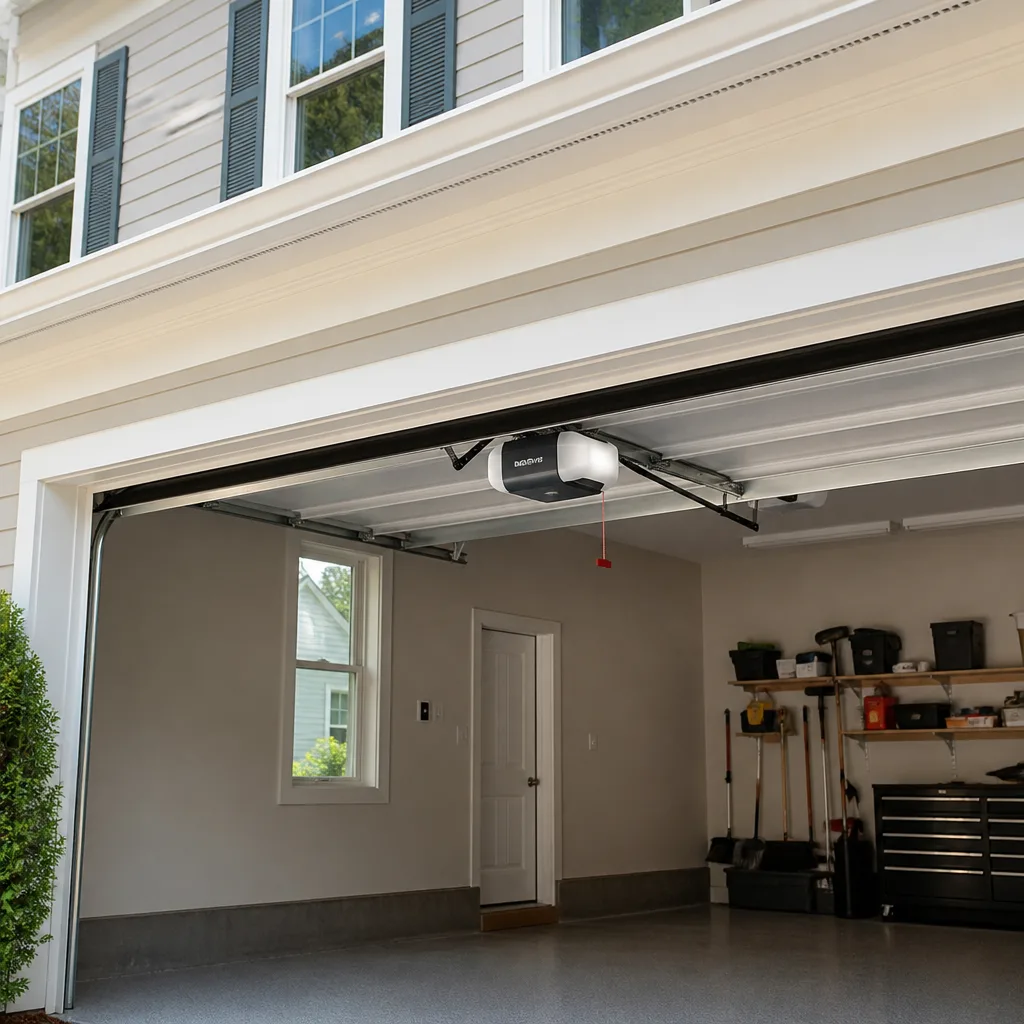 Chamberlain openers
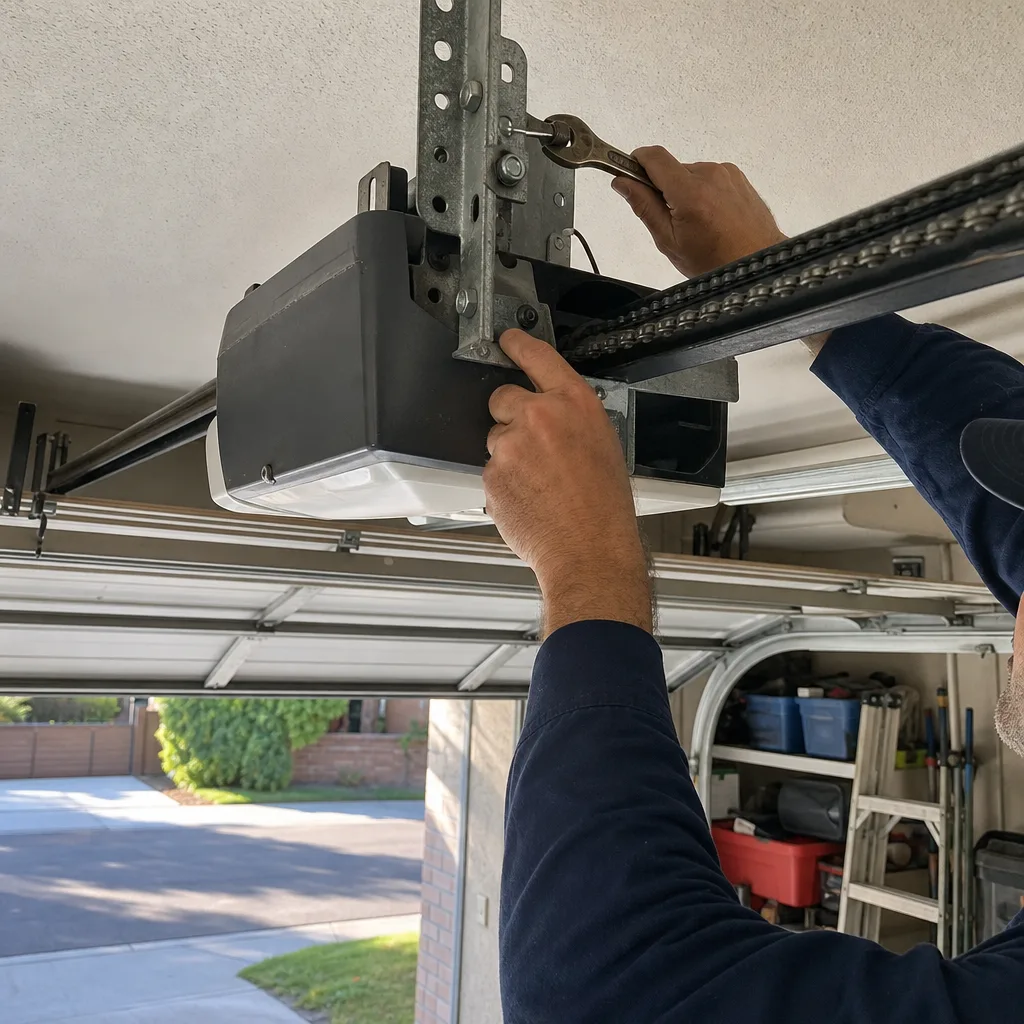
Full 25-point door and opener safety check with every visit - springs, cables, rollers, tracks, and your LiftMaster or Chamberlain opener included
You get a price before we start. It does not change when the truck arrives.
Get your free estimateSeasonal Garage Door Care for Folsom: Year-Round Homeowner’s Guide
Most garage door maintenance guides you’ll find online were written for places with real winters. Minneapolis gets sub-zero cold snaps that make metal brittle. Atlanta gets humidity that warps wood panels. Neither describes Folsom, where July pushes 108°F, the rainy season arrives in a two-month burst that can drop three inches in a week, and fall means oak leaves piling against your door seal from neighborhoods that back up to El Dorado Hills. This guide is written for the climate we actually live in, the one that beats on your garage door in ways those other guides never mention. We’ll walk through what Folsom’s four distinct seasonal patterns do to your door, what to check month by month, and when a problem is worth a professional look before it turns into a no-open situation at 7 a.m. on a workday.
Quick Answer
Seasonal garage door care in Folsom means adjusting your maintenance routine around four local climate patterns: dry summer heat above 95°F that stresses torsion springs, fall oak and pine debris that clogs tracks and bottom seals, winter rain followed by cold nights that accelerates rust on hardware, and a spring transition where everything needs a thorough inspection. The most important tasks are lubricating moving parts twice yearly, clearing debris from tracks and seals each fall, and testing the door’s balance and auto-reverse features every season. Most homeowners can handle basic upkeep in under 30 minutes per season, but spring, track, and opener issues require a trained technician. For deeper background, see our Complete Garage Door Repair Guide for Folsom Homeowners.
Styles & brands we work with
- Raised-panel steel
- Carriage house
- Modern flush
- Full-view glass
- LiftMaster openers
- Chamberlain openers
Table of Contents
- Why Folsom’s Climate Breaks the Standard Seasonal Model
- Summer Heat and What It Does to Torsion Springs
- Debris Season: When El Dorado Hills Comes to Your Door
- Wet Season: The Rust You Don’t See Coming
- Spring Transition: The Annual Deep-Check
- Folsom Month-by-Month Garage Door Calendar
- The Lubrication Routine That Actually Works
- Common Mistakes to Avoid
- When to Call a Professional
- Frequently Asked Questions
Why Folsom’s Climate Breaks the Standard Seasonal Model
If you’ve ever read a garage door care guide that says “prep your door for freezing temperatures” or “watch for humidity warping in summer,” you’ve read advice written for somewhere else. Folsom has essentially two seasons that matter for your door: a long, hot, dry stretch from June through September, and a compressed wet period from December through February. Spring and fall are transition windows that each last about six to eight weeks. What makes our climate unusual for garage door hardware is the swing between extremes. A door that sits in direct afternoon sun on a south-facing Folsom home can reach surface temperatures well above 130°F in August. Then, three months later, nighttime temperatures dip into the 30s while rain saturates every exposed piece of metal. That’s a thermal cycle most guides don’t account for, and it’s exactly the cycle that shortens spring life and promotes rust in Folsom more than in coastal California.
What this means for homeowners: your maintenance schedule should not look like a national checklist. You don’t need to winterize in November the way a Chicago homeowner does. You need to do two serious inspections per year, one in October before debris and rain arrive together, and one in April after the wet season ends. Everything between those two inspections is light-touch monitoring and lubrication.
Key Takeaways
- Folsom’s climate stress comes from heat and moisture cycling, not freezing
- Two detailed inspections per year beat spread-out monthly rituals
- South-facing and west-facing doors in Folsom take the most thermal abuse
- Hardware failure here is gradual, not sudden, which means early detection matters
Summer Heat and What It Does to Torsion Springs
Sustained heat above 95°F is the single biggest factor in torsion spring wear for Folsom garage doors. Torsion springs are rated for a certain number of cycles, usually 10,000 on a standard spring. That rating assumes normal operating temperatures. When a spring sits in a garage that hits 110°F or more during a July heat wave, the steel expands and contracts daily, and the spring’s internal tension shifts slightly each time. Over the course of one Folsom summer, that repeated micro-expansion can take the equivalent of a year or more off a spring’s service life compared to a door in a mild coastal climate.
We’ve worked on doors throughout Folsom where springs that should have lasted seven or eight years failed at five because the garage had no ventilation and the homeowner never knew the heat was a factor. The signs to watch for after any extended heat wave:
- A door that feels heavier when you lift it manually
- A visible gap in the spring coil, even a small one
- Grinding or squeaking that gets louder after several hot days
- The opener struggling more than usual, especially on the first open of the day
Lubricating torsion springs during summer months helps marginally, but the real protective measure is checking tension at the start of summer and again at the end. If the door is balanced correctly in May, it should stay balanced through September unless the spring is nearing the end of its life. That post-summer check in late September or early October is the one that catches a spring about to fail before it snaps. For doors with LiftMaster or Chamberlain openers, the motor will often compensate for a weakening spring by working harder, which masks the problem and shortens opener life. If you hear your opener groaning on hot afternoons, that’s often the spring asking for attention, not the motor.
Debris Season: When El Dorado Hills Comes to Your Door
October and November in Folsom bring a specific problem that national maintenance guides skip entirely. The oak trees that line the older neighborhoods, and the pines that dominate lots near the El Dorado Hills border, drop an enormous volume of material in a six-week window. Leaves, pine needles, acorns, and small twigs work their way into the gap along the bottom of your garage door, settle into the track channels, and accumulate around the photoelectric sensors. We’ve seen doors in the Briggs Ranch and American River Canyon areas come to a stop mid-cycle because a single acorn wedged itself perfectly between the roller and the track.
The bottom seal is where most of the damage happens. Your garage door’s bottom seal, the rubber strip along the bottom edge, is designed to compress slightly against the concrete. Debris caught under it compresses the rubber unevenly, and over the course of a fall season, that uneven compression creates permanent gaps. Once that seal has gaps, winter rain follows the same path and you get water at the base of your door, warped weatherstripping, and eventually rust on the bottom panel.
- In mid-October, sweep or blow out the track channels on both sides of the door. A leaf blower works well; just aim upward from the bottom and clear the full length.
- Inspect the bottom seal for debris caught in the rubber folds. Pick out leaves and needles by hand; a flathead screwdriver can help with wedged acorns.
- Check the area where the door meets the ground. Scrape away any built-up leaf matter that’s touching the door or seal.
- Wipe down the photoelectric sensor lenses. Pollen and fine debris from fall trees will coat them and trigger false obstructions.
- If you have a Clopay or Amarr door with a steel bottom panel, check the bottom edge for scratches where debris was dragged. Touch up any exposed metal with paint before wet season.
This is also the right time to test your door’s auto-reverse feature, since sensor obstruction and debris interference peak in fall. Set a 2×4 flat on the ground under the door and close it. It should reverse within two seconds of touching the wood. If it doesn’t, stop using the door until a professional has checked it. Garage Door Service Folsom handles Garage Door Repair in Folsom for exactly this kind of issue, door and opener both.
Wet Season: The Rust You Don’t See Coming
Folsom’s wet season is short, but it’s concentrated. December through February brings most of our annual rainfall, often in bursts that drop several inches over a few days. The pattern that causes real damage goes like this: rain saturates the air and gets into every seam and joint in your door’s hardware, then a cold night drops temperatures into the 30s. That’s a rust-friendly cycle. Bare steel parts, especially hinges, roller stems, and the bracket where the track attaches to the wall, start corroding within weeks of the first wet period if they haven’t been maintained.
What surprises many Folsom homeowners is that this rust damage often goes unnoticed until spring. The hinges still work, the door still opens, so nothing looks wrong. Then in March or April, during that first hot spell, a hinge that has been quietly corroding seizes. The door jolts mid-cycle, the opener strains, and suddenly a $40 hinge replacement becomes a repair that pulls the door out of alignment. We’ve responded to calls where rusted hinges caused a roller to pop out of the track entirely.
Your wet-season checklist:
- Apply a thin coat of spray lubricant to all hinge points in early December, before the heaviest rain
- Check that the weatherstripping along the sides and top of the door is intact and sealing. Gaps let rain in and concentrate moisture on hardware
- Look for rust spots starting on hinges and brackets at the end of January. Early rust is surface-level and treatable; ignored rust is structural
- Keep the bottom of the door clean. Standing water against the bottom panel for extended periods accelerates corrosion on any exposed metal edge
If you have a Raynor or Wayne Dalton door with steel components, pay extra attention to bracket connections. Those two brands use specific bracket designs that collect water differently than other manufacturers. The good news is that early rust treatment is simple: wire brush the surface, apply a rust-inhibiting primer, and the hardware keeps working for years. That’s the kind of garage door service Folsom homeowners need before a small rust spot becomes a bracket failure.
Spring Transition: The Annual Deep-Check
March through May in Folsom is when everything that winter did to your door becomes visible. The ground dries out, temperatures warm up, and parts that absorbed moisture through the wet season start to move differently. This is the window for your most thorough inspection of the year, the one that sets up your door for summer heat and catches anything winter damaged before it worsens.
A proper spring deep-check takes about 45 minutes and should cover these items in order:
- Visual inspection of all hardware. Look at every hinge, bracket, and bolt. Rust that started in winter will be visible now. Loose bolts will be easier to spot because the door has been through enough cycles for movement to show.
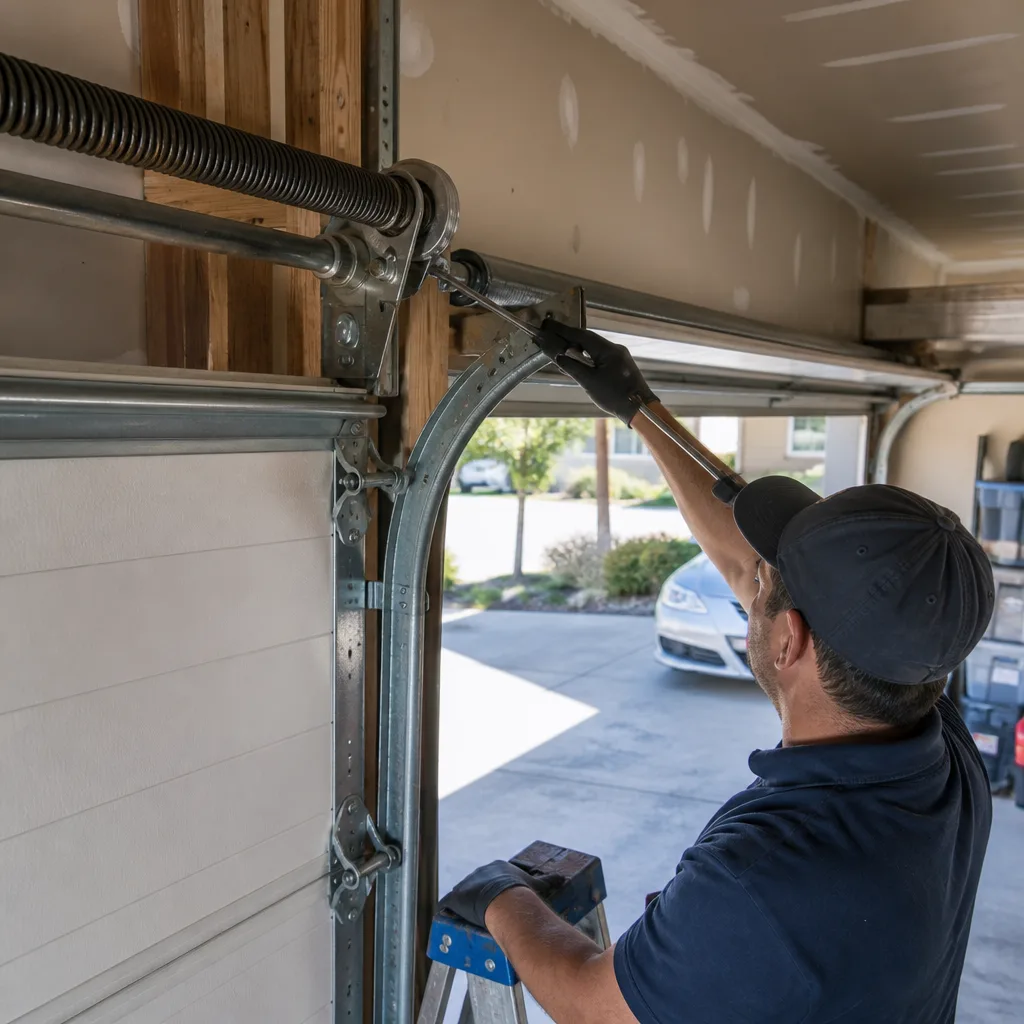
- Balance test. Disconnect the opener (pull the red cord) and lift the door by hand. It should move smoothly, stay in place roughly at waist height, and require minimal effort. Any sticking, sagging, or a door that drops means a spring or cable issue.
- Track alignment check. The tracks should be parallel to the door edges all the way up. If winter ground movement shifted the slab even slightly, tracks that were fine in fall may be out of alignment now.
- Cable inspection. Look for fraying on the lift cables on both sides. This is also a good time to check that both cables are carrying equal tension.
- Opener test. Run a full open and close cycle with the opener connected. Check that the force settings are correct by testing the auto-reverse feature with a 2×4.
- Lubrication. After the inspection, apply lubricant to hinges, rollers, springs, and the opener rail. Spring is one of the two main lubrication points in Folsom, along with fall.
If your spring check turns up a fraying cable or a spring that’s lost tension, that’s a repair we handle every week. Garage Door Installation in Folsom is a separate service, but most spring-check issues are repairable rather than replacement candidates. The distinction matters for your budget.
Folsom Month-by-Month Garage Door Calendar
If you want a simple reference to stick on the inside of your garage cabinet, here it is. This calendar reflects Folsom’s actual climate pattern, not a generic four-season model. Most months require nothing from you. The months that matter are concentrated in two windows.
January and February
- Check for rust on hinges and brackets after each significant rain event
- Verify the bottom seal is keeping water out; look for damp spots inside the garage after storms
- Listen for unusual sounds from the opener during cold mornings
March
- Start the spring deep-check described above
- Address any rust found during winter
- Test the auto-reverse feature
April
- Complete the spring deep-check if not finished in March
- Lubricate all moving parts
- Schedule any needed repairs before summer heat arrives
May through August
- Monitor for heat-related spring symptoms: heavy door, gap in coil, opener strain
- Lubricate once in mid-summer if the door gets heavy daily use
- Keep tracks clear of dust and cobwebs, which build up faster in dry summer conditions
September
- Post-summer spring check: look for gaps in the coil and test balance again
- Clean the photoelectric sensor lenses
- Start listening for changes in opener sound
October and November
- Clear tracks of leaf and pine debris every two weeks during heavy drop
- Inspect and clean the bottom seal thoroughly
- Wipe down sensor lenses again
- Apply fall lubrication to prepare for wet season
December
- Final debris check before the full wet season hits
- Apply protective lubricant to hinges
- Check side and top weatherstripping for gaps
The Lubrication Routine That Actually Works
Lubrication is the one maintenance task almost every guide recommends and almost every homeowner does wrong. The most common mistake is using WD-40, which is a cleaner, not a lubricant. It strips away existing lubrication and leaves metal surfaces with no lasting protection. The second most common mistake is over-lubricating, which attracts dust and creates a paste that accelerates wear.
Here’s what we recommend for Folsom conditions: a silicone-based spray lubricant for hinges and rollers, and a white lithium grease for torsion springs and the opener rail. These are available at any hardware store in the Sacramento area. The routine takes about ten minutes.
- Wipe down the areas you’re about to lubricate with a dry rag to remove dust and old lubricant buildup
- Spray silicone lubricant on each hinge pivot point, working from top to bottom on both sides
- Apply a small amount to each roller stem, where the roller meets the hinge bracket
- Spray or wipe white lithium grease onto the torsion spring, covering the full coil surface with a thin layer
- Apply white lithium grease to the opener rail or screw drive, depending on your opener type
- Operate the door through one full cycle to distribute the lubricant
For Genie and LiftMaster opener systems specifically, we recommend checking the opener’s manual for lubrication guidance. Some newer models use sealed bearings that need nothing, while older screw-drive units require regular greasing. A Genie opener from 2015 will have different needs than a current Chamberlain model. That brand-specific distinction is the difference between maintaining a system correctly and throwing generic advice at it, and it’s a big part of how we approach Garage Door Opener Repair in Folsom.
Common Mistakes to Avoid
- Using WD-40 as a lubricant. It strips lubrication and leaves metal dry. Use silicone spray or white lithium grease instead.
- Waiting for a visible problem to do maintenance. By the time a spring shows a gap or a hinge rusts through, the failure is close. Preventive checks are what prevent the 7 a.m. no-open scenario.
- Following a national four-season checklist. Winterizing in November makes sense in Minnesota and does nothing for a Folsom door. Match maintenance to local climate patterns.
- Ignoring the opener when the door itself seems fine. A weakening spring makes the opener work harder, and a worn opener masks spring problems. They need to be checked together because they fail together.
- Neglecting the bottom seal in fall. Debris compressed into the seal during October and November is the root cause of most winter water intrusion in Folsom garages.
- Skipping sensor cleaning. Fall pollen and dust coat sensor lenses fast. A dirty sensor triggers the safety reverse at random and leads homeowners to think their opener is failing, when it’s actually doing its job.
- Treating all brands the same. A Chamberlain opener and a Raynor door have different maintenance needs. If you’re not sure what your specific system needs, a specialist can tell you in minutes.
When to Call a Professional
Torsion spring replacement is never a DIY job. The tension stored in a wound spring can cause serious injury if released incorrectly. If you see a gap in the spring coil, hear a loud snap, or the door suddenly won’t open, that’s a professional repair. Cable fraying is another stop-when-you-see-it condition: a snapped cable turns a door into dead weight falling sideways.
Track misalignment, bent panels, and opener logic board failures all require a specialist with brand-specific training. Most Folsom homeowners own doors and openers from LiftMaster, Chamberlain, Genie, Raynor, Clopay, Amarr, Wayne Dalton, or Craftsman. See our guide on Choosing the Right Garage Door Brand: A Buyer’s Guide for Folsom for help selecting yours. A repair is faster and cheaper when the technician already knows the system. Garage Door Service Folsom offers free estimates in Folsom, call (877) 318-4983, and we’ll tell you what’s wrong and what it costs before any work starts.
Frequently Asked Questions
Twice a year is sufficient for most Folsom homes: once in October before debris and wet season arrive, and once in April after the wet season ends and before summer heat.
DIY lubrication and inspection materials cost $15 to $30 per year. A professional inspection and tune-up in Folsom typically runs $75 to $150 depending on what’s included. Call (877) 318-4983 for a free estimate on any repair work the inspection turns up.
Heat alone doesn’t snap a spring, but sustained temperatures above 95°F accelerate metal fatigue by causing daily expansion and contraction. A spring with several years of use will fail sooner in Folsom’s summer heat than the same spring in a cooler climate.
Cold temperatures thicken lubricant and stiffen moving parts, so the opener works against more resistance in December through February. If the strain persists into spring, the spring itself is likely weakening.
Yes. Clopay and Amarr doors have different bottom seal designs than Raynor and Wayne Dalton. LiftMaster and Chamberlain openers share some components but have different force settings. Genie openers use different rail systems. Brand-specific maintenance prevents unnecessary wear.
For urgent repairs like a snapped spring or a door that won’t open, we prioritize same-day service in Folsom when scheduling allows. Call (877) 318-4983 and we’ll get you on the schedule.
See the difference
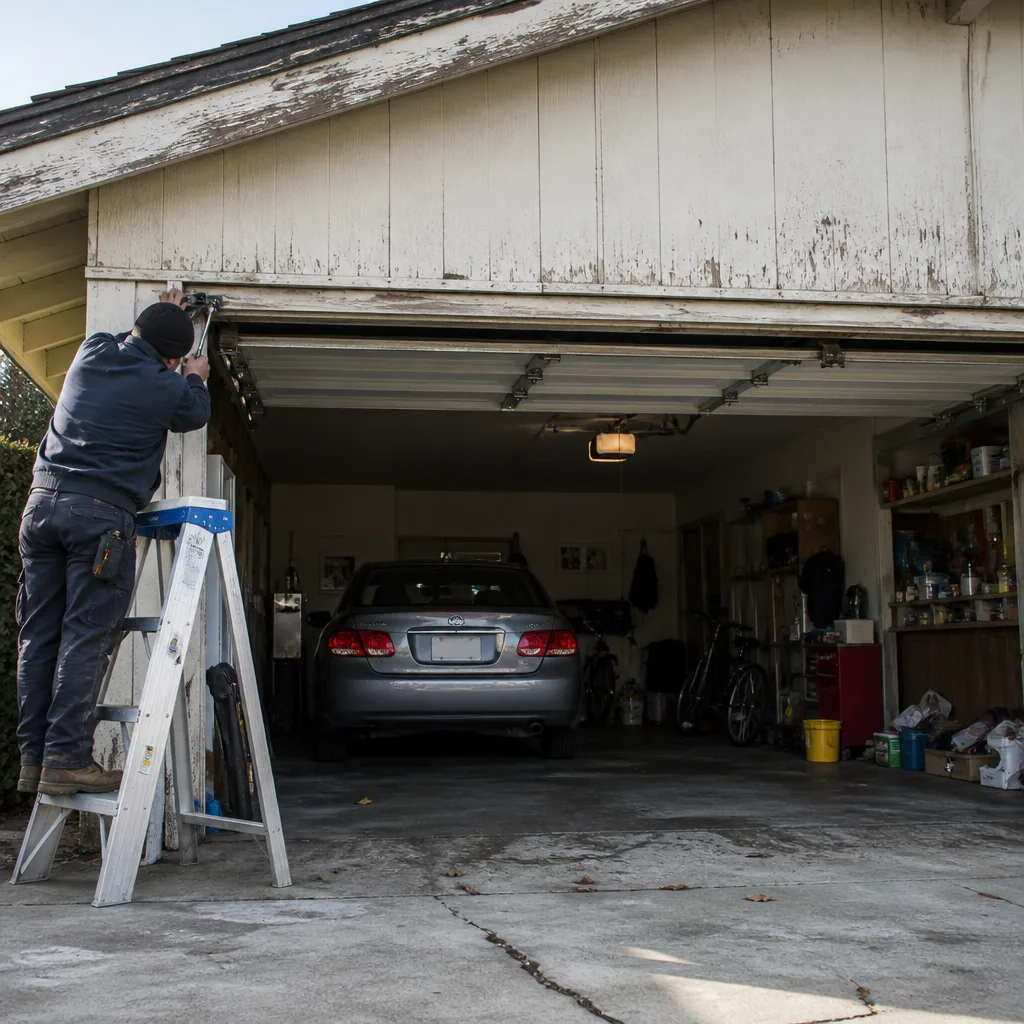 Before
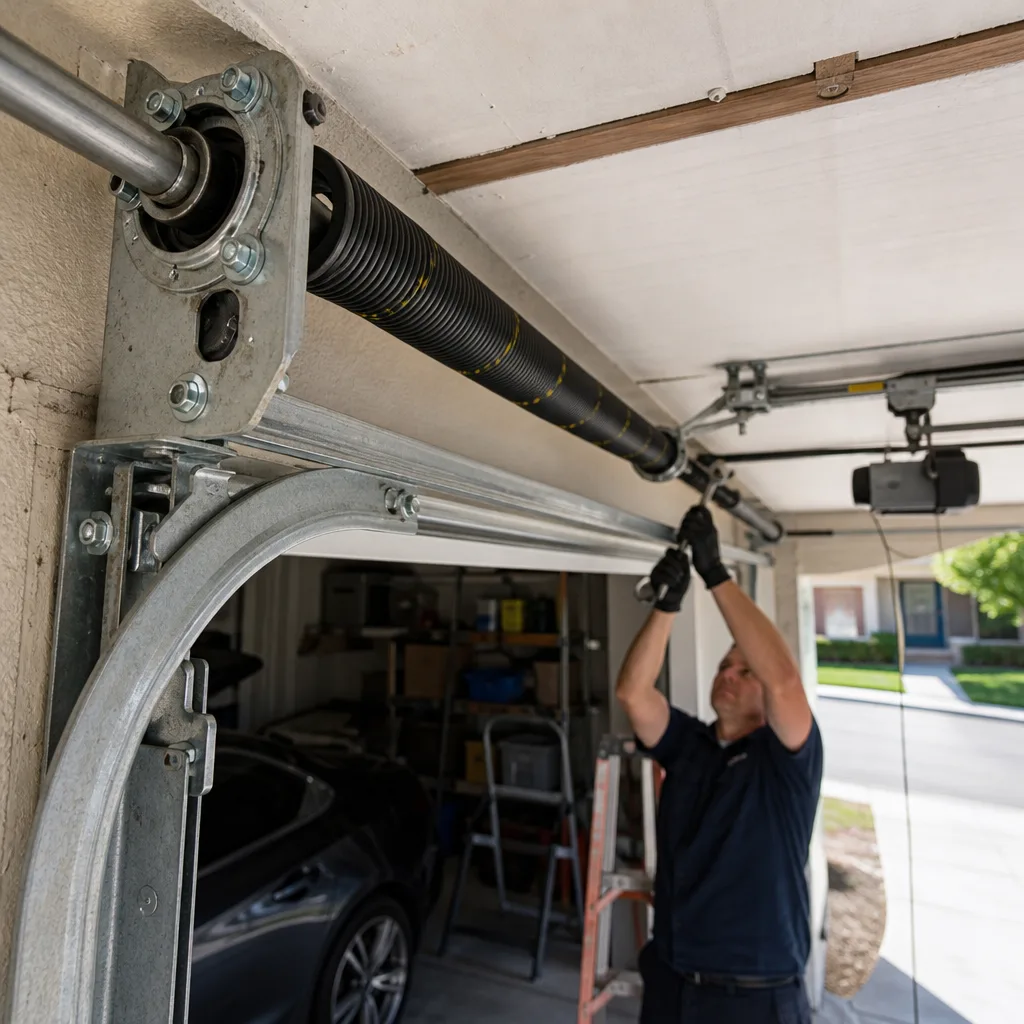 After
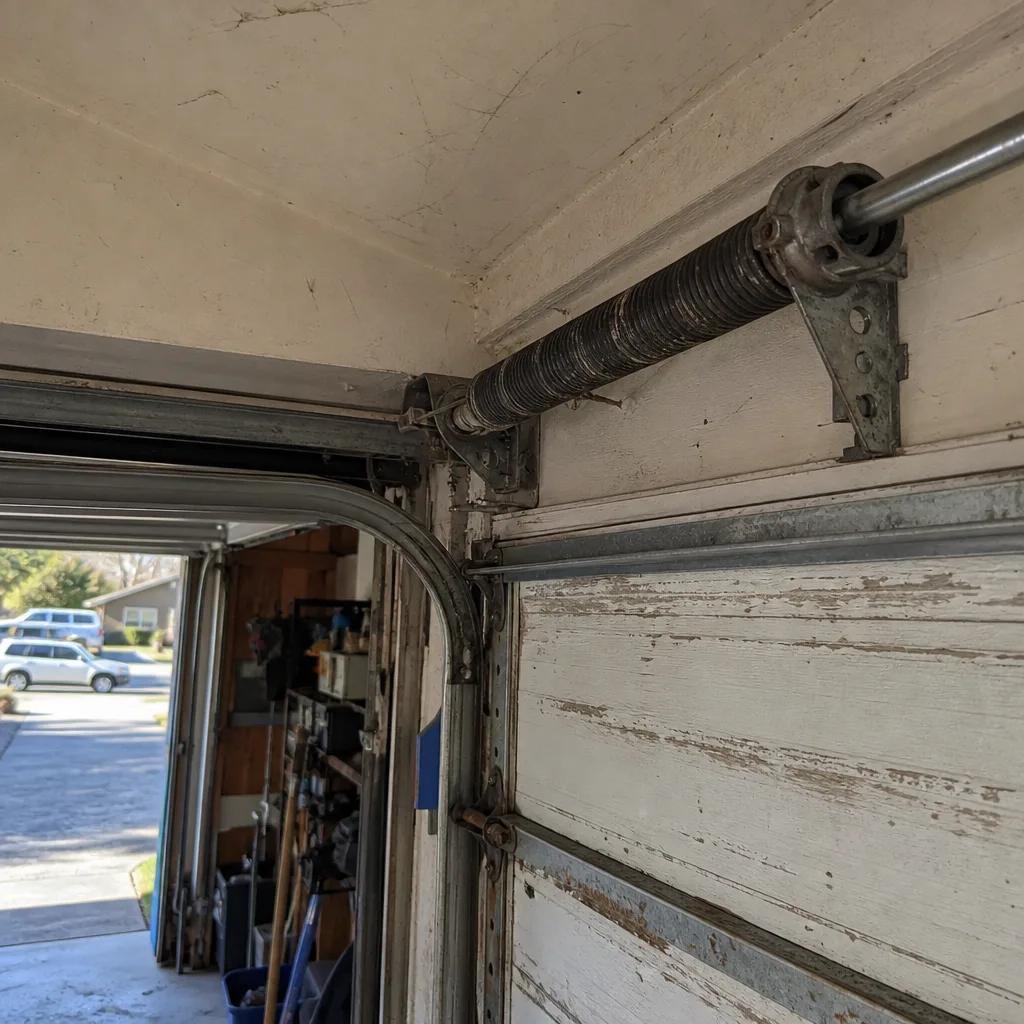 Before
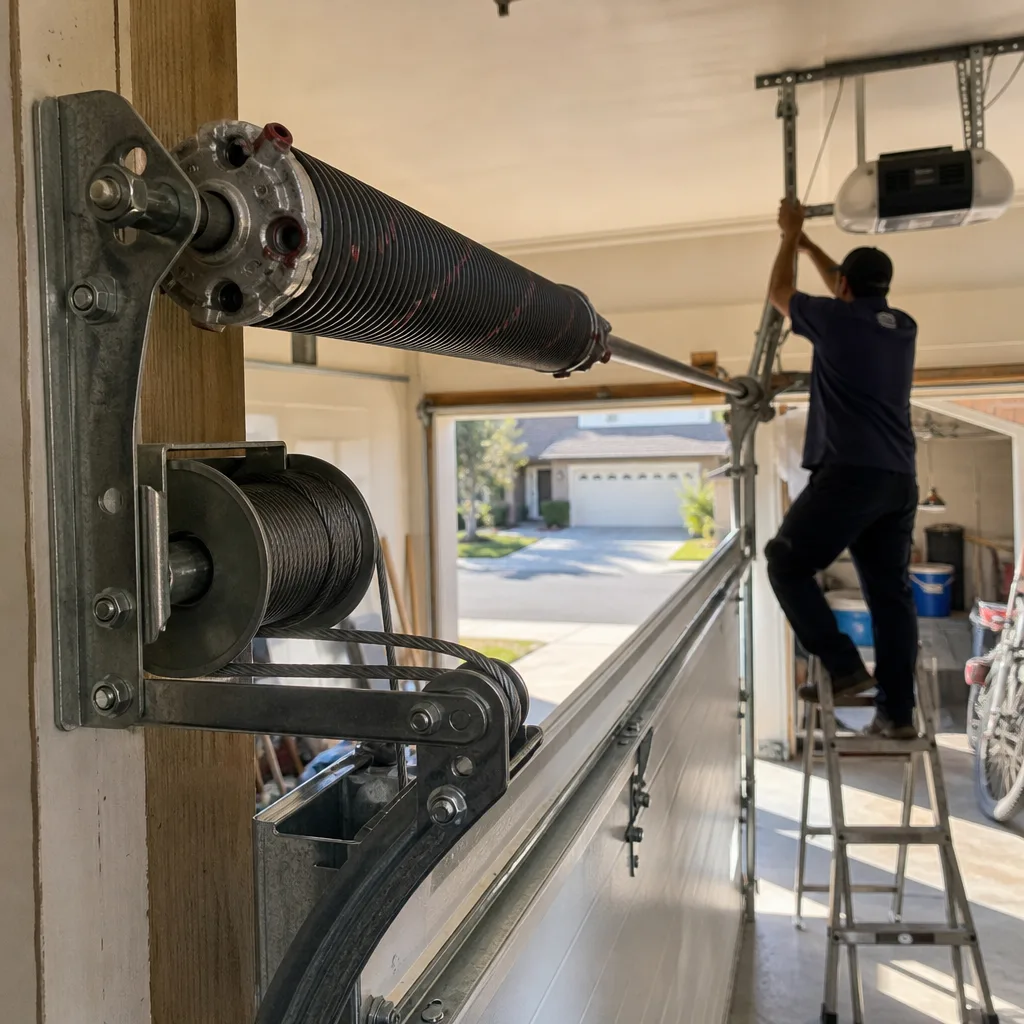 After
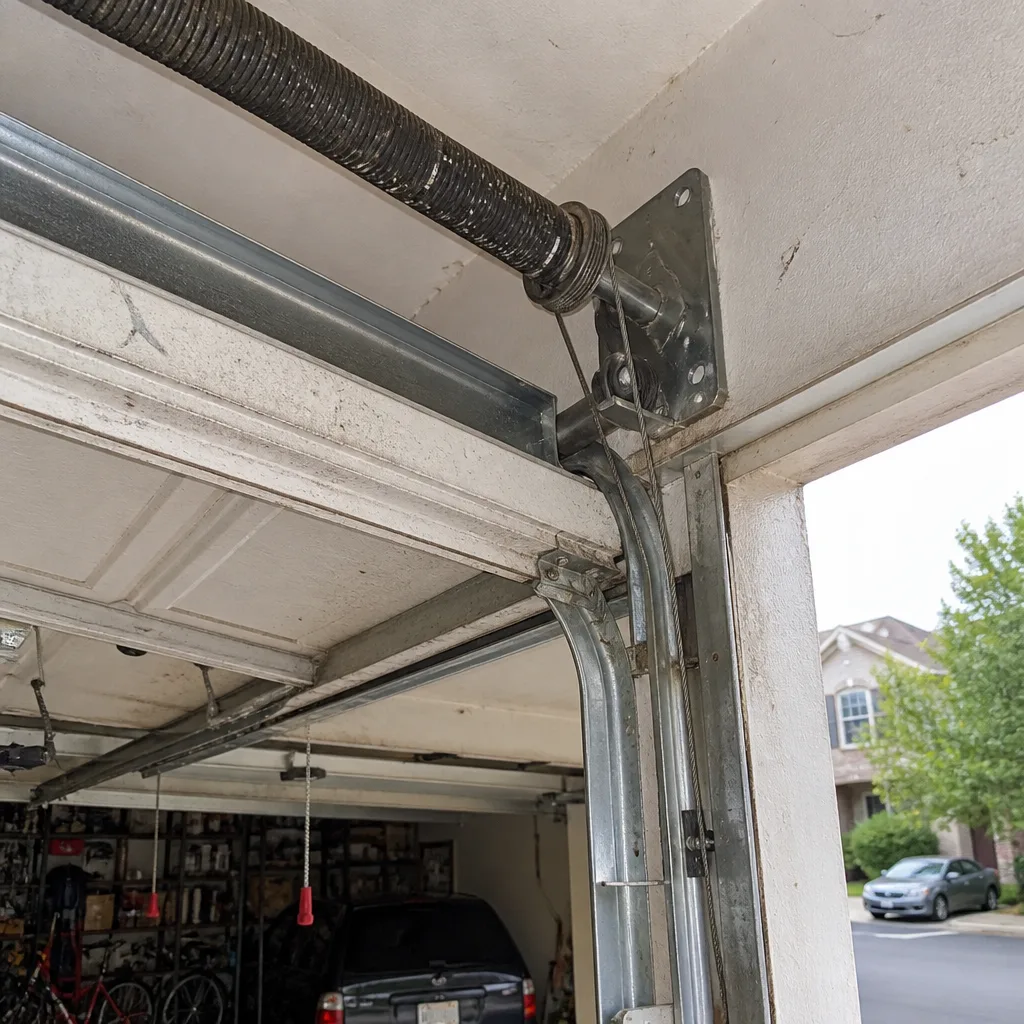 Before
 After
The Bottom Line
Folsom garage doors fail differently than doors anywhere else in the country. Our climate doesn’t punish with freeze-thaw cycles; it punishes with sustained heat that fatigues springs, fall debris that destroys seals, and a wet season that rusts hardware before anyone notices. The maintenance routine that works here is built around those three threats: a post-summer spring check, a fall debris clearing, and a post-winter rust inspection. Fifteen to thirty minutes of attention twice a year prevents most of the expensive failures we see, and every dollar of preventive care returns many more in avoided emergency calls. If you’re not sure where your door stands, a quick inspection takes less time than one missed morning of work.
Contact Garage Door Service Folsom
If you found something during this guide that needs attention, or you just want a professional opinion on your door’s condition, call Garage Door Service Folsom at (877) 318-4983 for a free estimate. We’ll inspect your door and opener together, tell you exactly what’s wrong if anything, and quote the repair before any work begins. For more guides & resources, visit our blog. Garage doors only, door and opener handled together, and every brand covered: LiftMaster, Chamberlain, Genie, Clopay, Amarr, Wayne Dalton, Craftsman, and Raynor.
Written by the team at Garage Door Service Folsom, serving Folsom since 2016.