
Last updated November 3, 2026
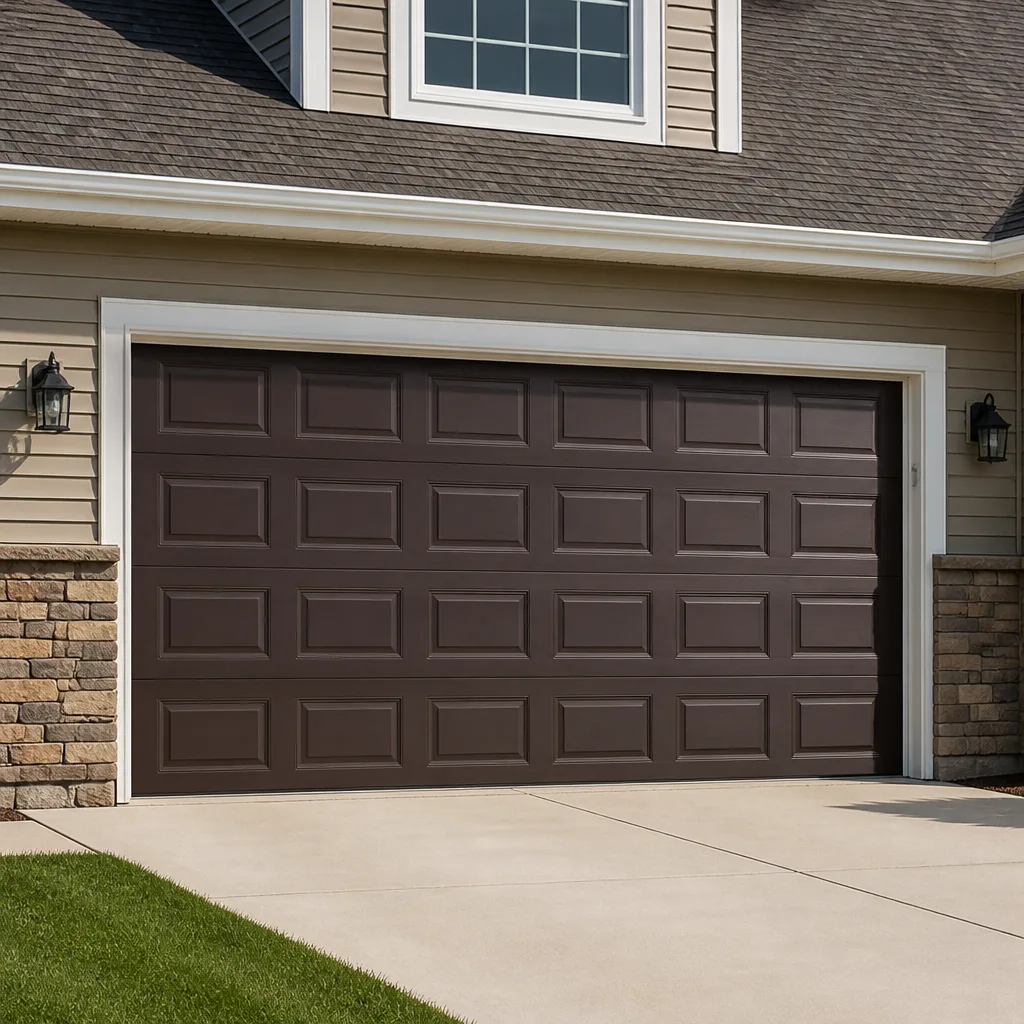 Raised-panel steel
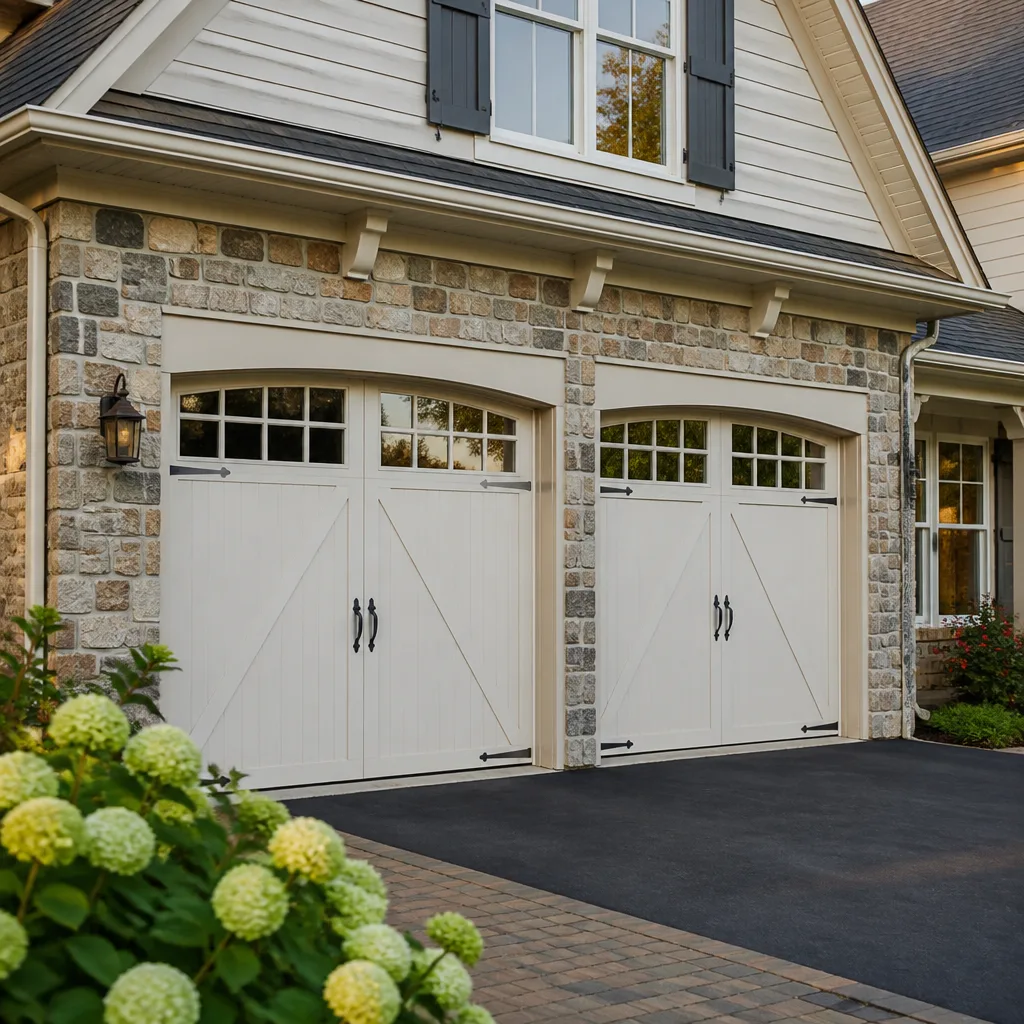 Carriage house
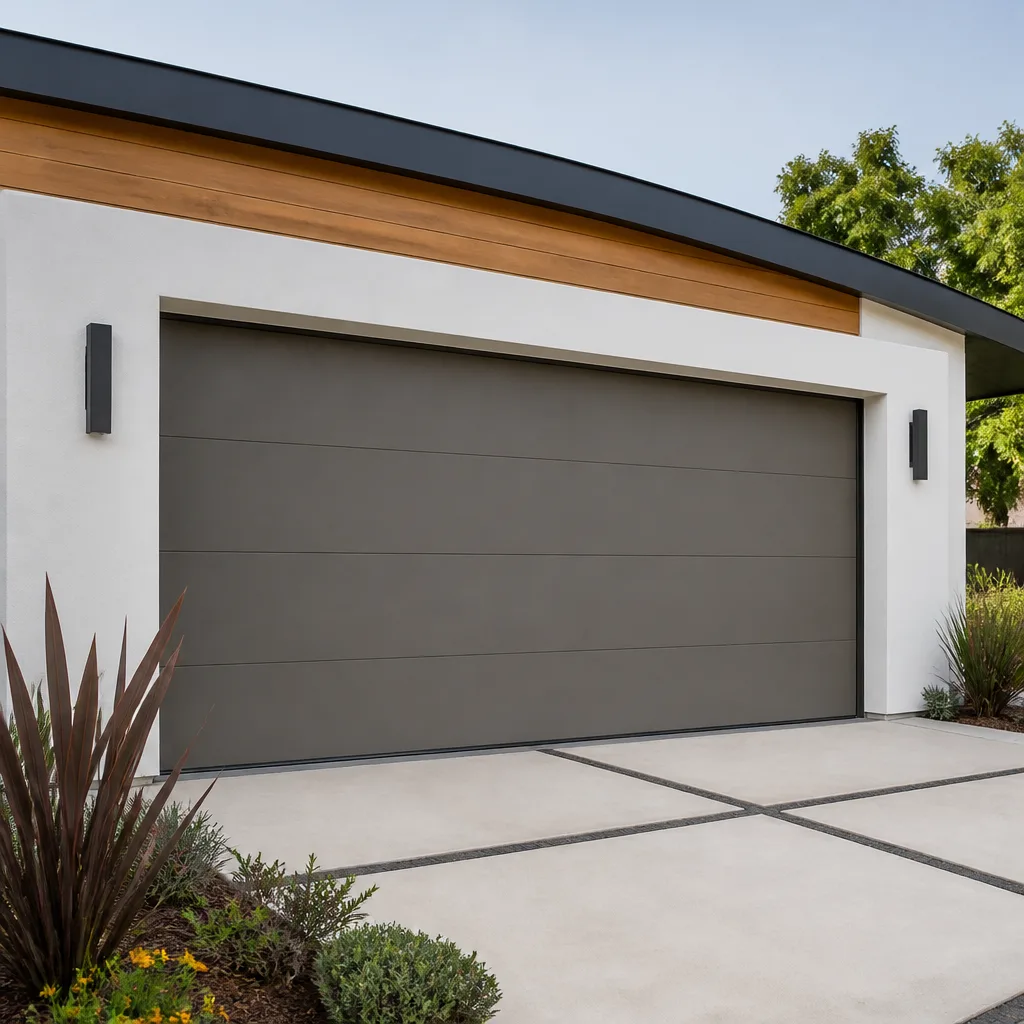 Modern flush
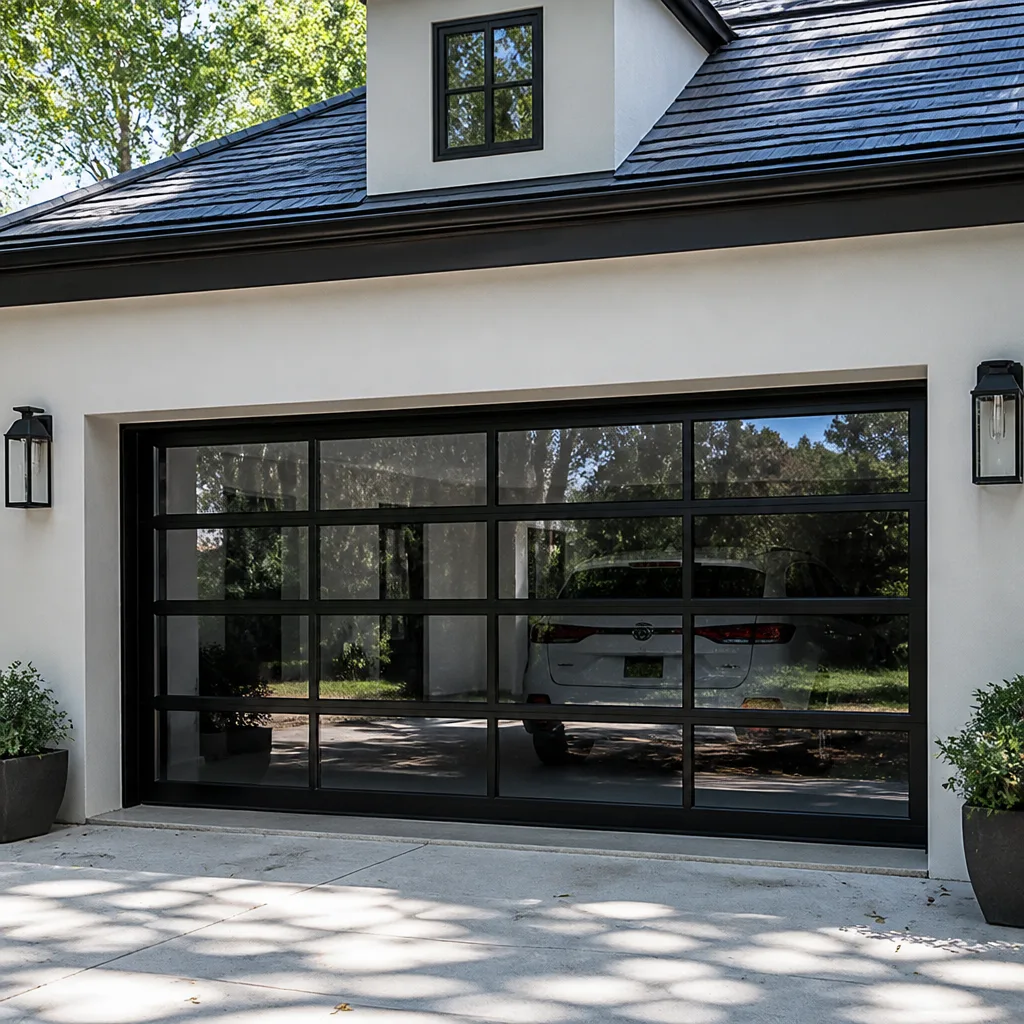 Full-view glass
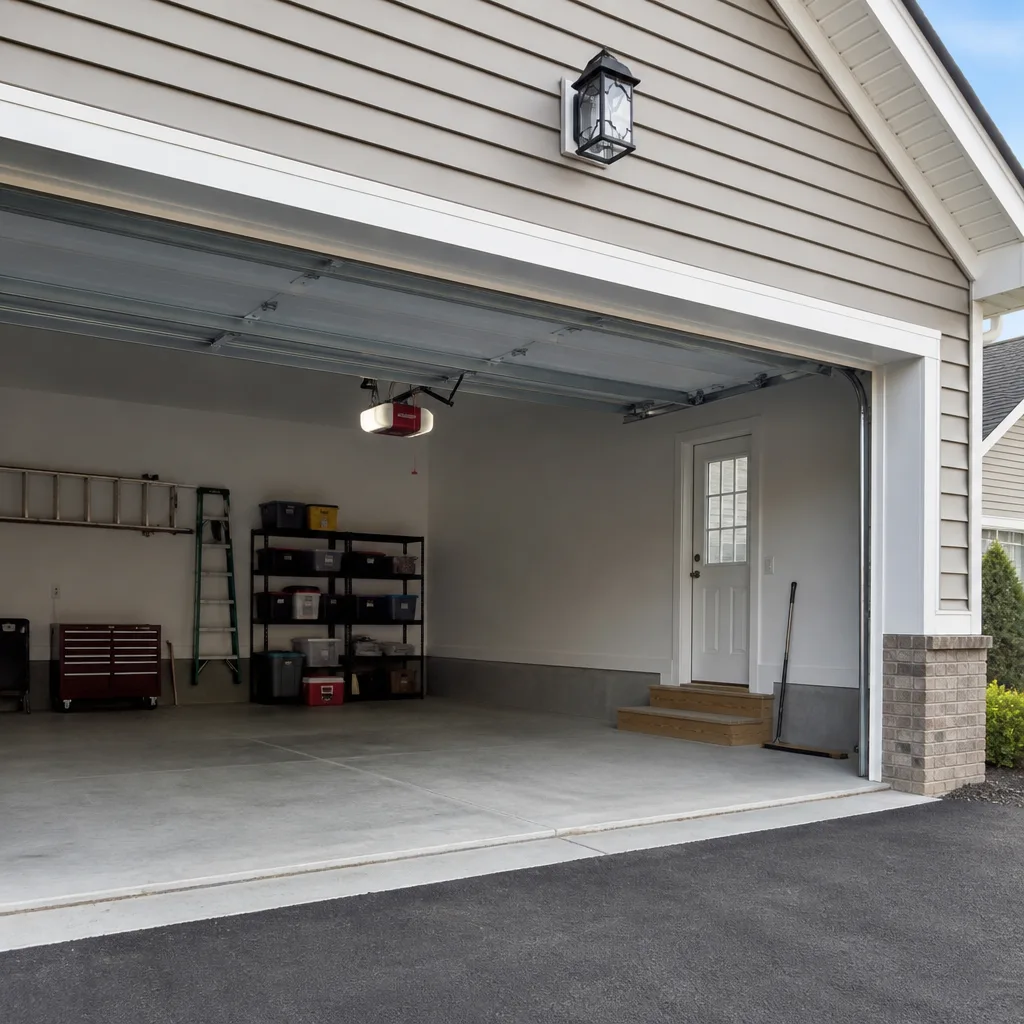 LiftMaster openers
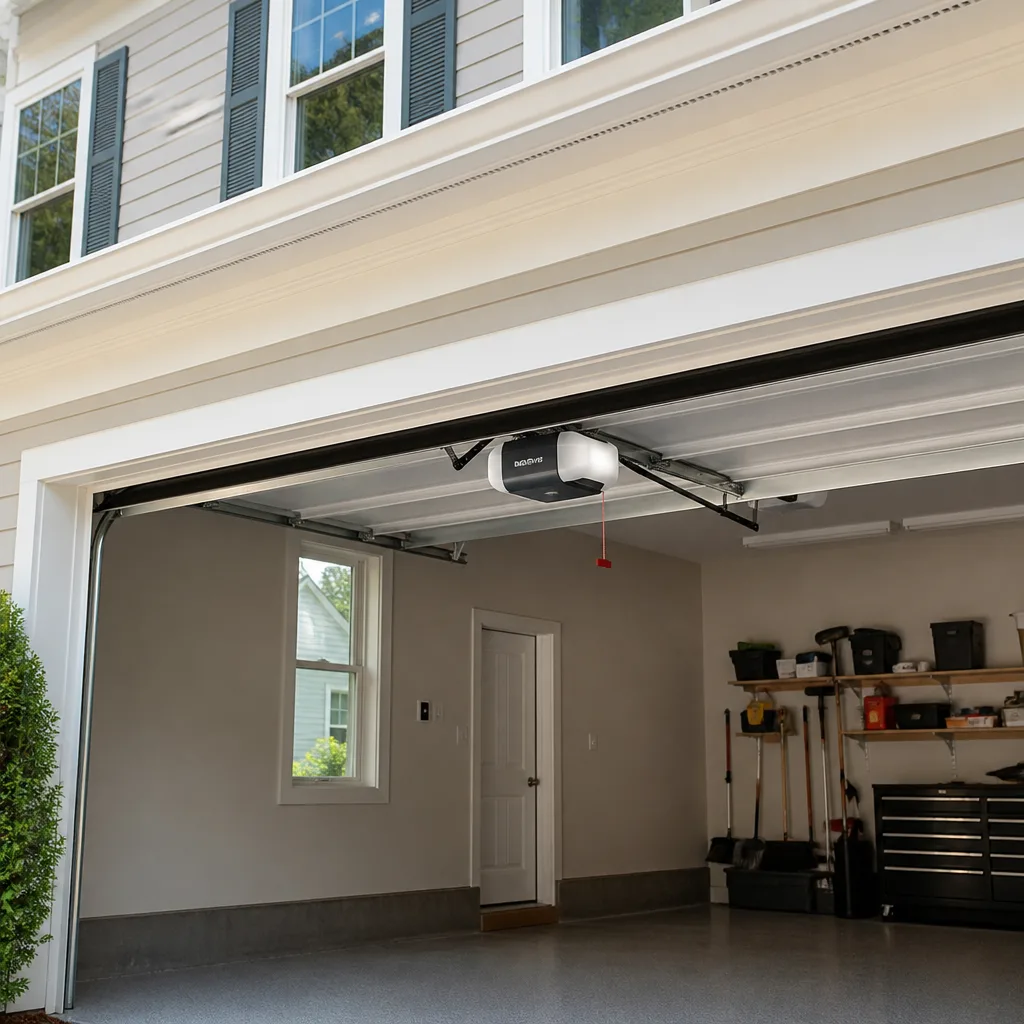 Chamberlain openers
Full 25-point door and opener safety check with every visit - springs, cables, rollers, tracks, and your LiftMaster or Chamberlain opener included
You get a price before we start. It does not change when the truck arrives.
Get your free estimateThe Complete Garage Door Repair Guide for Folsom Homeowners
Folsom’s temperature swings between January nights and August afternoons exceed 70°F, and that thermal cycling is the single biggest reason local garage door hardware fails faster than the national average. Most repair guides never mention it, but we see the evidence in nearly every Folsom service call: springs that snapped in the middle of a July heat wave, cables that frayed during a cold snap, tracks that warped just enough to bind. This guide explains why your door breaks, what you can safely fix yourself, what you should absolutely not touch, and what our Garage Door Repair services should cost in Folsom. You’ll finish with a clear decision tree for your specific situation.
Quick Answer
Garage door repair in Folsom typically costs between $150 and $450 depending on the component, with spring replacement running $180 to $340 and opener repair at $120 to $380. Most repairs are same-day jobs for a specialist who carries parts on the truck. If your door won’t open, makes grinding noises, or sags on one side, the root cause is almost always a spring, cable, roller, or track component that has been wearing down for months, and Folsom’s heat-and-dust cycle accelerates every one of those failure points.
Styles & brands we work with
- Raised-panel steel
- Carriage house
- Modern flush
- Full-view glass
- LiftMaster openers
- Chamberlain openers
Table of Contents
- Why Folsom’s Climate Is Hard on Garage Doors
- How Your Garage Door System Actually Works
- The Folsom Repair Decision Tree: DIY, Pro, or Dangerous
- Brand-Specific Failure Patterns in Folsom Tract Homes
- What Garage Door Repair Costs in Folsom
- What a Thorough Service Inspection Should Include
- Folsom Permits and HOA Rules for Door Work
- Common Mistakes to Avoid
- When to Call a Professional
- Frequently Asked Questions
Why Folsom’s Climate Is Hard on Garage Doors
Folsom sits at the edge of the Sacramento Valley, where summer temperatures routinely cross 100°F and winter nights dip into the 30s. That 70-degree swing does something specific to metal: it expands and contracts. Garage door springs are wound under enormous tension, and every expansion cycle adds microscopic stress to the steel. Over a few hundred cycles, that stress becomes an invisible fatigue line. Then one afternoon when the door is halfway up, the spring lets go with a sound like a gunshot. We get those calls all summer in neighborhoods like Natomas-style developments, Broadstone, and Empire Ranch.
Dust from the Foothills plays a second role. Folsom’s dry months kick up fine granite dust that settles into roller tracks and hinge pins. That dust mixes with whatever lubrication is present and forms a paste that slows the rollers. A slowed roller drags on the track, which puts lateral strain on the door panels and the opener motor. The opener compensates by working harder until its gears or logic board fail prematurely. Homeowners frequently assume the opener is the problem when the actual culprit is a dirty track and dry rollers.
Seasonal moisture adds a third variable. Folsom’s winter rains and morning fog bring enough humidity to start surface corrosion on cables and hinges that have lost their coating. Cable fraying is insidious because it starts inside the cable drum where nobody looks, then fails catastrophically when the door is fully open. A snapped cable drops one side of the door instantly, which can bend panels, shatter rollers, or throw the door off its track. The cost of replacing a frayed cable before it snaps is roughly one-tenth the cost of repairing the damage after it does.
None of this is bad luck. It’s material fatigue in a specific environment. Knowing the pattern means you can schedule maintenance before the failure. We’ll cover exactly what to check later in this guide and in more guides & resources.
How Your Garage Door System Actually Works
A garage door is not one machine. It’s five systems that have to work together every single cycle. When one degrades, it loads the others until something lets go. Understanding the basic anatomy makes every repair decision clearer.
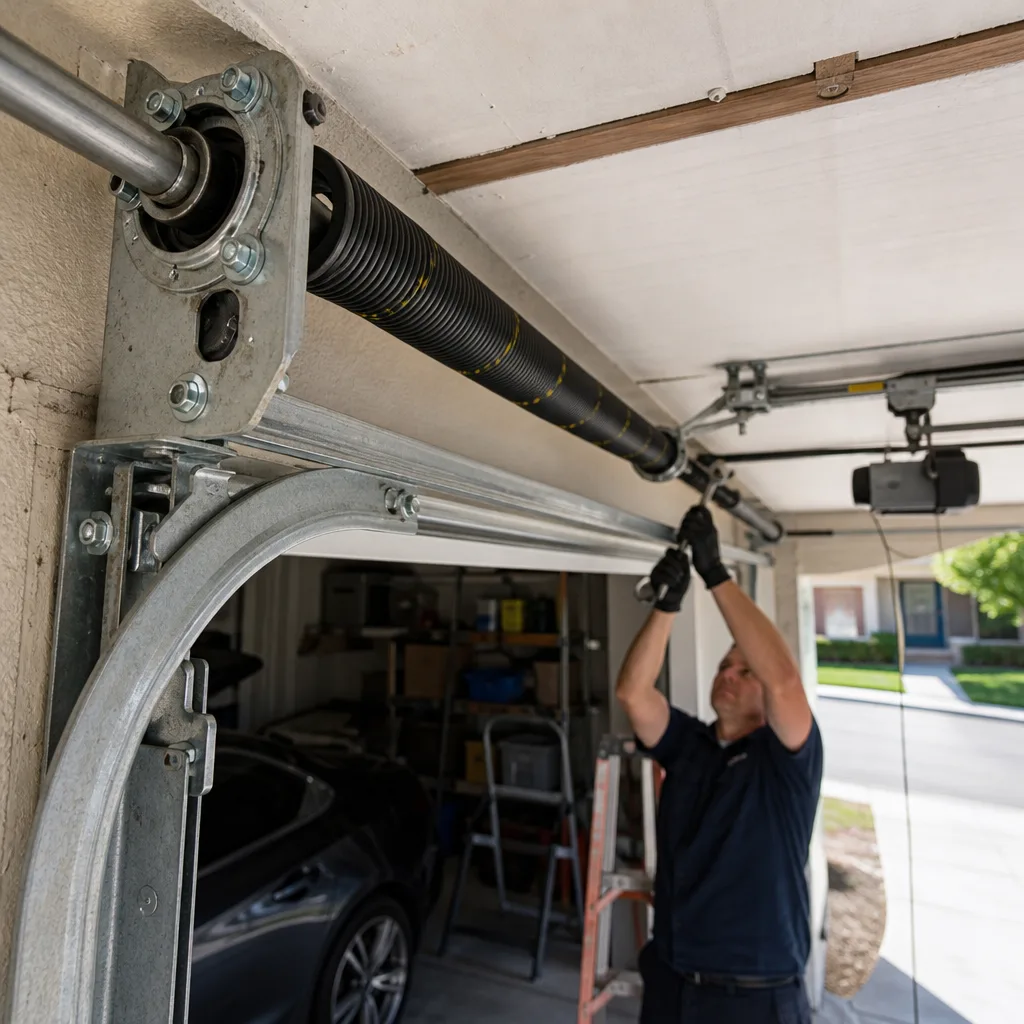
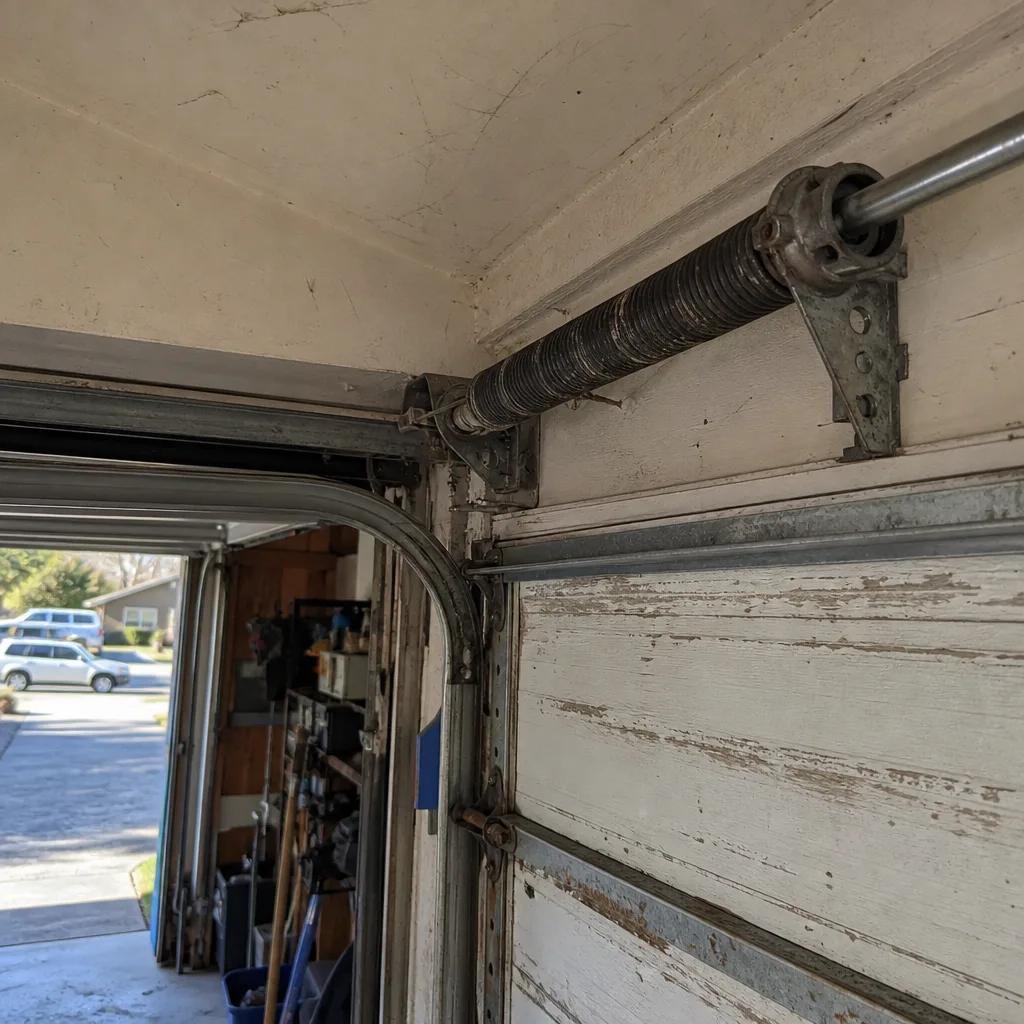
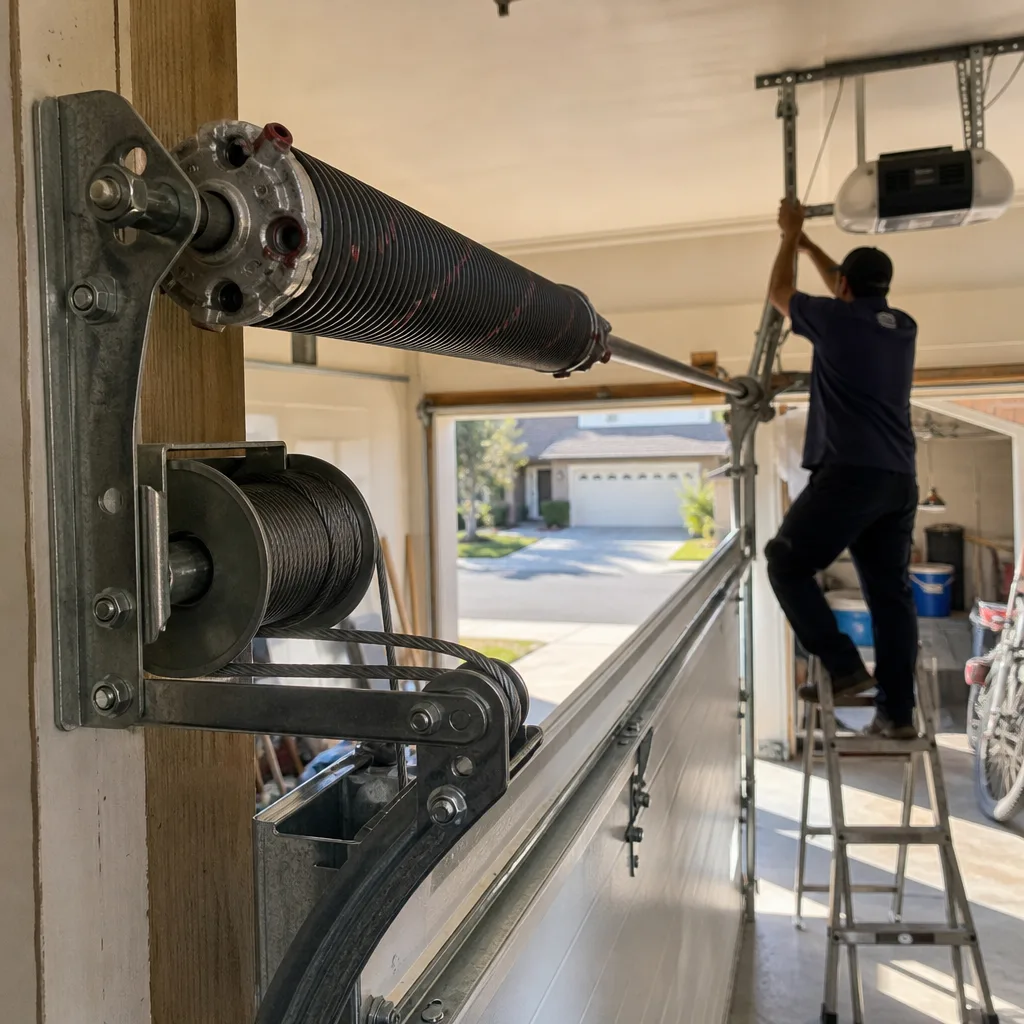
- Torsion springs mounted above the closed door do most of the lifting. They store energy by winding or unwinding as the door moves. A typical spring is rated for 10,000 cycles, which in a daily-use Folsom garage means roughly 7 to 10 years. Folsom’s heat extremes push that number toward the lower end.
- Extension springs mounted along the horizontal tracks function the same way but fail differently, usually by stretching permanently before they snap.
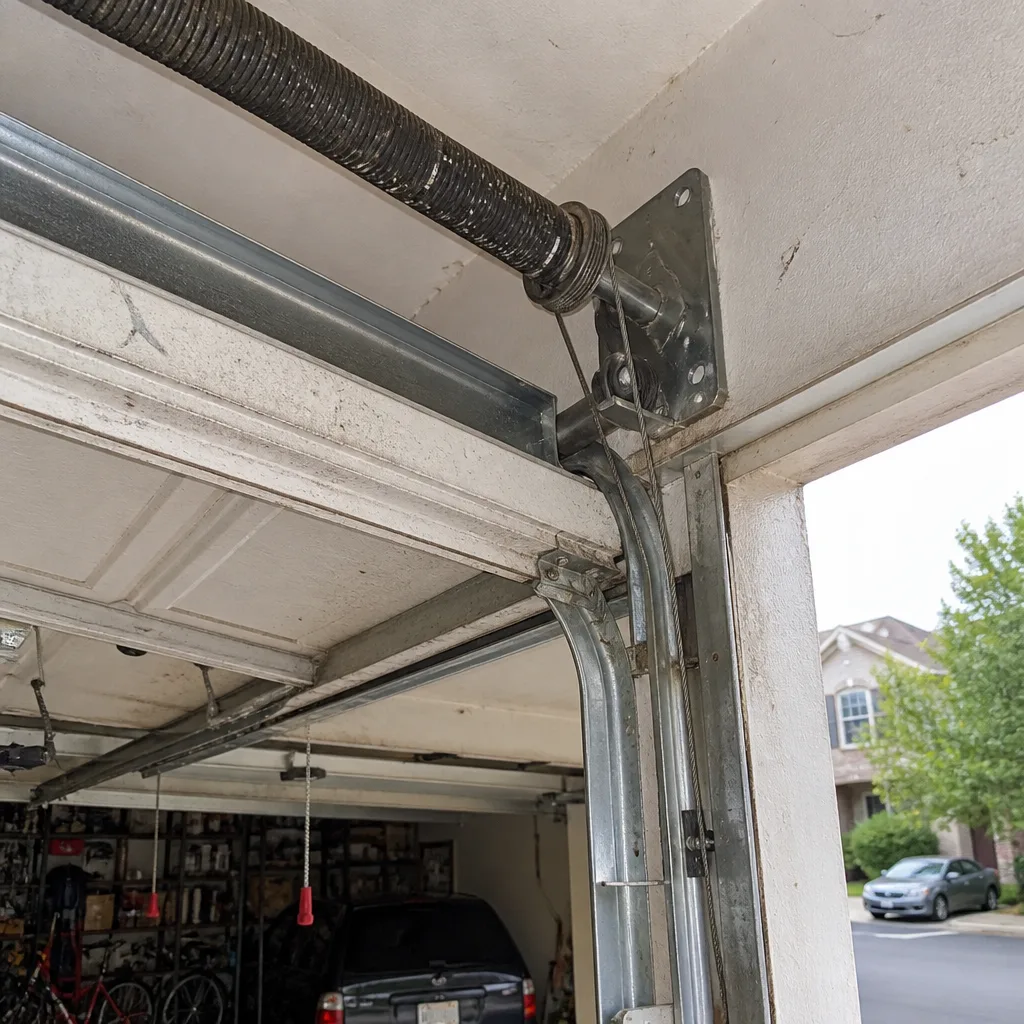
- Cables transfer spring tension to the bottom brackets of the door. They run through pulleys and drums that guide their path. Cable damage is visible as unwinding strands, kinks, or a door that rises unevenly.
- Rollers and hinges keep the door aligned as it travels the curved track. Rollers are either steel with unsealed bearings or nylon with sealed bearings. Nylon runs quieter and lasts longer in Folsom’s dust, but steel is still common in early-2000s tract homes.
- The opener is a separate system bolted to the ceiling. It pulls or pushes a trolley along a rail, but it’s not designed to lift the door’s full weight. When the springs weaken, the opener strains to compensate, and the plastic gears inside strip out. Most opener failures are actually spring failures that were never addressed.
When all five systems are balanced, a well-adjusted door can be opened with one hand. When the spring is right, the opener barely has to work. When anything is off, the damage compounds quickly.
The Folsom Repair Decision Tree: DIY, Pro, or Dangerous
Some garage door repairs are genuinely safe for a capable homeowner. DIY vs Professional Garage Door: The Folsom Homeowner’s Decision Guide explains which are dangerous enough that even experienced technicians treat them with extreme respect. The line between the two is not always obvious, so here’s a straight answer.
Repairs a homeowner can safely do
- Lubricating rollers, hinges, and springs. Use a garage door-specific lubricant, not WD-40, which is a solvent and strips the protective film. Spray the roller bearings, hinge pins, and the spring coils twice a year. In Folsom, do this in April and October to offset dust season.
- Tightening visible nuts and bolts. The vibration from a few thousand cycles a year loosens hardware. Go around the track brackets, hinge screws, and opener mounting bolts with a wrench or socket every few months.
- Cleaning the tracks. Wipe out dust and grit with a rag. Do not use grease on the tracks, which collects Folsom dust and turns into grinding paste.
- Replacing the remote battery and reprogramming remotes. This is purely an opener electronics task. If the wall button works but the remote doesn’t, replace the battery first. If the remote still fails, it’s a logic board issue best handled by someone who knows Garage Door Opener Repair in Folsom.
- Replacing the weatherstrip along the bottom of the door. Folsom dust and summer heat rot the rubber in two to three years. A replacement costs under $30 and takes 20 minutes.
Repairs that require a professional
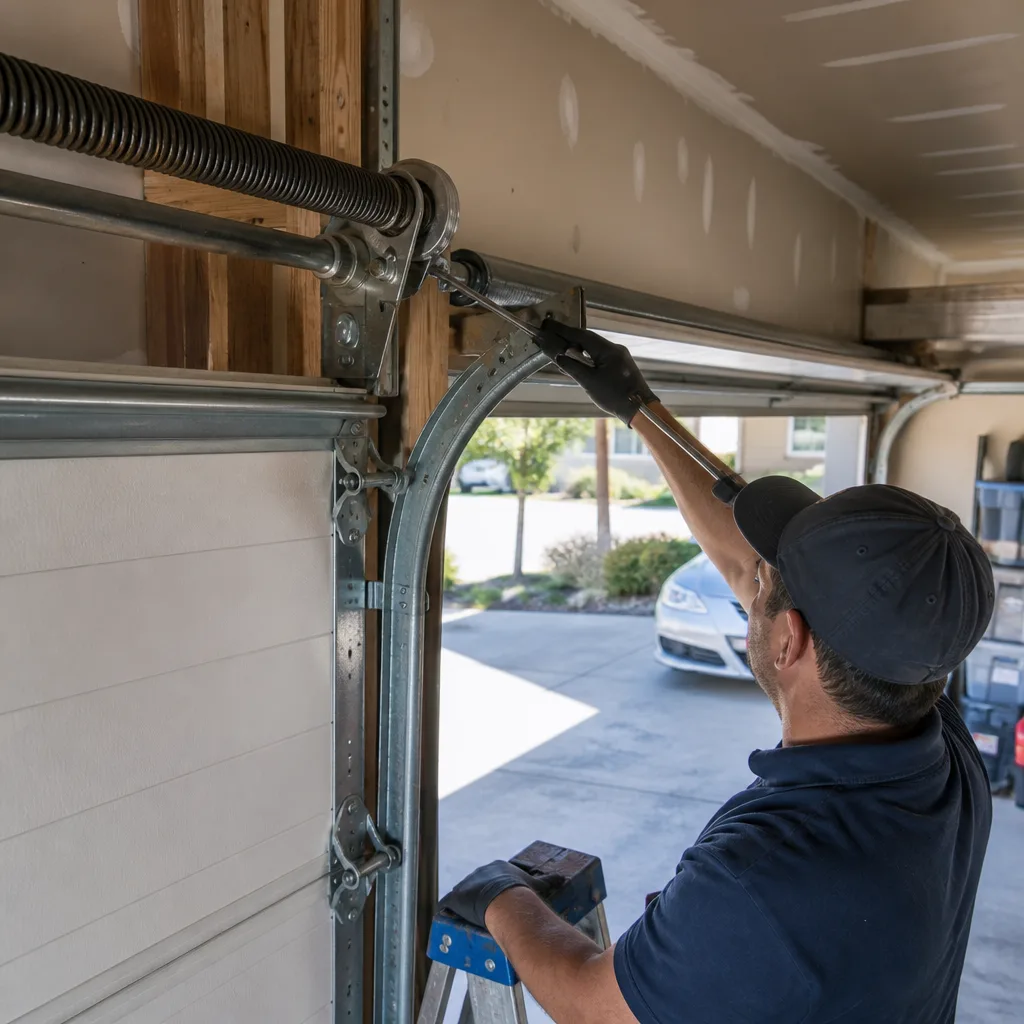
- Spring replacement, period. Torsion springs hold 100 to 300 pounds of tension each, depending on the door. When one snaps, that energy releases instantly, and a winding bar thrown free can kill. Extension spring systems are equally dangerous for different reasons. Do not attempt this yourself regardless of YouTube confidence.
- Cable replacement. Cables run under spring tension. If you detach the wrong cable while the spring is loaded, the door can drop. A cable job in Folsom takes a pro 30 to 60 minutes and costs $150 to $200. The injury risk is not worth the savings.
- Track realignment or replacement. When a door jumps the track, the lower panel is often damaged too. Forcing it back into place without addressing the panel damage leads to repeat failures.
- Opener circuit board or motor replacement. These parts are brand-specific and voltage-sensitive. A generic replacement board from an online marketplace may catch fire or damage the motor. We’ve had to replace brand-new boards installed by homeowners who guessed wrong.
Repairs nobody should attempt
Any work on a door that is stuck in the up position with a broken cable or spring. This is the most dangerous configuration. The door looks stable but is holding only on the remaining cable or a single track. When that lets go, 200 to 400 pounds comes down in under a second. A professional will secure the door first, then do the repair. Homeowners should keep people and cars out of the garage and call immediately. This is one of the few situations where we tell Folsom residents to wait outside for the tech to arrive.
Brand-Specific Failure Patterns in Folsom Tract Homes
Folsom’s building boom from 1998 to 2007 put thousands of homes up with a limited set of door and opener brands. The result is that we know what fails first on each one, often before the homeowner describes the symptom. Here’s what we see by brand in the field.
Chamberlain openers from the early 2000s are everywhere in Folsom, from the older neighborhoods near Sutter Street to the newer builds off East Natoma. The most common Chamberlain failure is the plastic drive gear inside the opener motor housing. It strips out after 8 to 12 years, especially if the door springs were never tensioned correctly. The symptom is a motor that runs and hums but doesn’t move the trolley. The second common failure is the capacitor on the logic board, which causes the opener to click but not run. Both are repairable on a same-day visit. We still service this generation of Chamberlain units because homeowners prefer the repair to replacing the whole opener.
LiftMaster is Chamberlain’s contractor-grade line, heavily installed in Folsom tract homes where an electrician or general contractor selected the opener. These are more durable than the retail Chamberlain units, but the wall control degrades first. We see cracked wall panel housings and corroded wiring terminals from garage humidity. The second failure is the safety sensor alignment: Folsom garages with tools, bikes, or storage rack pressure against the sensor mounts, and the infrared beam drifts out of alignment. The door then reverses and won’t close, which homeowners understandably mistake for a logic board failure.
Genie systems, especially the screw-drive models popular in the early 2000s, have a different problem set. The screw drive itself picks up Folsom dust, then the carriage slides become pitted and noisy. In summer, the aluminum screw expands and the door moves more slowly near the open position. The fix is not a new opener, it’s a thorough drive cleaning and lubrication, plus a carriage inspection. Genie’s second familiar failure point is the optical sensor wiring, which is thinner than LiftMaster’s and fails at the connection points after a decade of heat cycling.
For doors themselves, Clopay and Amarr panels dominate Folsom’s residential stock. The failure pattern here is not the panel itself but the hinge attachment points. On doors that face south or west, the afternoon heat softens the aluminum stile where the hinge screws anchor, and the screws work loose over thousands of cycles. The first sign is a rattling sound or a visible gap at the hinge seam. Replacing the hinge with a reinforcing plate usually corrects this for the remaining life of the door. Knowing this pattern means we fix a hinge for under $100 instead of letting the loose panel tear itself on the track and push the homeowner into a Garage Door Installation in Folsom they didn’t actually need yet.
What Garage Door Repair Costs in Folsom
Prices below are what we quote for common Folsom repairs. They assume a standard single or double door in an existing tract home. Every job is quoted in writing before work starts, and the price doesn’t change once we see the door. That’s a promise we’ve kept since the day the company opened.
| Repair Type | Typical Price Range | Same-Day Possible |
|---|---|---|
| Spring replacement (pair) | $180 – $340 | Yes, hours not days |
| Single spring replacement | $120 – $190 | Yes |
| Cable replacement (per side) | $150 – $200 | Yes |
| Roller replacement (full set) | $120 – $200 | Yes |
| Track realignment | $100 – $180 | Yes |
| Opener gear/board repair | $120 – $380 | Usually |
| Full opener replacement | $550 – $1,200 | Free measure, scheduled install |
| Bottom seal replacement | $70 – $110 | Yes |
What drives cost variance? A single-car door from 1999 with one spring runs at the lower end. A heavier double-wide door with insulated panels and two springs runs higher. Folsom houses built after 2005 have stricter fire codes, which means some garages have self-closing fire doors connected to the house and thicker door panels, both of which add weight and therefore spring cost. Your exact quote comes from the door’s weight, height, and spring configuration, not from a one-size-fits-all menu. The price you’re quoted at the first call is the price you pay, and you’ll see the quote before any work begins. Estimates are free, and they don’t come with a sales pitch.
What a Thorough Service Inspection Should Include
If a repair company charges you for an inspection, you should know exactly what the inspection covered. A legitimate 20 to 30 minute checklist includes all of the following. If a tech spends five minutes watching the door go up and down and hands you an invoice, you got a drive-by, not a service call. Here is what we check on every Folsom service visit, and what you should expect from any contractor you call.
- Spring condition. Visual inspection for rust, coil gap, and fatigue lines. The tech should count the coils per inch and compare the two springs if it’s a double-spring system. A spring that’s stretching shows the coils separating when the door is closed.
- Cable condition. Full unwinding of the cable drum check. The tech should look for broken strands, especially at the drum connection and the bottom bracket. This isn’t optional to do visually; the cable must be examined under tension and at rest.
- Roller wear. Each roller should spin freely with no flat spots. A frozen roller carves a groove into the track over time, which is a track replacement, not a roller job.
- Hinge and bracket tightness. Every hinge screw and track bracket bolt checked with a tool, not by hand. Loose upper brackets are the leading cause of the door coming off the track in Folsom garages that face the afternoon sun.
- Balance test. The tech disconnects the opener and lifts the door manually to the halfway point. It should stay there. If it drops, the spring is under-tensioned. If it flies up, the spring is over-tensioned. This one test reveals more than any other single check.
- Safety reverse system check. The tech tests the electric eye by blocking the beam, and the mechanical reverse by placing a 2×4 flat under the closing door. Both are federal safety mandates that took effect in 1993. If your door predates that, we’ll recommend the upgrade.
- Opener force setting. The opener’s closing force should be adjusted to the minimum that reliably closes the door. Many openers are set far too high, which means a closing door that hits an obstacle will keep pushing instead of reversing.
- Track alignment and level. Both vertical and horizontal rails checked with a level. Folsom’s clay-heavy soil expands and contracts with moisture, and doors on slabs that have shifted slightly will bind on the track over time.
Every item on this list takes under five minutes for an experienced tech. The whole inspection runs 25 minutes, and you should be told what was checked, what failed, and what can wait. If the tech can’t show you the worn part or explain the problem in plain language, call someone else.
Folsom Permits and HOA Rules for Door Work
Component repairs like spring replacement, cable work, roller swaps, and track adjustment do not require a building permit in Folsom. The city classifies those as maintenance repairs, not structural modifications. Full door replacement is different. If you’re changing the door’s size, altering the garage opening, or installing a new header, the city of Folsom requires a building permit, and the work must pass inspection. A straight swap of an existing door for a new door of the same dimensions usually does not trigger a permit in a single-family home, but we recommend confirming with the city’s building division before scheduling, because specific neighborhoods with historic designations or overlay districts can have different rules.
HOA considerations in Folsom are a bigger practical factor than the city permit process. Some planned communities like Broadstone, American River Canyon, and portions of Empire Ranch have architectural review committees that dictate door style, color, material, and even window placement. If you replace a door without approval, the HOA can require a correction, which is expensive and slow. Most Folsom HOAs publish their garage door specs online or in their CC&Rs. Check before you buy. If your HOA’s approved list includes materials from the major manufacturers, we can match the spec exactly. We also work directly with Folsom homeowners to navigate the paperwork, which usually takes one week for a standard replacement door.
For anyone who wants to avoid surprises, call the city’s building department at (877) 318-4983 or search for Folsom’s garage door permit page online. The same applies if you have a detached garage that might be classified as an accessory structure under a different code section.
Common Mistakes to Avoid
- Forcing a door that is stuck. When a Folsom door won’t open, the temptation is to hit the opener button again or muscle the door up. Repeatedly cycling a jammed door bends panels, strips the opener gear, and can snap the cable the rest of the way. If the door sticks, stop and diagnose.
- Lubricating with the wrong product. Grease, motor oil, and WD-40 are all bad choices on a garage door. They collect Folsom dust, harden in summer heat, and turn the track into sandpaper.
- Ignoring a rattling door. A rattle means a loose hinge, a dead roller, or a slack cable. Left alone for a few hundred more cycles, those become structural failures. Fixing the rattle is always cheaper than fixing the resulting damage in Folsom.
- Replacing the opener before checking the door balance. If the door is heavy because of a worn spring, a new opener is just a new motor running a bad system. The springs do the lifting. Balance the door, then decide about the opener.
- Buying replacement springs by guesswork online. Spring strength is measured by wire gauge, coil count, inside diameter, and door weight. The wrong spring can snap immediately or make the door dangerously unbalanced in Folsom’s heat. This is not a generic part.
- Waiving the HOA check on a door replacement. Replacing a Folsom door and getting fined afterward is more common than most people assume. One call to your HOA office takes five minutes and saves a few thousand dollars.
When to Call a Professional
Call a specialist when the spring snaps, the cable lets go, the door comes off its track, or the opener runs without moving the door. These are the four situations where continuing to use the door or attempting a parts-store fix will make the problem worse. A spring replacement in a Folsom garage is a 45-minute job in competent hands. The same job attempted with the wrong tools or the wrong spring tension ends in property damage or a trip to the ER. If your door has been getting slower, noisier, or shakier over a period of months, that’s the door telling you something specific. A trained eye finds it in minutes. Garage Door Service Folsom home offers free estimates in Folsom. Call (877) 318-4983 and tell us what the door is doing. We’ll give you an honest read on whether it’s urgent, deferrable, or something you can handle yourself.
Frequently Asked Questions
Spring replacement in Folsom runs $180 to $340 for the pair, including labor and the springs themselves. The exact number depends on door weight, spring gauge, and whether it’s a single-spring or double-spring system. Call (877) 318-4983 for a free estimate and a fixed quote before we start.
Yes, spring, cable, roller, and track repairs are same-day jobs in Folsom in nearly all cases. We carry common springs, cables, rollers, and opener parts on the truck. Full door replacement and custom orders take longer because the door is measured and ordered, then installed on a scheduled day.
No, the price you agree to before the work starts is the price you pay. If the diagnosis changes during the repair, you’ll be shown the issue and approve the revised quote before any additional work is done. No open-ended invoices.
In Folsom, the most common problem is a broken torsion spring, and it’s usually because of accumulated heat stress from summer temperature swings. Second is a door that binds on the track due to dust buildup and loose brackets. Both are repairable in one visit.
We repair Chamberlain, LiftMaster, Genie, Clopay, Amarr, Wayne Dalton, Craftsman, and Raynor systems, which covers the brands installed in the majority of Folsom tract homes built since the 1990s. If your opener’s brand isn’t on that list, we’ll tell you on the call and direct you to the right place rather than guessing.
It depends on what broke. If the door is fully closed and the opener is disconnected, it’s safe short-term. If the door is stuck open or sagging on one side, it’s a hazard and a security risk because the garage no longer closes. A pro can secure it temporarily in Folsom the same day. Call (877) 318-4983 and we’ll walk through what you’re seeing and whether it can wait.
The Bottom Line
The Complete Guide to Garage Door in Folsom covers how problems follow predictable patterns driven by heat, dust, and time. Springs fatigue, cables fray at the drum, openers strip gears when the springs fail first. The difference between a $150 repair and a $1,200 replacement often comes down to whether you address the problem early. Know what you can safely do: lubricate, tighten, clean. Know what you should never do: touch springs, cables, or a door stuck in the up position. And know what to expect from any pro who walks into your garage: a full inspection, a plain-language diagnosis, and a fixed price before any work begins. That’s the standard we hold ourselves to, and the one Folsom homeowners should hold every contractor to.
Written by the team at Garage Door Service Folsom, serving Folsom since 2016.
See the difference
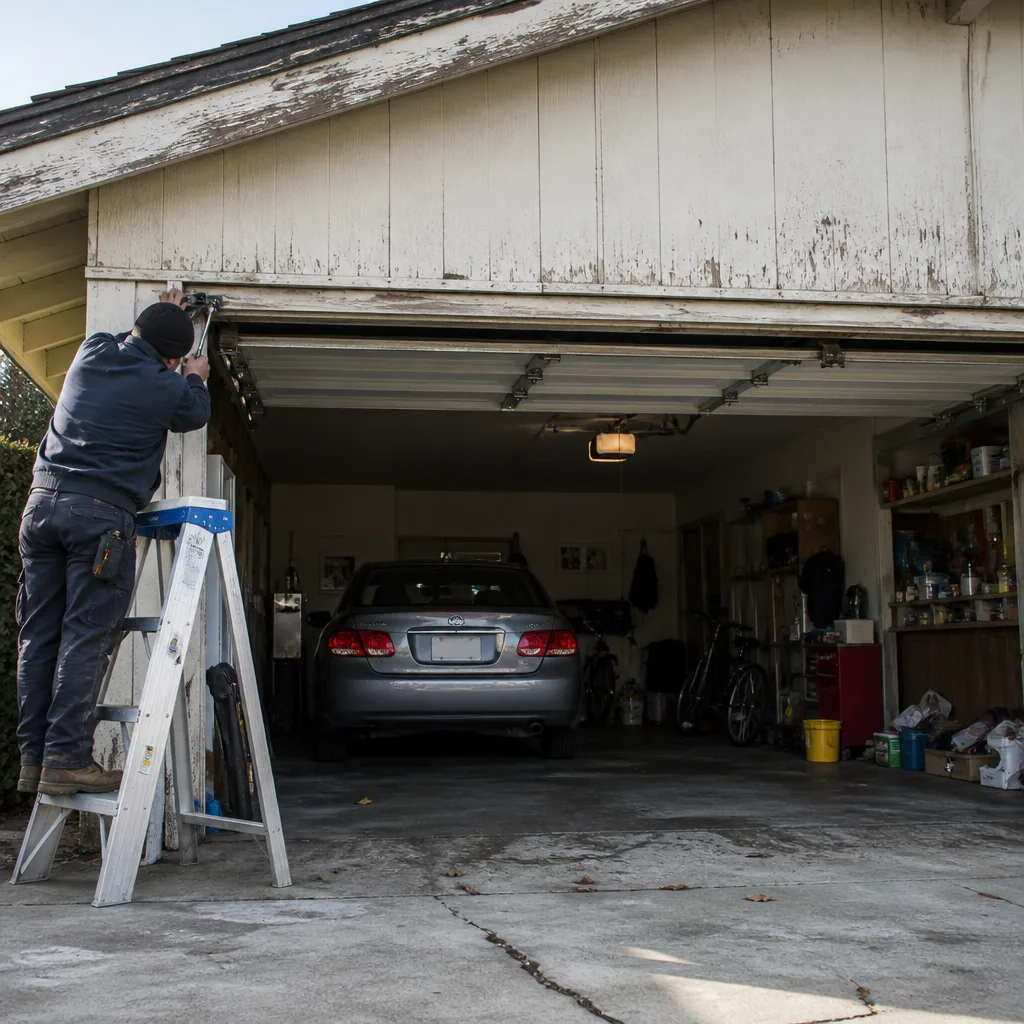 Before
 After
 Before
 After
 Before
 After