
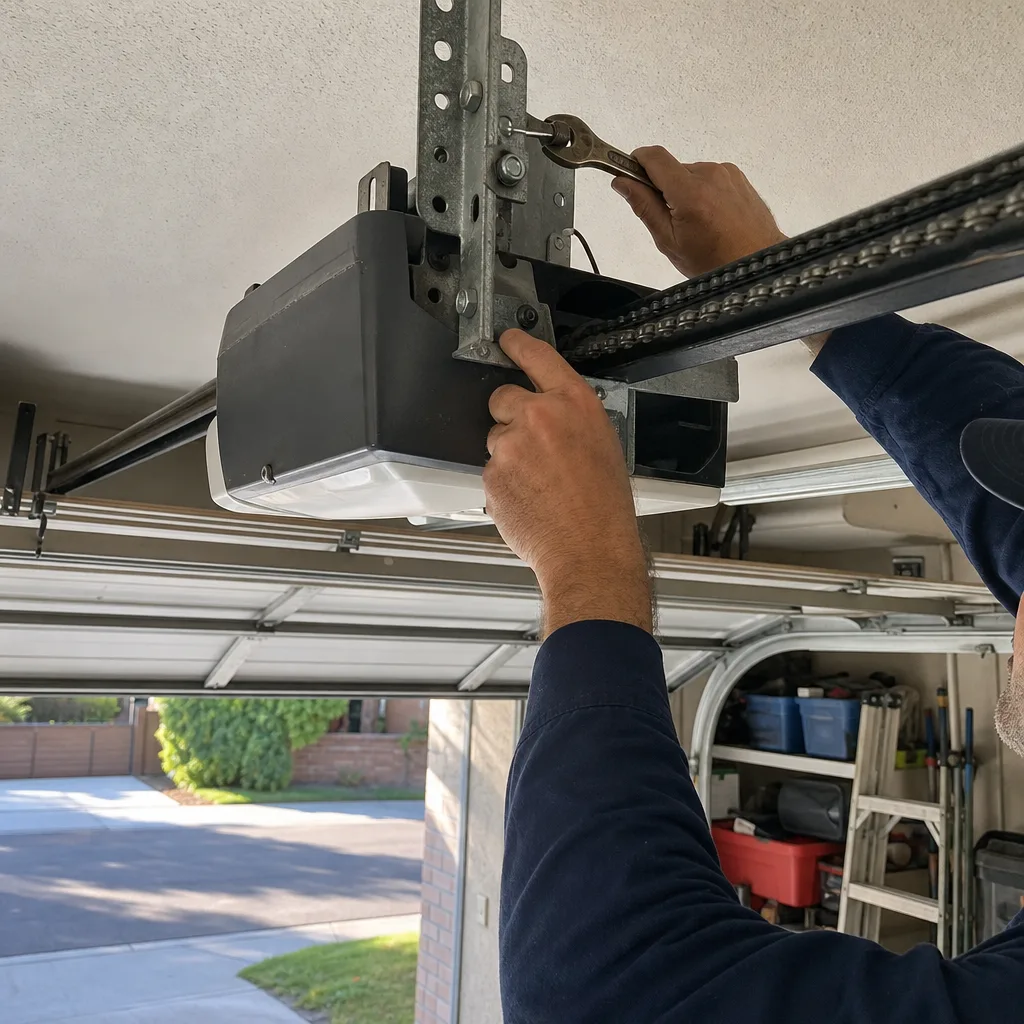
Last updated November 2, 2026
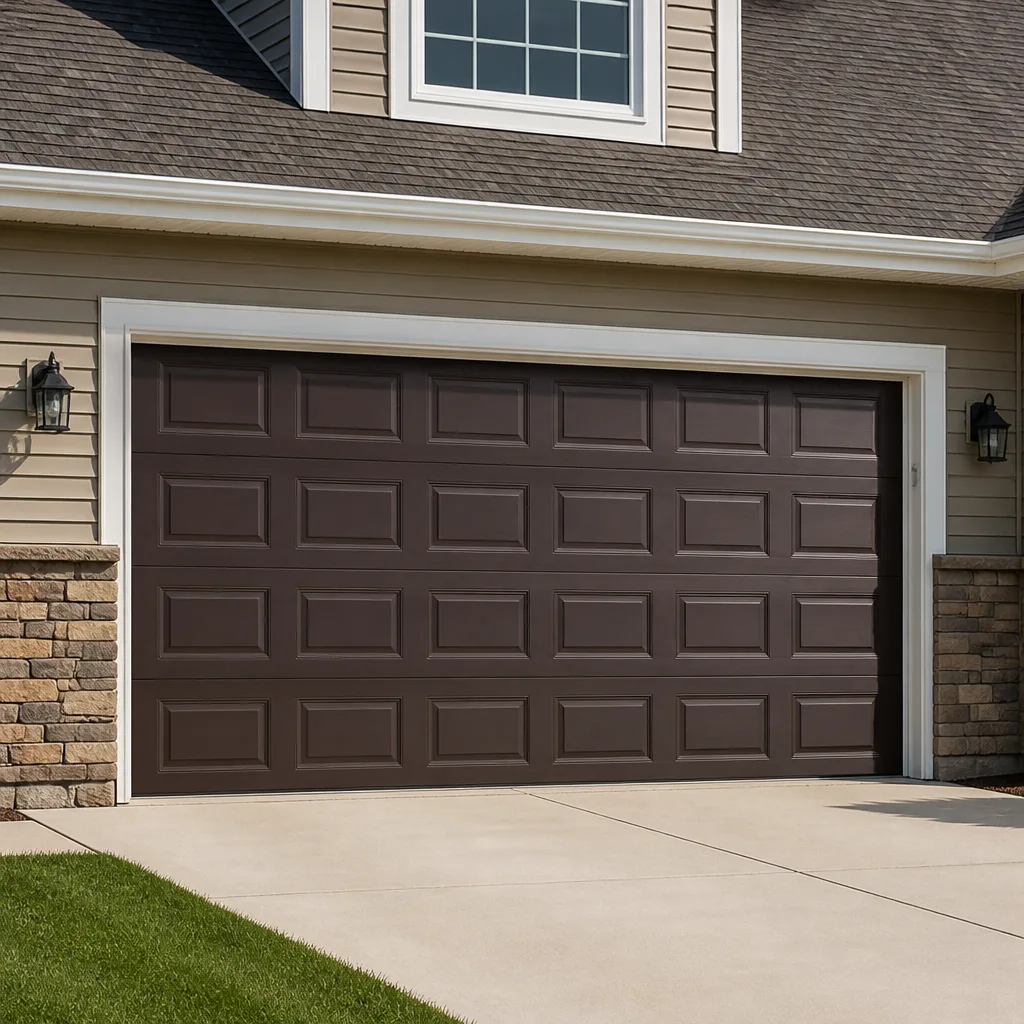 Raised-panel steel
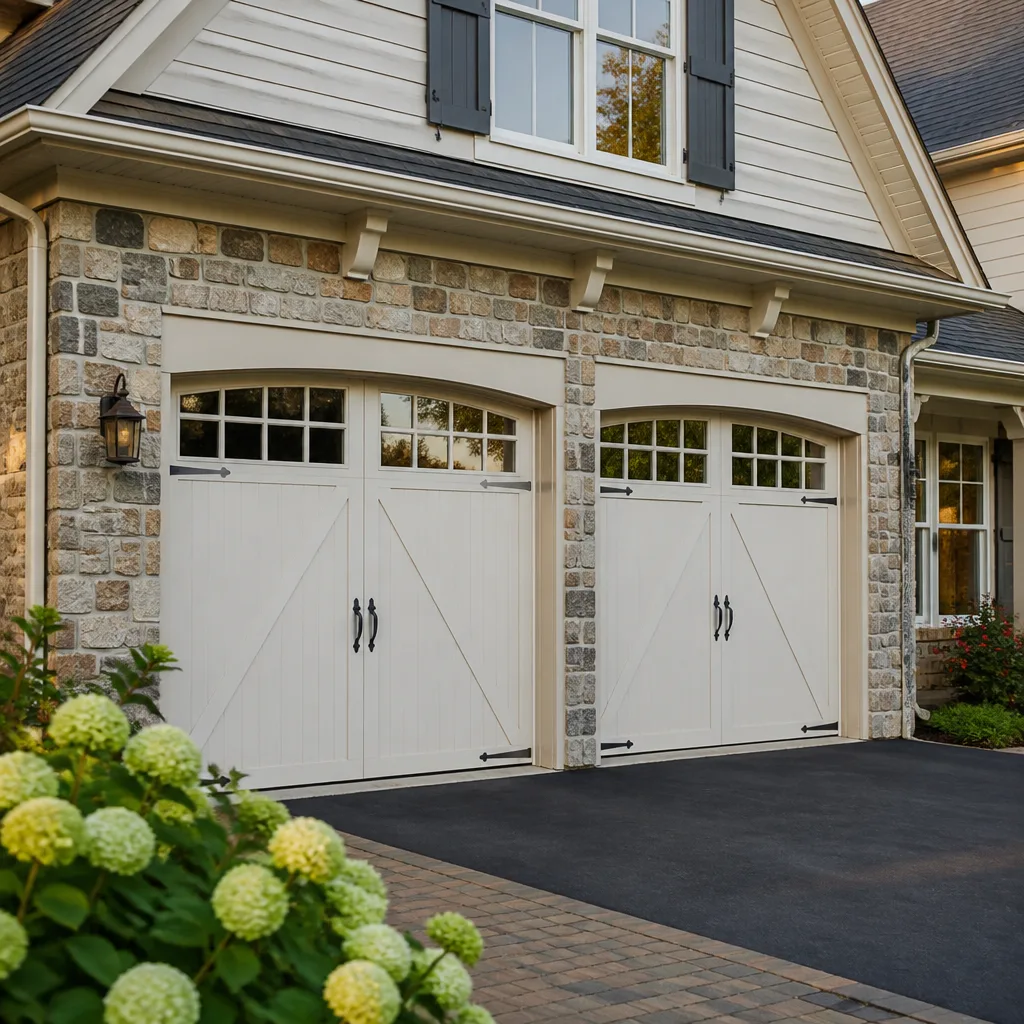 Carriage house
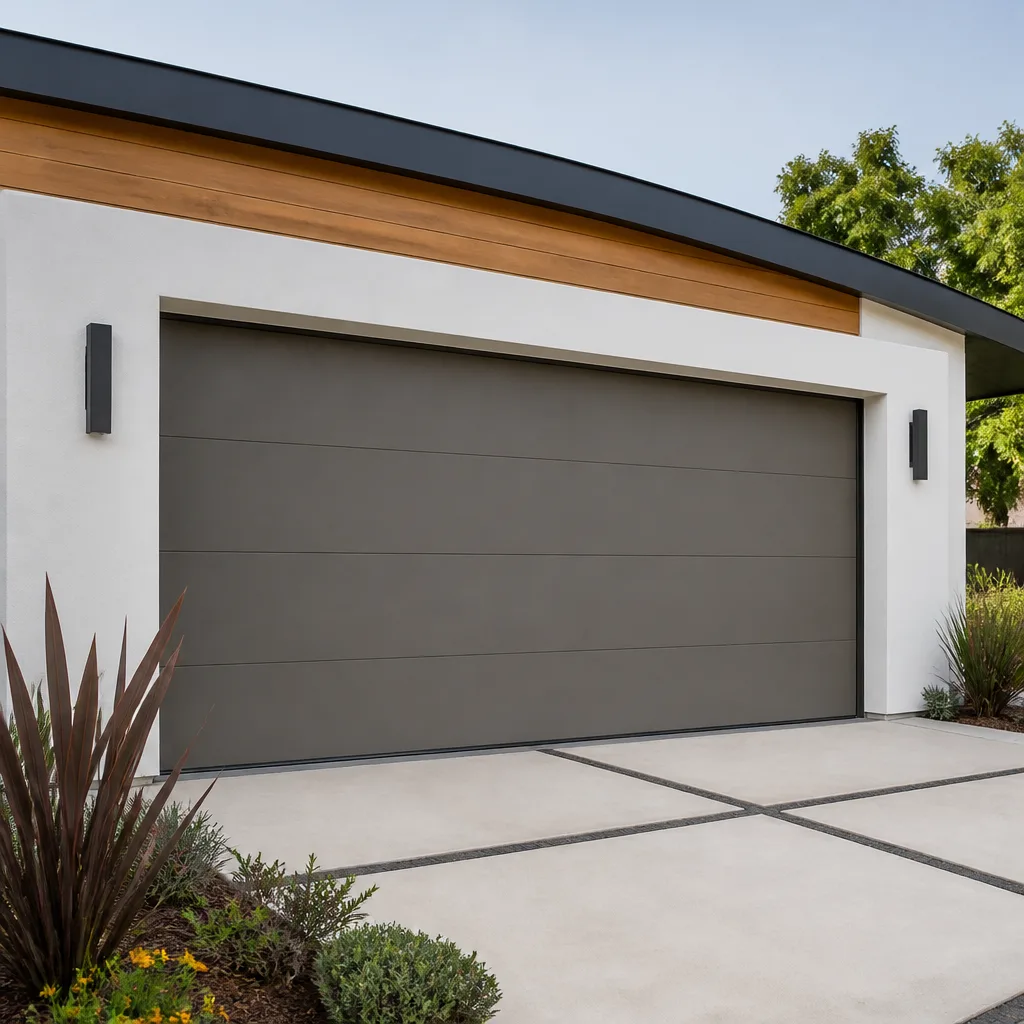 Modern flush
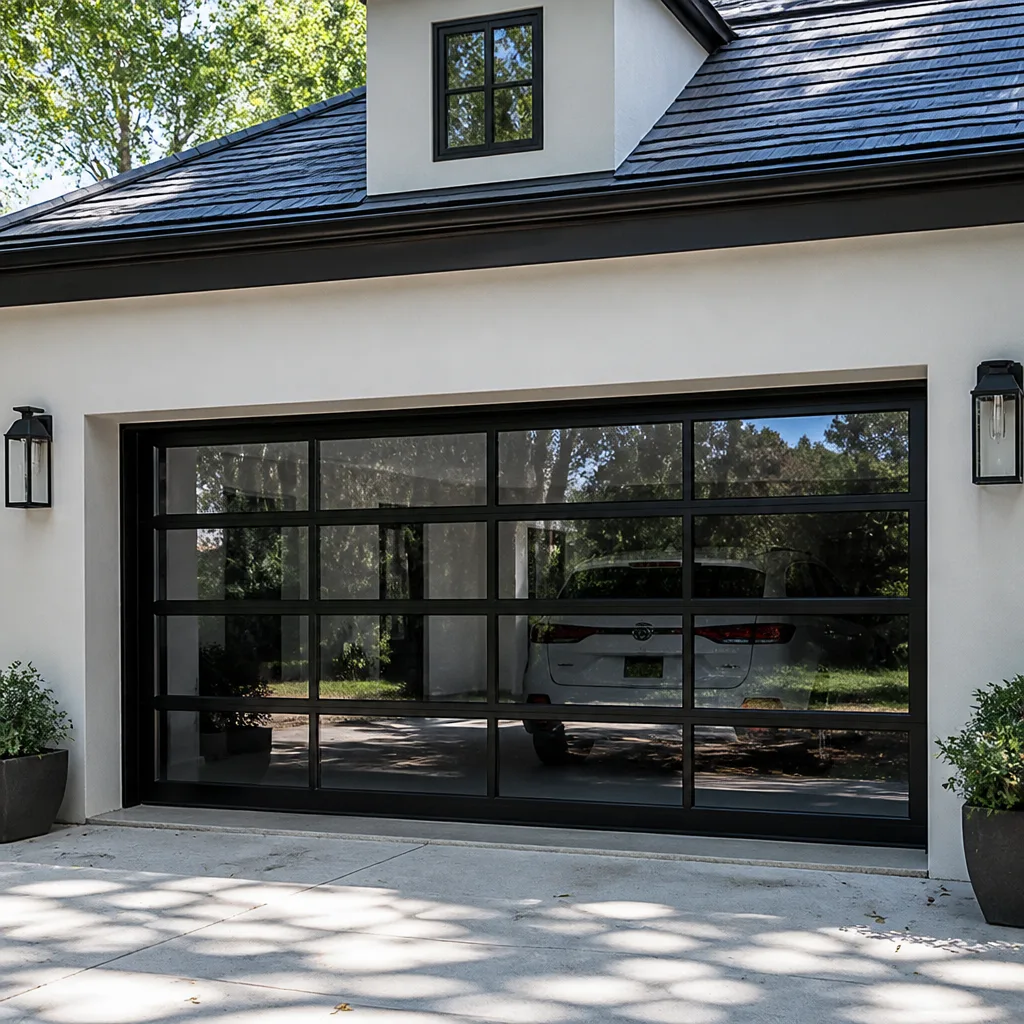 Full-view glass
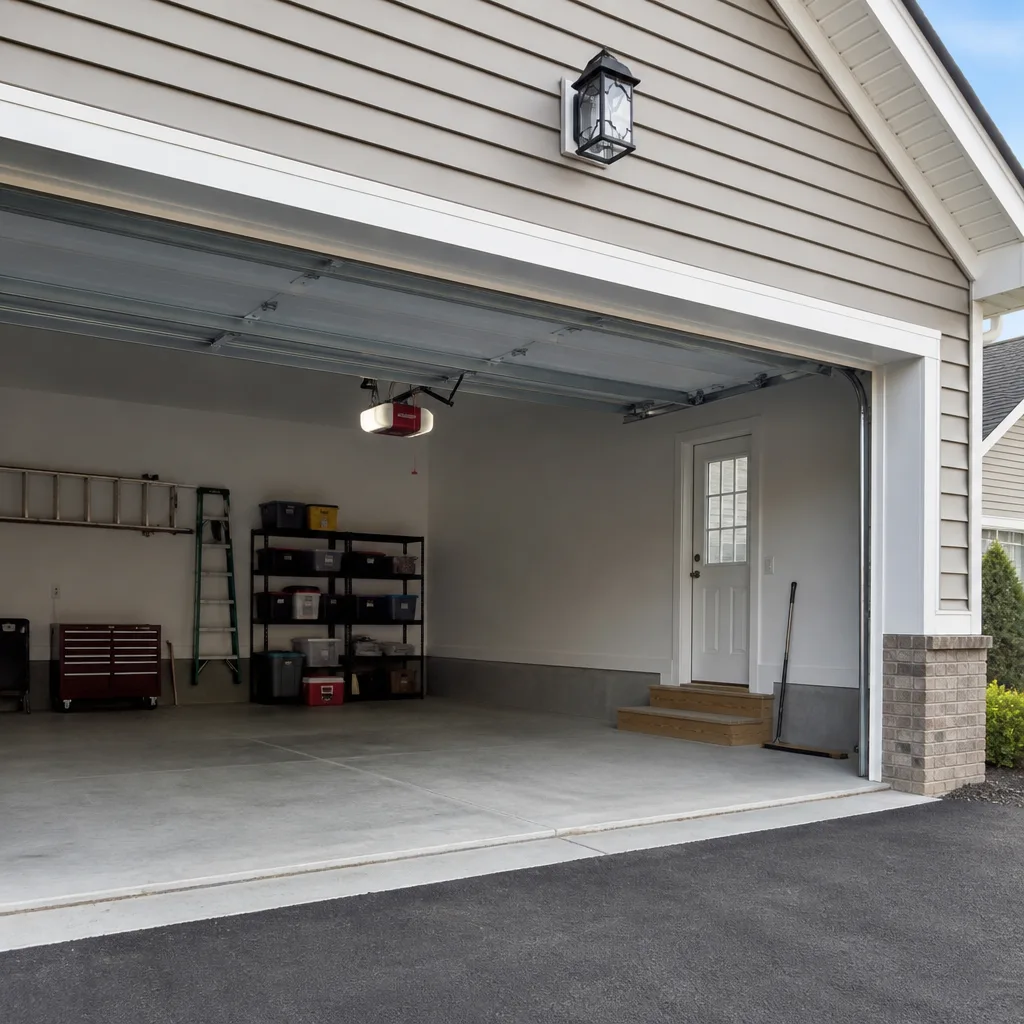 LiftMaster openers
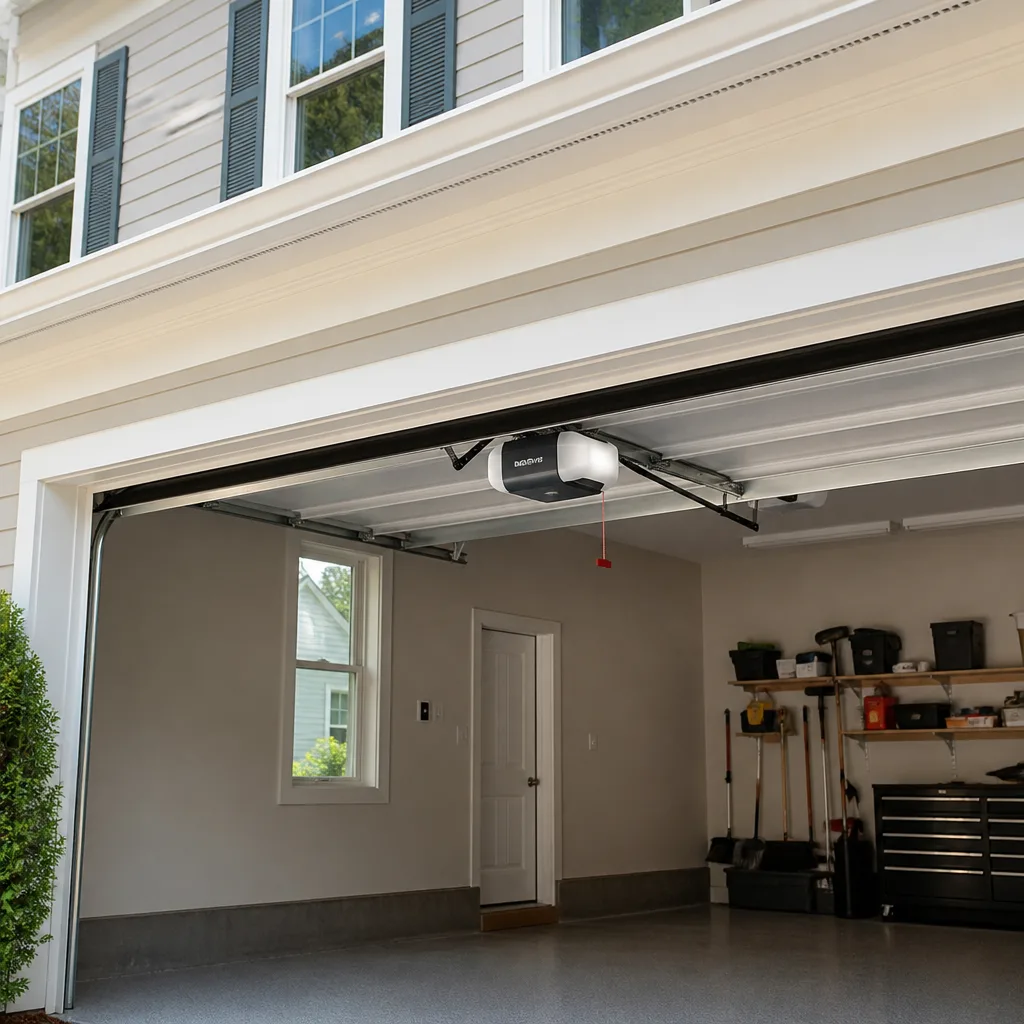 Chamberlain openers
Full 25-point door and opener safety check with every visit - springs, cables, rollers, tracks, and your LiftMaster or Chamberlain opener included
You get a price before we start. It does not change when the truck arrives.
Get your free estimateGarage Door Emergency Preparedness Guide for Folsom Homes
During the 2021 Caldor Fire evacuation, homeowners throughout El Dorado County reported garage doors that wouldn’t open manually because they’d never tested the emergency release cord. They were discovering this for the first time with smoke visible on the ridge and a car trapped inside. That’s the moment you learn whether your garage door is actually prepared for a Folsom emergency, and for too many households, the answer is no. This guide covers the specific failure modes that happen during evacuations, outages, winter storms, and seismic events in the Folsom area, and exactly what to do about them before you need to. For more guides & resources, see our blog.
Quick Answer
Garage door emergency preparedness for Folsom homes means three things: knowing how to operate your door manually when power is out and time matters, having a battery backup system compatible with your specific opener brand, and knowing what to inspect after the threats Folsom actually faces like wildfire evacuation, winter storm debris, and earthquake activity along the Foothill fault system. For a complete overview, see our Garage Door Repair Maintenance Checklist for Folsom Homeowners. Most homes fail at the first one. The emergency release cord is the single most important piece of emergency equipment on your garage door, and most homeowners have never pulled it once.
Styles & brands we work with
- Raised-panel steel
- Carriage house
- Modern flush
- Full-view glass
- LiftMaster openers
- Chamberlain openers
Table of Contents
- How to Operate Your Garage Door Manually During an Emergency
- Battery Backup Openers: What Actually Works During Extended Outages
- Wildfire Evacuation: Securing a Garage Door That Won’t Close
- Post-Seismic Inspection: What to Check After an Earthquake
- Winter Storm and Debris Damage: Folsom’s Second Emergency Season
- Fire Season Pre-Season Checklist for Your Garage Door
- Common Mistakes to Avoid
How to Operate Your Garage Door Manually During an Emergency
The emergency release mechanism on your garage door is a simple cord, usually red, hanging from the opener rail. In a power outage or opener failure, pulling this cord disconnects the door from the motorized trolley so you can lift the door by hand. It works on every major brand installed in Folsom homes, including Chamberlain, Genie, and LiftMaster models, but the procedure has specific steps that people get wrong under stress.
Here is the correct manual release procedure:
- Verify the door is fully closed. If the door is open when you pull the release, it can crash down. This is the most dangerous mistake we see. A door disconnected from its opener while open has no motor holding it up.
- Pull the red emergency release cord straight down and toward the garage interior. You should hear a click as the trolley disengages. On most Chamberlain and Genie openers, the cord hangs from the center rail. Pull it once, firmly. Do not yank repeatedly.
- Lift the door manually using the handles or the bottom edge. A properly balanced door should lift smoothly with moderate effort. If it takes significant force or the door is extremely heavy, stop. That indicates a broken spring, and the door is no longer safe to operate manually.
- Open the door fully. A manually operated door must be lifted all the way to the open position and secured, or it can slide back down. Most doors will stay up when fully opened if the springs are healthy.
- Reconnect the door to the opener after the emergency. Pull the release cord down and toward the door, then run the opener. The trolley will re-engage on the next cycle.
Mistakes That Jam the Door in Emergency Conditions
The most common failure during a Folsom evacuation isn’t the opener. It’s the release cord itself. Here is what goes wrong:
- Pulling the cord while the door is in motion. If the opener is running and the cord is pulled simultaneously, the trolley can bind against the rail. The door locks in place and requires a technician to free it.
- Pulling the cord at an angle. The release mechanism on Chamberlain and Genie openers is designed for a straight downward pull. Pulling at an angle bends the release lever inside the trolley, and the door may not disengage at all.
- The cord has been shortened or tied up. Some homeowners shorten the release cord to keep it away from car roofs. If it’s tied in a knot or wrapped around the rail, you cannot access it quickly. It should hang freely, reachable from the ground without a ladder.
- The door was never balanced after a spring replacement. A door with uneven spring tension will slam shut or refuse to stay open when operated manually. This is a maintenance issue that becomes an emergency issue at exactly the wrong time.
In our experience serving Folsom homes, at least half the garage doors we inspect have a release cord that has never been tested. Pull it once a season, with the door closed, and confirm the door lifts manually before you actually need it. That single test is the difference between evacuating in five minutes and spending fifteen minutes in the garage with the door stuck.
For doors the opener has failed on but the spring is intact, manual operation is not a temporary workaround you should live with for weeks. It signals an opener repair need, and the problem rarely gets better on its own. Our Garage Door Opener Repair in Folsom service addresses the motor, logic board, and drive system issues that leave a door stuck in manual mode permanently.
Battery Backup Openers: What Actually Works During Extended Outages
Folsom’s power outages during high-wind events and PG&E public safety power shutoffs can last hours or days, and a standard garage door opener with no battery backup is a 150-pound dead weight. Battery backup systems have been required by California building code on new garage door installations since 2019, but most Folsom homes predate that requirement. For details on compliance, see Garage Door Permits, Codes & Inspections in CA: What You Need to Know. The gap between what’s required and what’s installed is where emergencies happen.
The key fact homeowners miss: not all battery backup systems are equal, and compatibility depends on the specific opener brand and model already mounted to your ceiling. Here is what actually works:
- LiftMaster and Chamberlain. These brands, made by the same parent company, offer openers with integrated battery backups in their premium lines. The battery is built into the motor housing and kicks in automatically during an outage. When buying new, look for the “Battery Backup” designation on the box. For existing openers, a standalone battery backup unit is available for select models. Most will operate the door between 20 and 50 full cycles during an outage, depending on door weight and condition.
- Genie. Genie’s battery backup solution is available as an add-on unit for their newer belt and screw drive models. Their backup batteries typically provide 50 cycles on a balanced door. The Genie battery is external, mounted adjacent to the opener, which makes replacement simpler but adds a visible component on the ceiling.
- Older models of any brand. If your opener is more than 15 years old, retrofitting a battery backup is usually not possible or not cost-effective. The unit’s logic board was not designed to interface with a battery. In these cases, a new opener installation with integrated backup is the honest recommendation.
A critical caveat: battery backups only work if the battery is charged and functional. These batteries degrade over 3 to 5 years, and in Folsom’s summer garage temperatures, which regularly exceed 100 degrees, degradation accelerates. A battery backup that has never been cycled may be dead the first time you need it. Test it by unplugging the opener once a year and running the door on battery power. If the door moves slowly or the battery warning light is on, replace the battery before fire season.
One more reality check: some Folsom homeowners assume their opener has battery backup because it’s relatively new. Many do not. Check the unit itself for a battery indicator light or a label. If you are not certain, an opener repair specialist in Folsom can identify the model and confirm whether backup power is present or can be added.
Wildfire Evacuation: Securing a Garage Door That Won’t Close
Most emergency guides cover opening a garage door when the power is out. Few cover the opposite problem: you’re under evacuation order, the power has failed or the door has malfunctioned, and the garage door is stuck open. You cannot leave a Folsom home with an open garage. The contents are exposed, the interior door to the house is typically lighter and easier to breach than the front door, and in a wildfire scenario, an open garage becomes an entry point for embers that can ignite the structure from the inside.
Here is how to secure a garage door that will not close during an evacuation, in order of preference:
- Disconnect the opener and close the door manually. With the door open, the manual close procedure is the reverse of manual opening. Stand inside the garage, pull the release cord to disconnect the trolley, and carefully guide the door down by hand using the handles. A door with healthy springs should close with controlled resistance. If the door is heavy or drops, do not fight it; one person cannot safely hold a door with a broken spring.
- If the door will not move manually, check the track for obstructions. In a debris event, branches, leaves, or a displaced roller can jam the track at the lower panels. Clear visible debris from the track channels, but do not attempt to realign a bent track yourself. That is a repair job.
- If the door is stuck partway open or jammed, lock it in place. Most garage doors have manual slide locks on the interior side of the tracks. These bolt the door to the track and prevent it from being lifted. Slide both locks into the engaged position on each track. This does not seal the door, but it prevents the door from being opened further by hand.
- Secure the interior door between the garage and house. This is the door a firefighter will tell you to reinforce. It should be solid-core or metal, with a deadbolt, and it should be closed and locked during evacuation. If your garage door is open and cannot be secured, this interior door is your final barrier.
- Remove the opener from the equation. Pull the release cord so the door is disconnected from the opener. A door that is disconnected cannot be opened by a stray remote signal or a power surge restarting the motor.
This is a scenario we have walked Folsom homeowners through repeatedly, especially after the Caldor Fire changed how El Dorado County residents think about evacuation readiness. The time to learn this procedure is not while an evacuation warning pings your phone. Practice manually closing your door the same way you practice manually opening it.
Post-Seismic Inspection: What to Check After an Earthquake
Folsom sits roughly 30 miles west of the Foothill fault system, a network of lesser-known but active faults that runs along the Sierra foothills from roughly Auburn down toward the Mother Lode country. Seismic events large enough to rattle the house are rare but real, and when they happen, the garage door is often the first part of the home to show damage. The reason is simple: the door panels, tracks, springs, and opener mount are all load-bearing moving parts under continuous tension. Earthquake vibration can shift any of them out of alignment.
After a significant earthquake, here is what to check before using the door again:
- Opener mount brackets. Look at the motor housing mounted to the ceiling. The angle iron and lag bolts should be tight and straight. A shifted mount means the opener’s rail is no longer aligned with the door’s centerline, and running the motor in that condition shears gears.
- Track alignment. Stand in the garage and sight down the vertical tracks on both sides. They should be parallel and straight. A door that shifted during shaking will show as a gap between the door rollers and the track, or a visible bend in the track itself. Do not attempt to run the door on visibly shifted tracks.
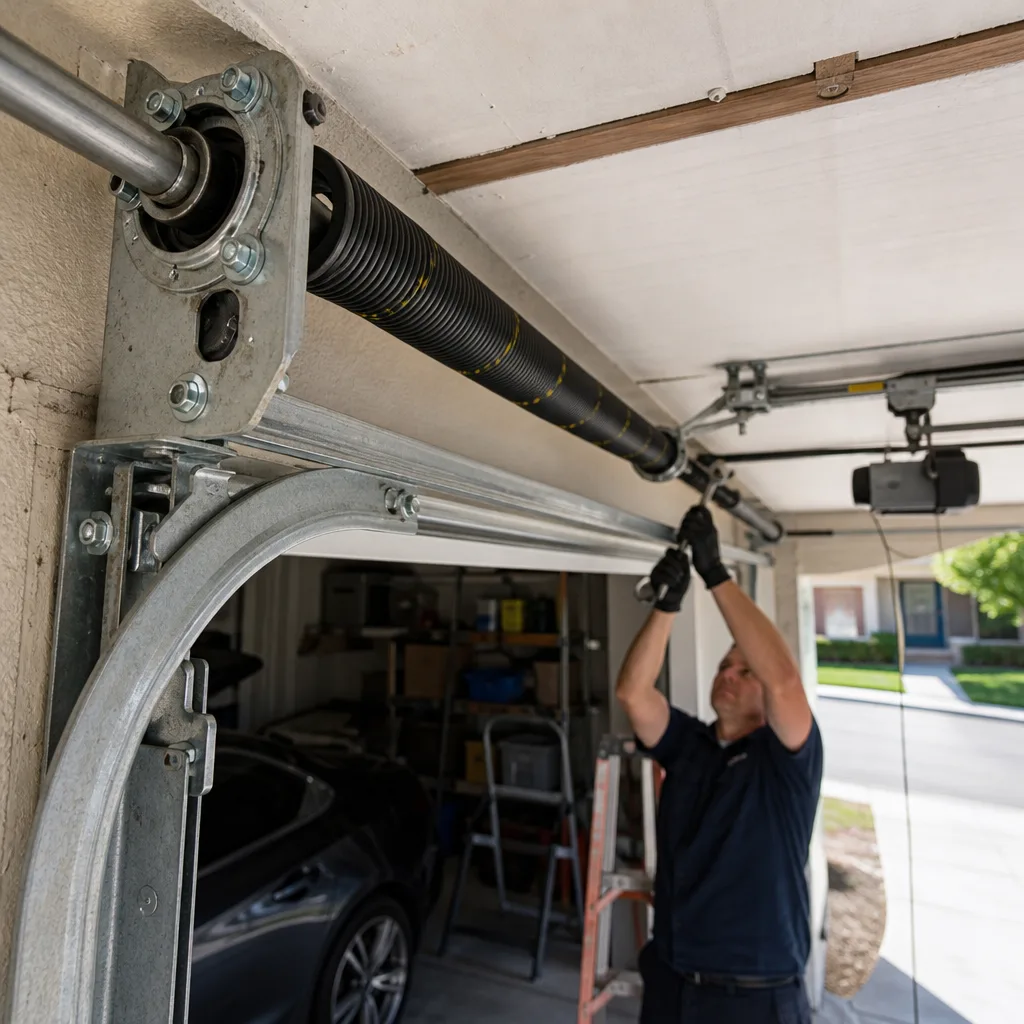
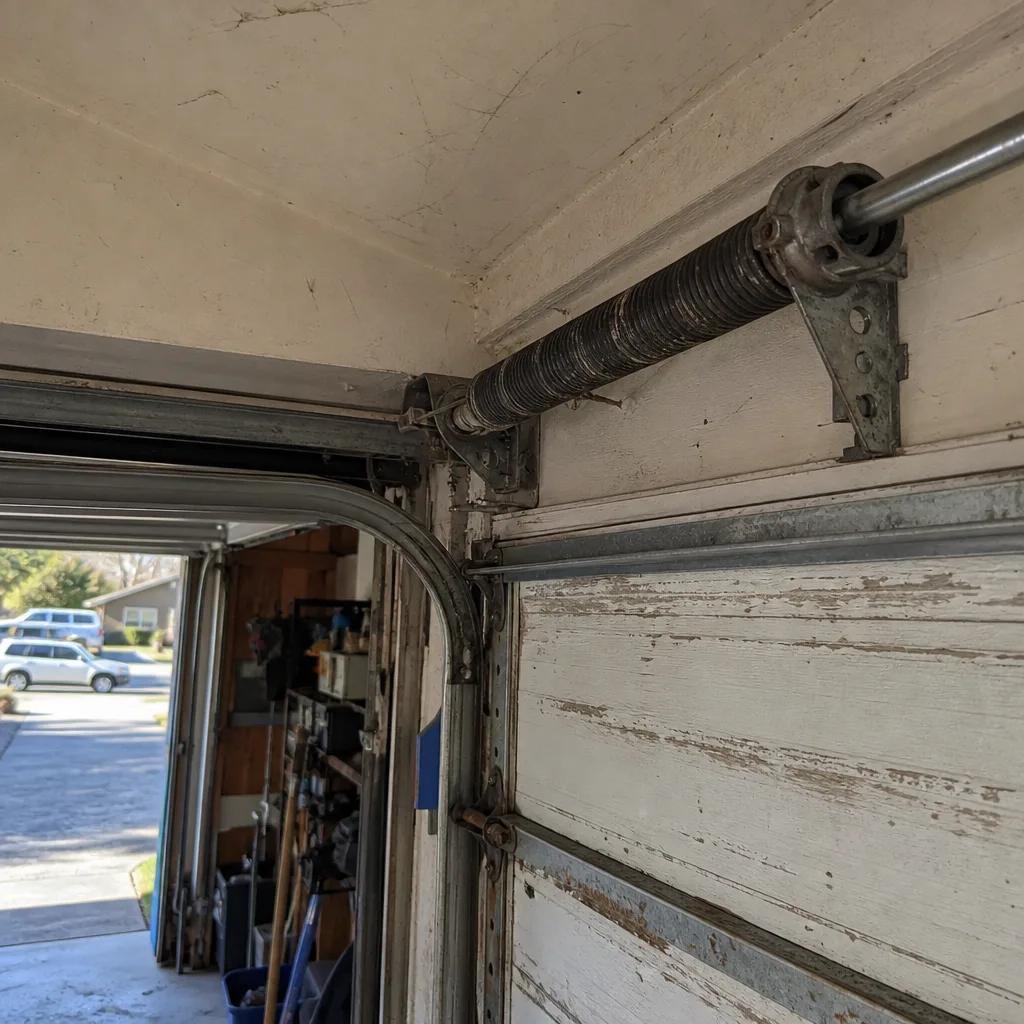
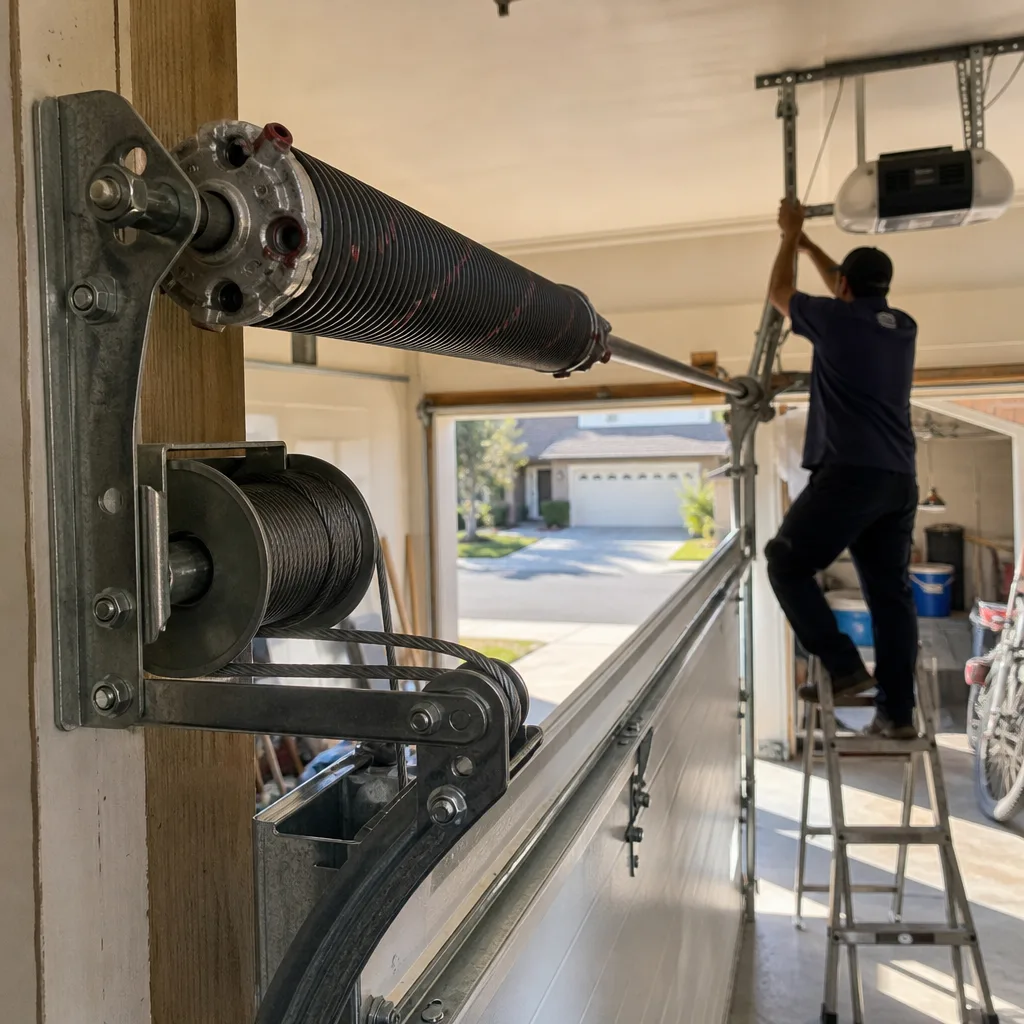
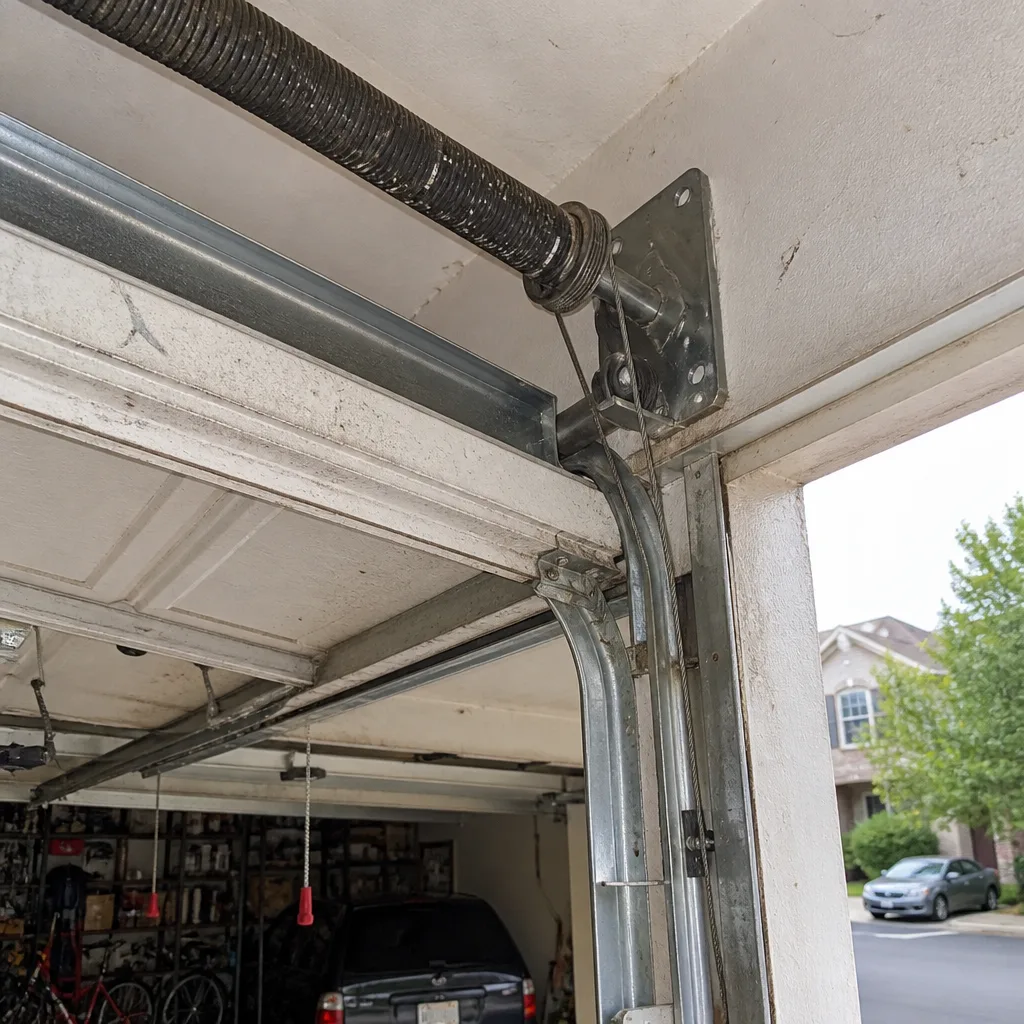
- Spring condition. Check the torsion springs above the closed door. Look for a visible gap in the coil, which indicates a spring has snapped. A snapped spring under residual tension is a serious injury risk and should not be touched. Check the extension springs along the horizontal tracks if you have an older door.
- Door panel alignment. With the door closed, check the seams between panels from the inside. Panels that are uneven or have visible cracks may have shifted during shaking. A shifted panel can bind as the door travels.
- Balance test. Disconnect the opener with the door closed, then manually lift the door halfway. A properly balanced door stays put; a door that drifts down has spring damage. Do not operate an unbalanced door with the opener.
Any of these findings means the door should be inspected before the opener is used again. Running a misaligned door under motor power turns a small shift into a torn rail, a stripped gear, or a thrown cable. For Folsom homeowners dealing with post-earthquake door damage, the repair work should be done by a specialist who can evaluate both the door mechanism and the opener, since the two systems fail together after a seismic event.
Winter Storm and Debris Damage: Folsom’s Second Emergency Season
Folsom’s emergency profile is unique in the Sacramento region because the city sits at a transition point between the valley and the foothills. Winter storms that bring rain to Sacramento can bring high wind, wet snow, and falling tree debris to Folsom, and the garage door is the home’s widest exposed surface. A wind gust that does nothing to your roof can bend a garage door panel outward or drive a branch through a lower panel.
The winter storm failure patterns we see in Folsom homes are predictable:
- Wind-driven debris strikes. A limb or piece of outdoor furniture hitting a door panel can dent the steel, crack a wood panel, or knock a door off its track. A dented panel is not just cosmetic; it changes the door’s weight distribution and can cause the door to bind mid-cycle.
- Moisture expansion on wood doors. Folsom’s winter wet season causes wood door panels to swell. Amarr and Clopay wood doors are especially sensitive to moisture, and a door that swells will rub against the jamb and stress the opener motor. Wood doors in Folsom need exterior sealing before the rainy season, not after.
- Cable slippage. The cables on each side of the door work with the springs to balance the load. Water intrusion into the cable drums on older doors causes the cables to slip or unwind, and a slipped cable makes the door operate unevenly or jam entirely. A door with a slipped cable should be serviced before it drops.
- Opener failure from power surges. Winter storms bring outages and brownouts, and the power surge when electricity returns can fry an opener’s logic board. A surge protector on the opener power outlet is cheap insurance that most Folsom garages don’t have.
For doors that have suffered winter storm damage, the key question is whether the door is safe to operate at all. A visible dent, a scraping sound during travel, or a door that jerks as it moves are all reasons to stop using the opener and call for repair. Continuing to operate a damaged door under motor power multiplies the repair cost and has caused cables to snap under load.
Fire Season Pre-Season Checklist for Your Garage Door
Folsom’s fire season now extends from roughly May through November, and the city’s position at the foothills edge means ember cast from fires in El Dorado County, Placer County, or the American River corridor is a real threat. Your garage door is part of your defensible space plan, whether you think about it that way or not. Here is the pre-season checklist we recommend for every Folsom home, ideally completed in April or early May.
- Test the manual release. Disconnect the door from the opener and confirm it lifts and closes manually without binding. Reconnect and run a full cycle.
- Test the battery backup. If you have one, unplug the opener and run the door on battery. If no backup is present and your opener is older, consider whether replacement or a retrofit is warranted this season.
- Clear exterior hardware of debris. The track channels, bottom weather seal, and top of the door collect leaves, pine needles, and dust through fall and winter. Embers landing on accumulated debris at the base of a garage door or in the track channels is a direct ignition path to the door itself. Clear it all out.
- Check the bottom weather seal. The rubber seal along the bottom of the door is the first defense against ember intrusion into the garage. A torn, missing, or hardened seal leaves a gap at the threshold. Replace the seal if it’s cracked or no longer compresses evenly.
- Inspect exterior door panels for gaps. Metal and vinyl doors made by Clopay and Amarr are common in Folsom, and age and impact damage can create small gaps between panels. Embers entering the garage through these gaps is exactly how garage fires start. Any visible gap at the panel seams should be repaired or sealed.
- Lubricate the rollers and hinges. A dry roller is a noisy roller, and the extra friction during a hot season adds load to the opener. Use a silicone or lithium spray, not WD-40. Do not lubricate the track itself.
- Check vegetation around the door. Folsom defensible space guidelines recommend no flammable vegetation within 5 feet of the structure. Shrubs, woodpiles, or accumulated leaf litter against the garage door exterior should be removed before fire season.
This is a 30-minute checklist. Most of it requires no tools and no special skill. The items that do require parts, like a worn bottom seal or a failing battery, are straightforward repairs that can be handled during the same visit by a Garage Door Repair in Folsom specialist before fire season starts, rather than as an emergency during an evacuation warning.
If your door is beyond seasonal maintenance and needs replacement, the conversation should happen before fire season, not during it. A new garage door installation in Folsom takes planning for measurements, materials, and scheduling, and doing it during peak fire season means competing with every other homeowner who realized their door was failing at the worst possible time.
Common Mistakes to Avoid
- Never testing the emergency release until the emergency. The release cord is the garage door’s fire extinguisher. You want to know how it works before the ridge is on fire. Test it with the door closed, once per season. If it doesn’t disengage cleanly, fix it now.
- Assuming a newer opener has battery backup. California code requires battery backup on new garage door installations after 2019, but if your Folsom home’s opener was installed before that, it probably has no backup at all. Check the unit rather than assuming. We’ve heard “I thought it had one” too many times.
- Pulling the release cord with the door open. This is the mistake that turns an inconvenience into a damaged door or an injury. The door is only safe to disconnect when fully closed. If the door is stuck open, do not pull the cord as your first move.
- Trying to adjust or replace springs as a DIY project. Torsion springs on garage doors store enough energy to cause serious injury or death when they release improperly. This is not a YouTube tutorial situation. A snapped spring is a professional repair, period.
- Ignoring a door that’s been “acting up” for weeks. A door that shudders, hesitates, or makes grinding sounds is telling you something before it fails completely. Addressing it during normal conditions costs less and avoids the exact scenario where it fails during an outage or evacuation. The pattern we see in Folsom is delay until emergency, and it is the most expensive way to own a garage door.
- Lubricating the track. The track should stay clean and dry. Spraying lubricant into the track channels attracts dirt and grime, which creates a paste that strains the rollers and opener. Lubricate the rollers and hinges only.
- Using the garage door as the primary exit during a wildfire evacuation when the front door works. If you have a functioning front or side door, use it. The garage door is the heaviest, most complex moving component in your home, and during an emergency is exactly when it is most likely to fail. Use the simplest exit available.
See the difference
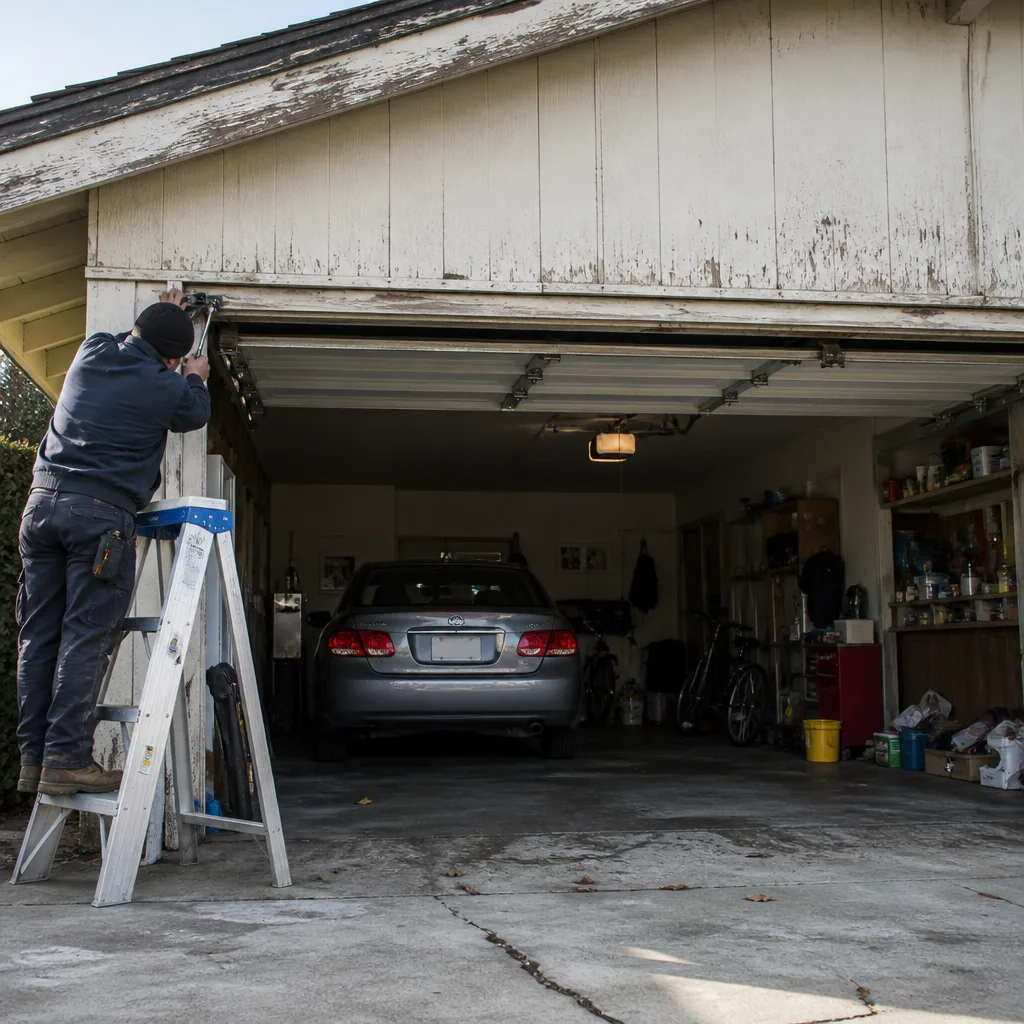 Before
 After
 Before
 After
 Before
 After
When to Call a Professional
A snapped spring, a bent track, a slipped cable, or a door that has jumped off its rollers are all professional repair jobs. These are not maintenance items, and attempting them without the right tools and training creates a serious injury risk. The same applies to opener logic board failures, which are electrical problems, and any issue where the door will not stay in place when operated manually. A garage door is a system under continuous tension, and a failure in one component puts load on every other component.
For Folsom homeowners, the most useful thing a professional can do before an emergency is a full inspection: balance check, spring inspection, roller and hinge condition, opener force settings, and manual release function. That visit answers the question every homeowner should be able to answer: if the power goes out and I need to leave, will this door open? Garage Door Service Folsom offers free estimates in Folsom, and one visit can prepare your door for fire season, winter storm season, and everything between. Call (877) 318-4983 to schedule.
Frequently Asked Questions
Pull the red emergency release cord hanging from the opener rail with the door fully closed, then lift the door manually by hand. A properly balanced door lifts with moderate effort and stays open. If the door is heavy or will not stay up, the springs may be broken and the door should not be operated manually.
Only if your opener has a functioning battery backup system. Openers installed after 2019 should have one per California code, but older Folsom homes typically do not. Check your opener for a battery indicator or test it by unplugging the unit and running the door. If it doesn’t move, you have no backup.
Battery backup installation in Folsom typically costs between $150 and $400 when the opener can be retrofitted, and more if a new opener with integrated backup is required. The price depends on the opener brand and model. Call (877) 318-4983 for an exact quote on your specific opener, and estimates are free.
No. Garage door torsion springs are under extreme tension and can cause serious injury or death if they release during handling. This is a professional repair. A trained technician has the correct winding bars and knows the procedure for the specific spring type on your door.
Pull the release cord to disconnect the door from the opener, then close the door manually by hand. If the door will not move, engage the manual slide locks on the tracks, close and lock the interior door between the garage and house, and evacuate. The door can be repaired after the evacuation order is lifted.
Test it once per season, or at minimum twice a year. Disconnect the door with it fully closed and confirm it lifts and closes manually without strain. This test takes two minutes and is the single most important emergency preparedness step for a garage door. Call (877) 318-4983 if the door binds or the release mechanism fails during testing.
The Bottom Line
Folsom’s garage doors face emergency conditions that generic preparedness guides ignore: wildfire evacuation orders, PG&E power shutoffs, winter storm debris, and seismic activity from the Foothill fault system. Preparation means knowing how to operate your door manually, having functional battery backup if your opener is modern enough to support one, and inspecting the door’s components after every severe event. The emergency release cord is the one piece of equipment that matters most, and it is the one most homeowners have never tested. Test it this week. If it fails, or the door doesn’t move smoothly by hand, fix it now while there’s time. The Caldor Fire taught Folsom and El Dorado County that emergency readiness is not a drill. For full-system garage door service in the Folsom area, contact Garage Door Service Folsom home specialists at (877) 318-4983.
Written by the team at Garage Door Service Folsom, serving Folsom since 2016.