
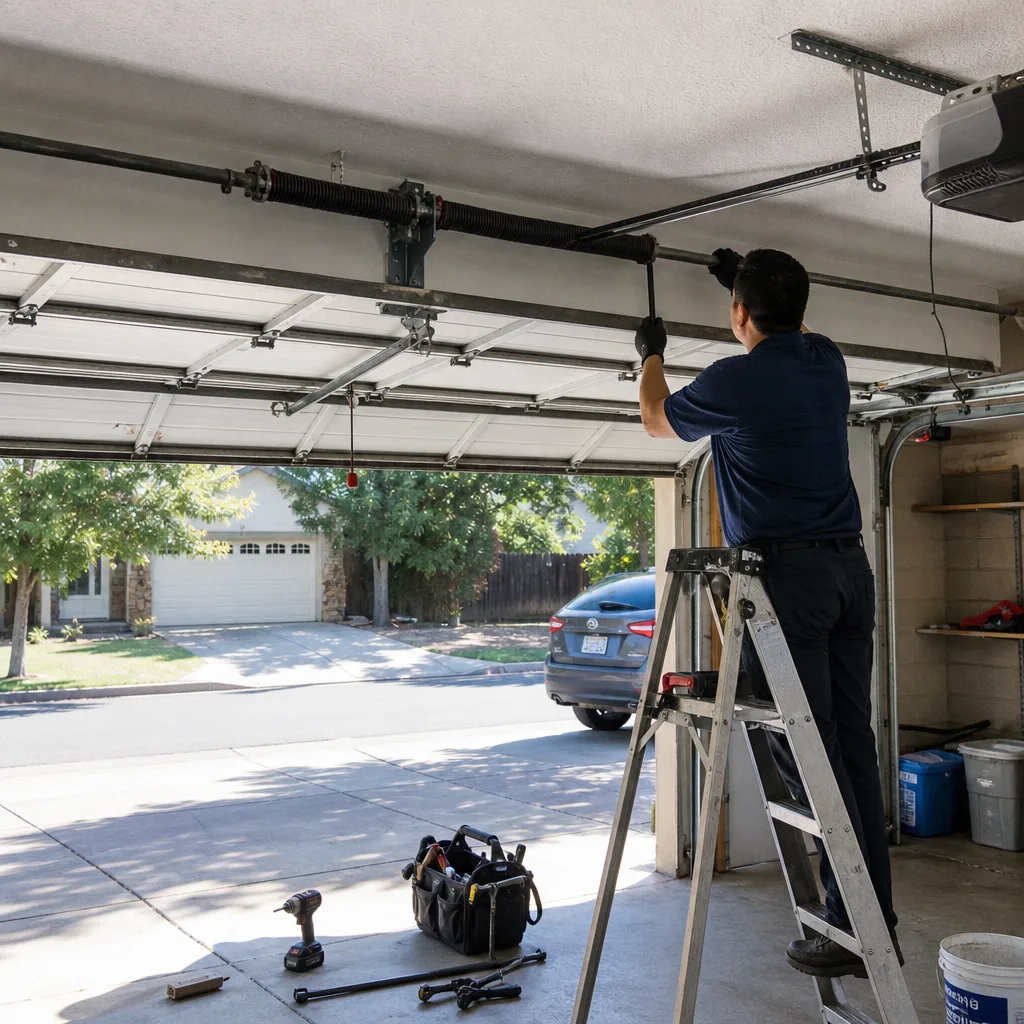
Last updated November 2, 2026
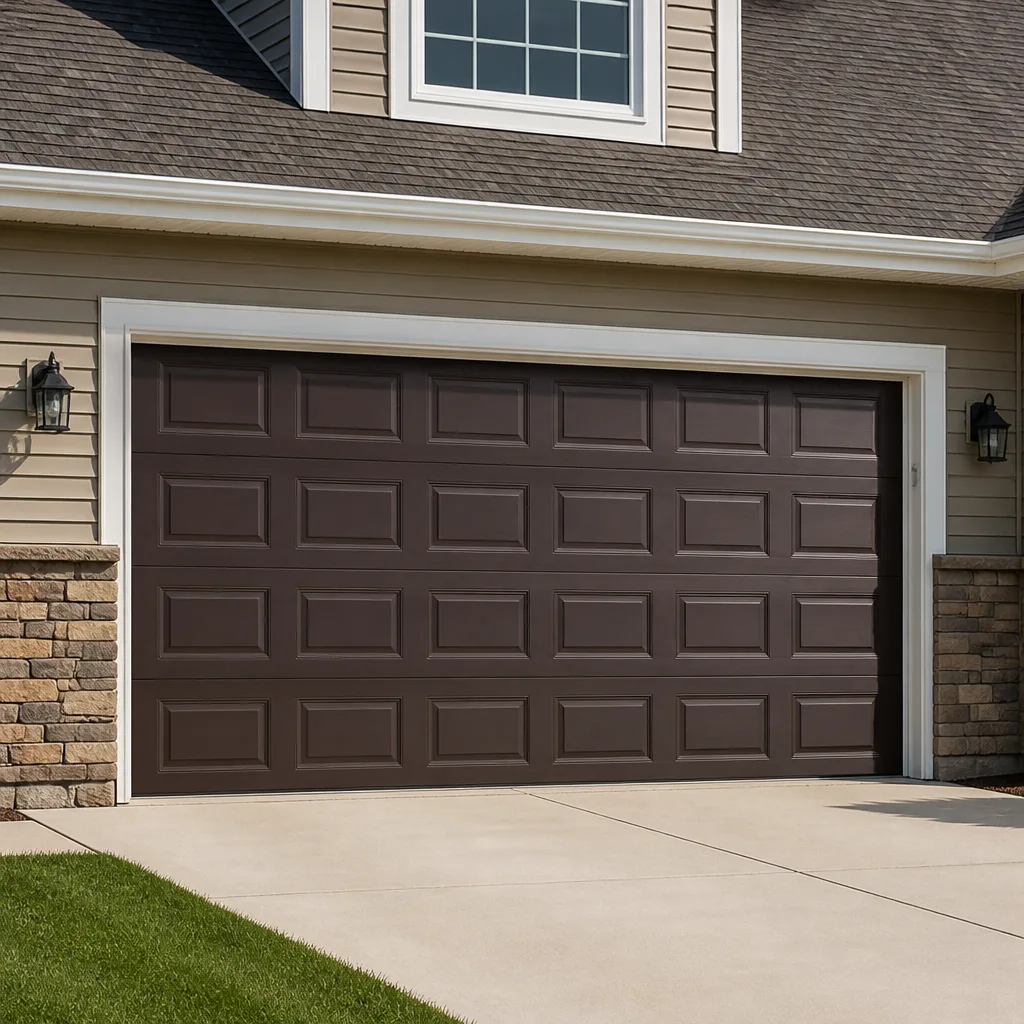 Raised-panel steel
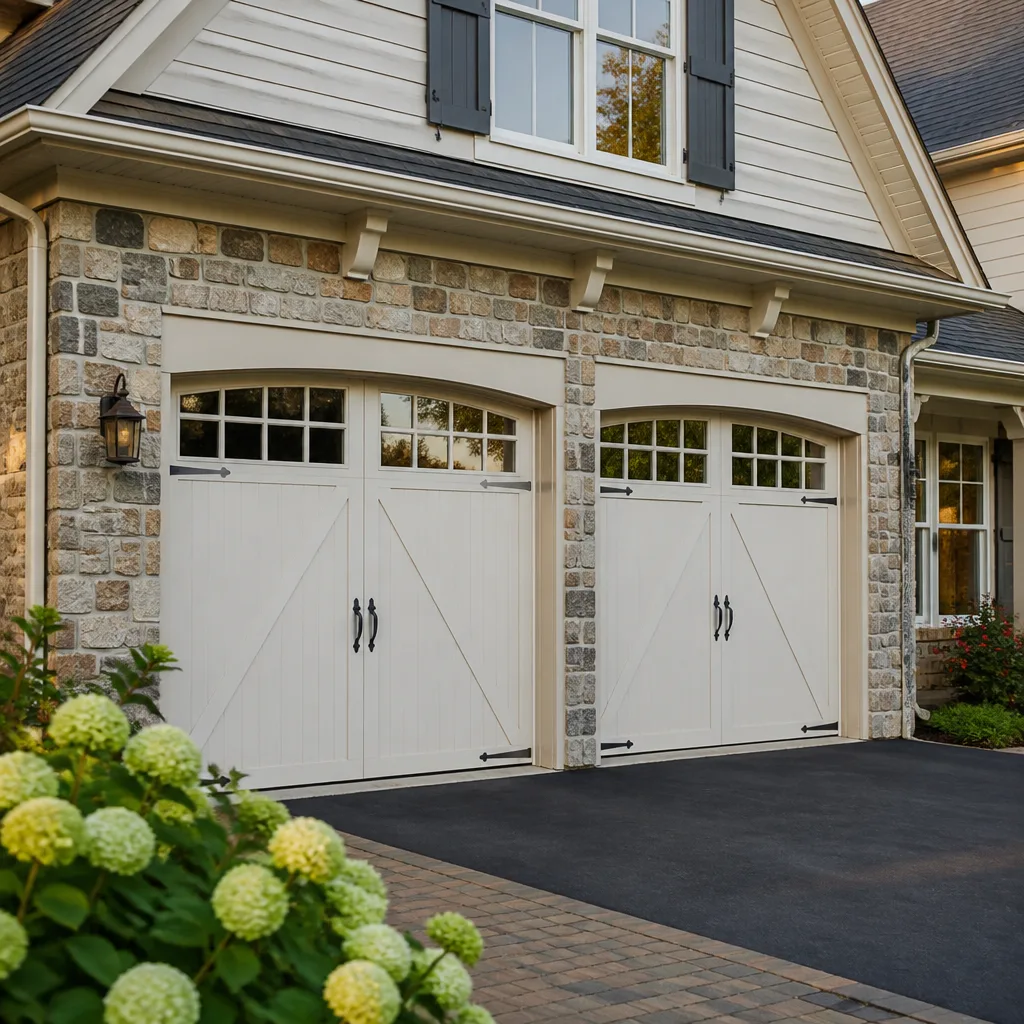 Carriage house
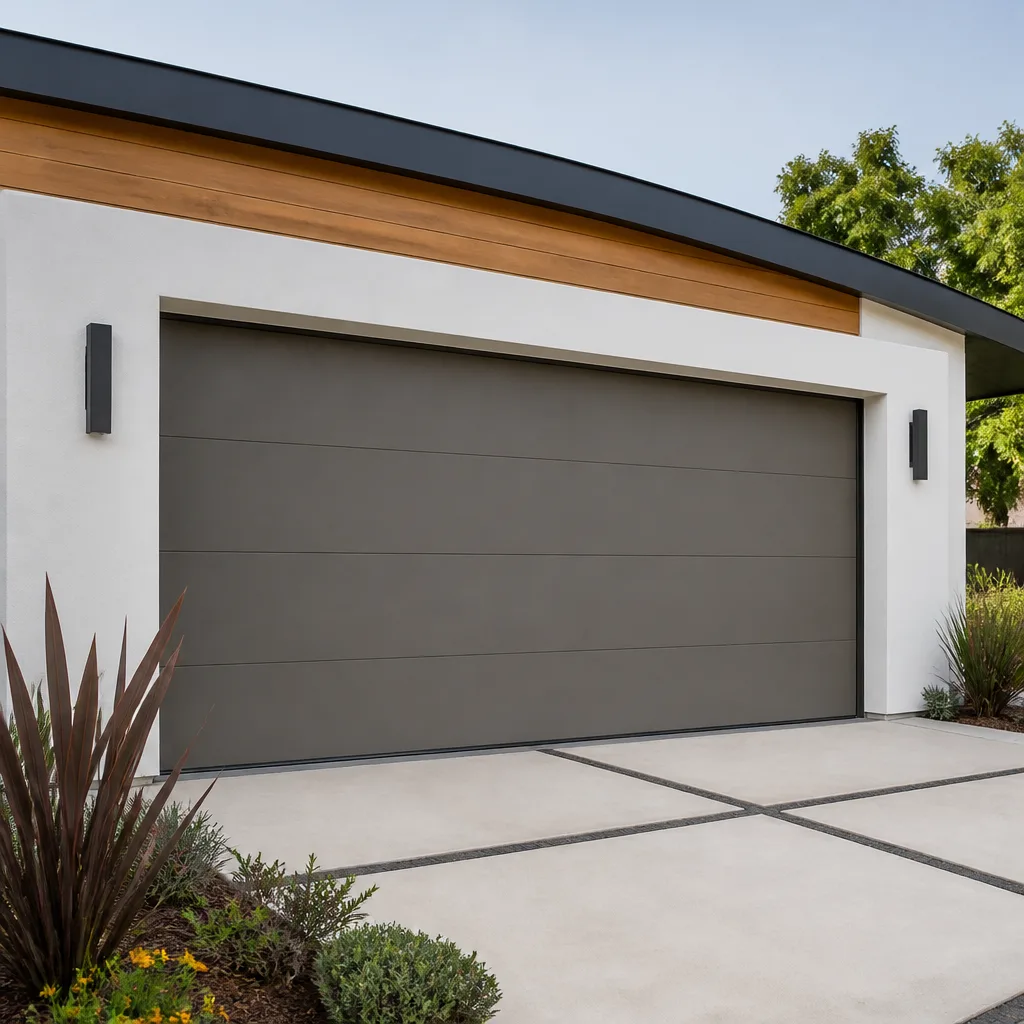 Modern flush
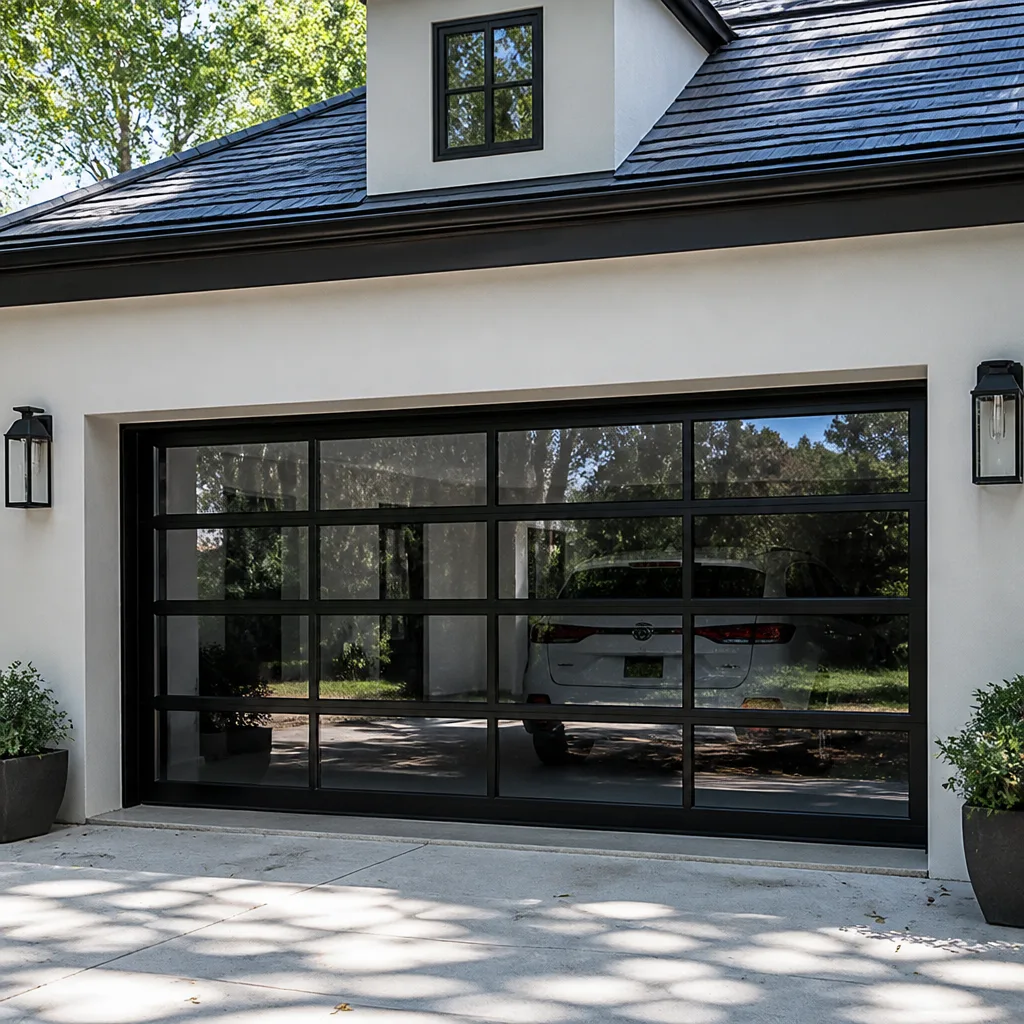 Full-view glass
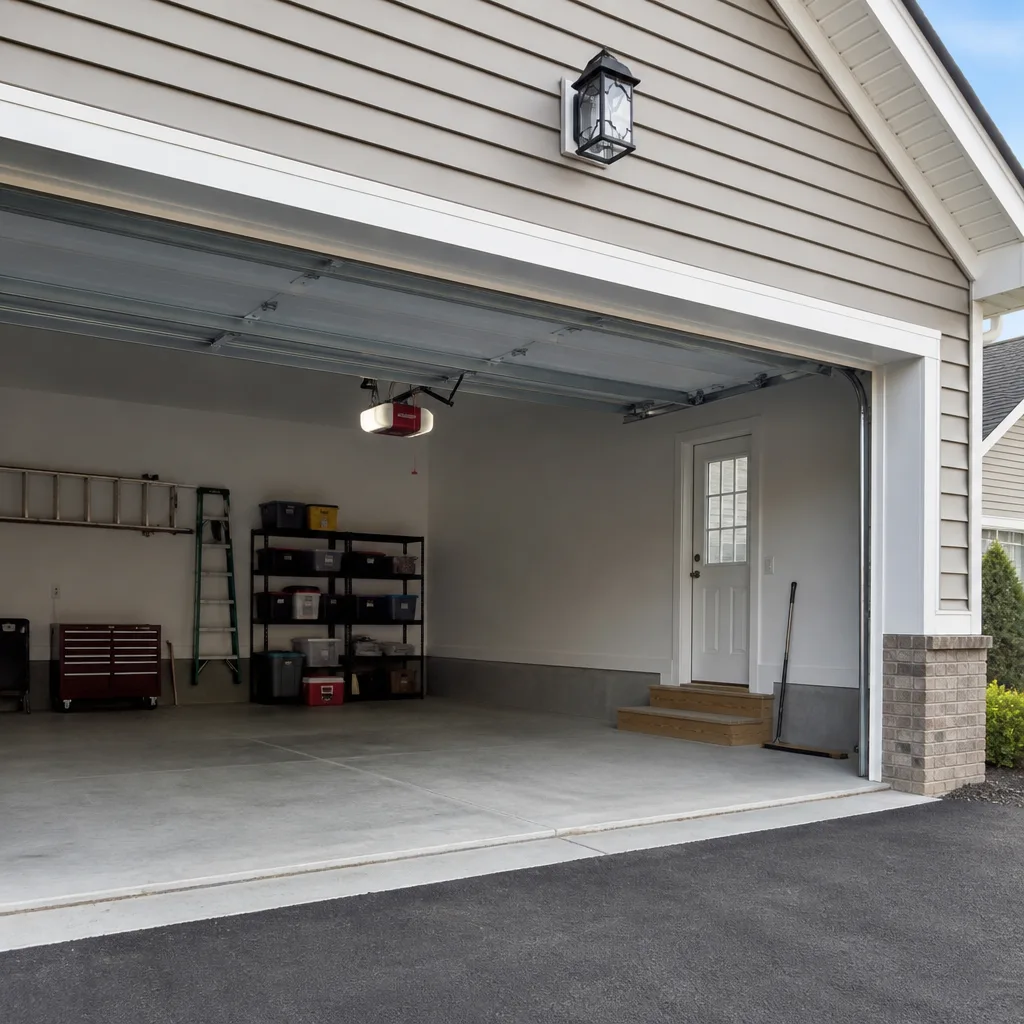 LiftMaster openers
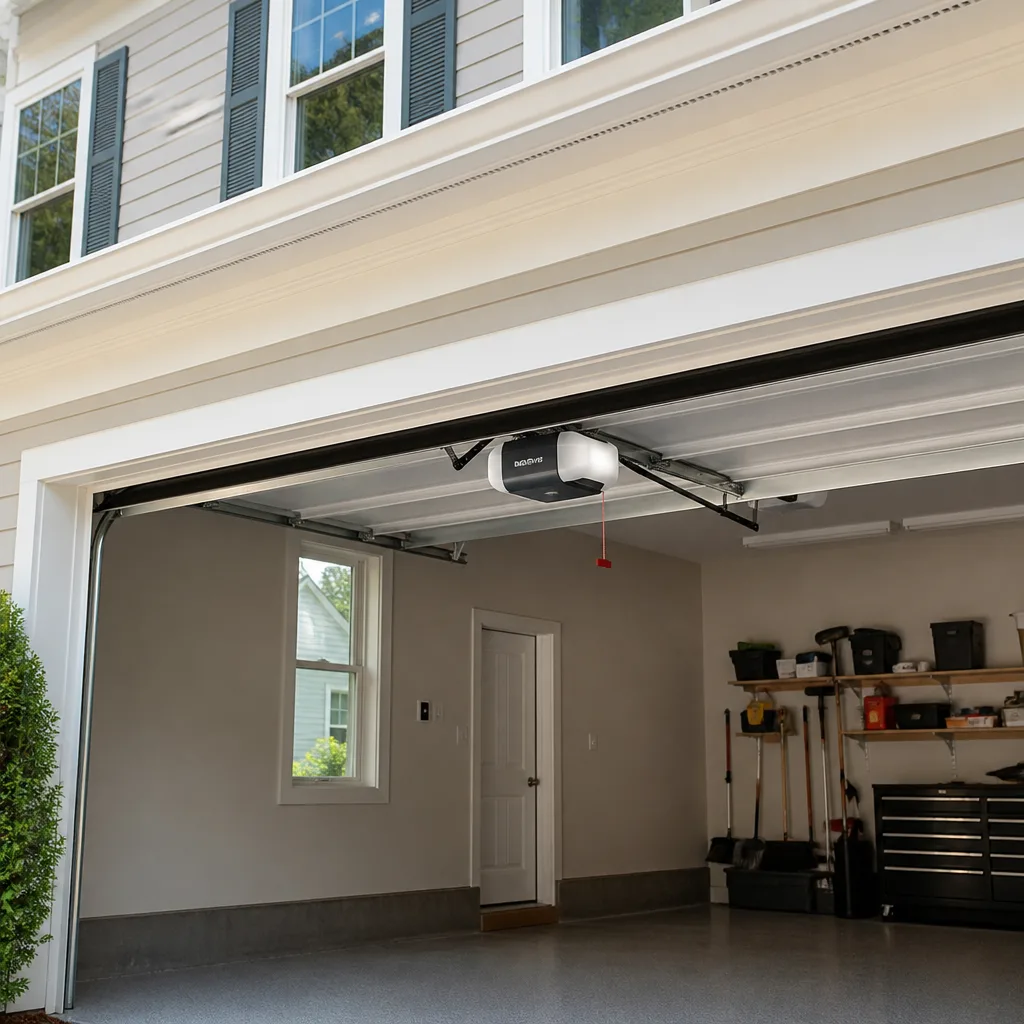 Chamberlain openers
Full 25-point door and opener safety check with every visit - springs, cables, rollers, tracks, and your LiftMaster or Chamberlain opener included
You get a price before we start. It does not change when the truck arrives.
Get your free estimateGarage Door Repair Troubleshooting: Common Problems and How to Fix Them
A door that reverses before hitting the floor and a door that reverses halfway down are two completely different problems with different parts and different price tags. Yet most homeowners describe both as “the door won’t close,” which sends technicians down the wrong diagnostic path and wastes everyone’s time. This guide teaches you to read what your door is actually telling you: the sounds it makes, where it stops, how it moves. By the time you finish, you’ll describe the problem to a technician in a way that pinpoints the cause quickly, and you’ll know which fixes you can handle yourself and which ones demand our Garage Door Repair services. We’ve built this from years of service calls across Folsom, where doors face their own specific challenges: heavy pollen in spring, dry summer heat that warps wood and fatigues parts, and the daily open-close cycle that most households put on their door 3 to 5 times a day.
Quick Answer
Most garage door problems fall into five categories: the door won’t open or close at all, it reverses before completing travel, it’s noisy, it’s uneven, or the opener runs but the door doesn’t move. Common causes include blocked or misaligned photo-eyes, worn rollers, broken extension or torsion springs, stripped gears in the opener, or a door that’s out of balance. Some fixes are safe DIY tasks you can complete in minutes with zero tools, while others require professional attention because the components are under extreme tension. For more guides & resources, explore our blog.
Styles & brands we work with
- Raised-panel steel
- Carriage house
- Modern flush
- Full-view glass
- LiftMaster openers
- Chamberlain openers
Table of Contents
- The Door Won’t Close: Photo-Eyes, Limits, and Force Settings
- The Door Won’t Open: Opener Issues vs. Mechanical Failures
- The Door Reverses Mid-Cycle: Reading Where and When It Stops
- Noise Diagnostics: Grinding, Popping, Scraping, and Rattling
- One Side Drops or the Door Sits Uneven: Balance and Cable Problems
- Opener Runs But Door Doesn’t Move: The Disconnect
- Intermittent Problems: How to Document What You’re Seeing
- Red-Flag Symptoms: Stop Using the Door Now
The Door Won’t Close: Photo-Eyes, Limits, and Force Settings
When a door refuses to close, the first thing to check is the photo-eye system. These are the two small sensors mounted about 6 inches off the floor on either side of the door opening. They send an invisible beam across the doorway, and if anything breaks that beam, the door refuses to close or immediately reverses. The most common issue we see in Folsom is simple: a rake handle leaning against the wall, a bicycle wheel, or a garden hose that’s shifted into the beam path. Pull every object away from the door tracks and try again before you touch anything else.
If the path is clear and the door still won’t close, check the photo-eye alignment. Both sensors have small LED lights. One should be solid, one should be solid or blinking depending on the brand. If either light is out or flickering, the sensors are out of alignment or the wiring has a problem. Gently nudge the sensor brackets until both lights go steady. On LiftMaster and Chamberlain openers, a blinking light pattern on the motor unit itself often tells you exactly what’s wrong; count the blinks and match them to the chart printed on the opener body.
The third common culprit is the close-force setting or the close-limit setting. These are small adjustment screws or buttons on the opener motor unit. If the close force is set too low, the opener interprets normal resistance as an obstruction and refuses to complete the cycle. If the close limit is set too far, the door travels past the floor point and rebounds. Adjusting these is possible for a homeowner, but it requires careful incremental changes and observing the door through a full cycle each time. If you’re not comfortable with it, this is a quick professional task.
Quick photo-eye checklist
- Clear every object from the door path and sensor area.
- Check both sensor LEDs. Solid on both means the beam is aligned and receiving.
- Wipe the sensor lenses with a dry cloth. Pollen and dust can block the beam even when alignment is fine.
- Check the sensor wiring at the back of each unit. A loose wire manifests as the same problem as misalignment.
- Test the door. If it still reverses or refuses to move, the issue is likely the force or limit settings, not the photo-eyes.
One more Folsom-specific point: summer power fluctuations from AC load on the grid can corrupt opener logic boards. If your door worked perfectly yesterday and refuses today with no physical obstruction, unplug the opener for 60 seconds and plug it back in. That resets the board and clears transient faults on LiftMaster, Chamberlain, Genie, and Raynor units alike.
The Door Won’t Open: Opener Issues vs. Mechanical Failures
Here’s the diagnostic fork most homeowners never learn: when the door won’t open, you have to determine whether the opener is running or not. If you press the button and hear nothing, the problem is electrical: a tripped circuit breaker, a dead battery in the remote, a wall button that’s failed, or a fried logic board in the opener. If you press the button and hear the motor running but the door doesn’t move, the problem is mechanical: a broken spring, a broken gear, or a disconnected drive system.
Start with the simple electrical checks. Is the opener’s power cord plugged in? Is the circuit breaker for the garage tripped? Does the wall button work even when the remote doesn’t? If the wall button opens the door and the remote doesn’t, you have a remote problem, not a door problem. Replace the remote battery. If neither wall button nor remote works and you hear nothing from the motor, check the breaker, then the opener’s fuse or internal circuit protection.
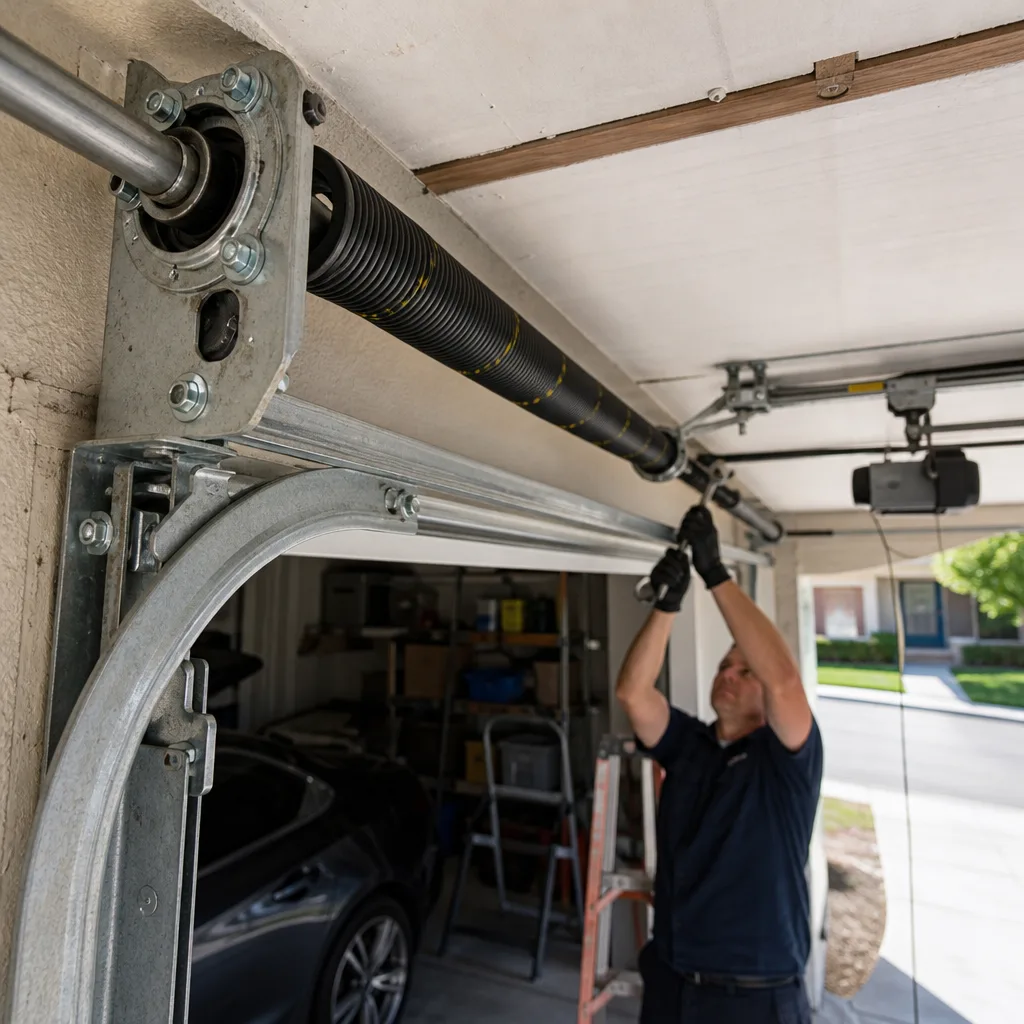
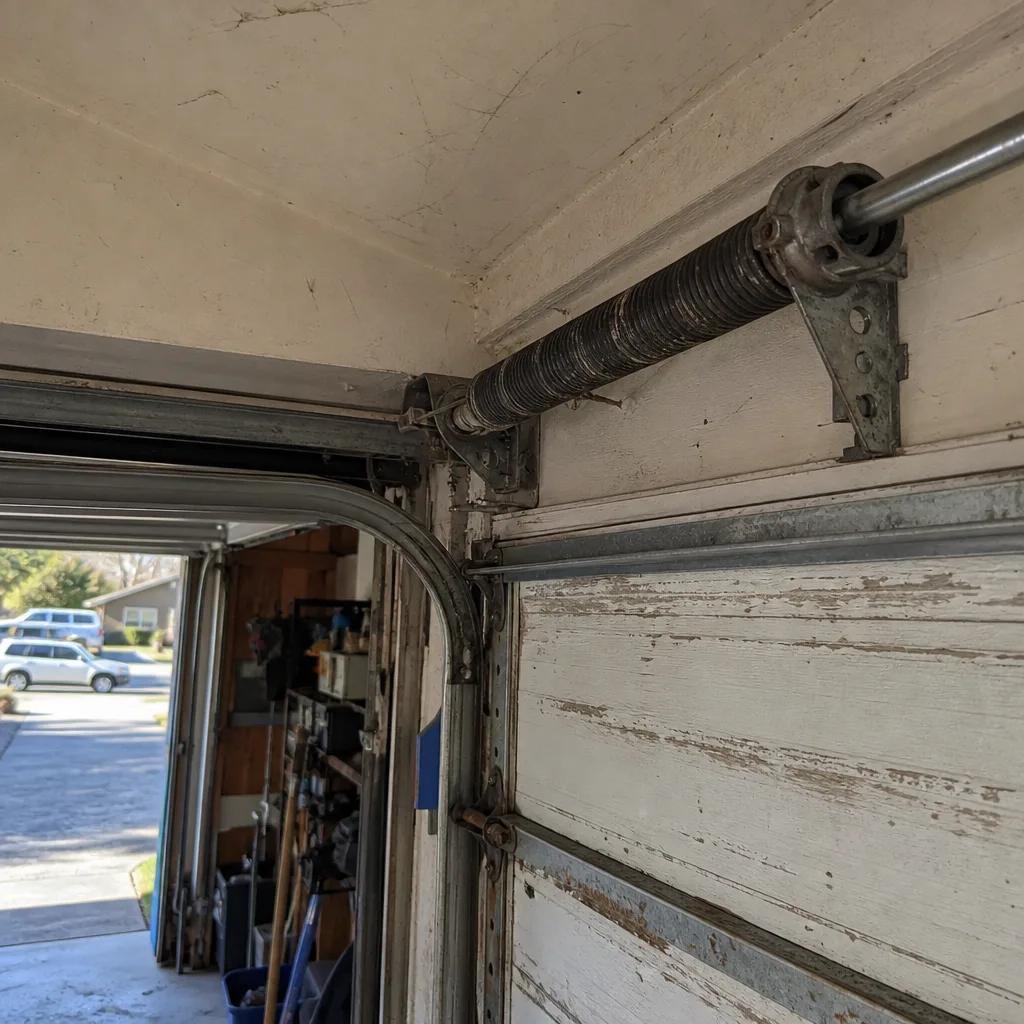
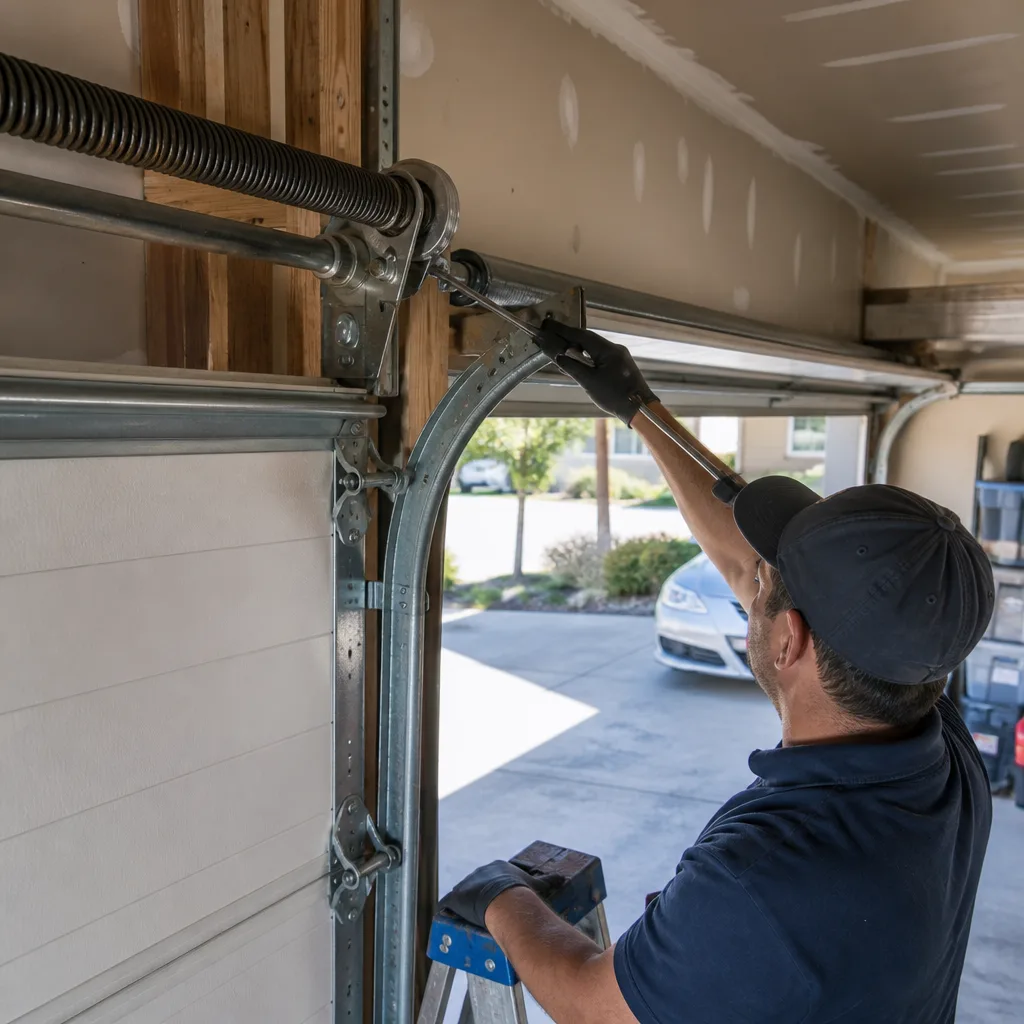
If the motor hums or runs but the door stays put, you’re likely looking at a broken torsion spring. These springs sit on a metal tube above the door opening, and they do the heavy lifting. When one breaks, the opener motor strains and either moves the door only a few inches or refuses to move it at all. A broken spring often makes a sound like a firecracker or a loud bang when it lets go, so if you heard that sound in the past few days, you already know the cause. Broken springs are not a DIY repair. The torsion spring is under enough tension to cause serious injury or death. Call a professional who carries the right spring for your door weight and height.
Another mechanical failure we see frequently is a shattered nylon gear inside the opener. Wayne Dalton and older Genie units are especially prone to this because their gears are more exposed to heat and wear. When the gear strips, the motor spins freely and the door doesn’t budge. This is a Garage Door Opener Repair in Folsom task: the gear kit replacement takes about an hour for a technician who has the right part on the truck.
The Door Reverses Mid-Cycle: Reading Where and When It Stops
This is the symptom that separates novice troubleshooting from actual diagnosis. The location of the reversal tells you the cause. A door that reverses immediately after touching the floor is almost always a close-force or close-limit issue, not an obstruction problem. The opener thinks it hit something and rebounds. This is an adjustment, not a repair, and it’s usually a ten-minute fix for someone who knows which screw to turn.
A door that reverses halfway down is a different story. That’s typically the point where the door hits real resistance: a track obstruction, a bent track, a roller that’s seized and dragging, or a door that’s out of balance and fighting the opener. In Folsom homes with wood doors from the 1980s and 1990s, we see this pattern constantly. The doors are heavy, the hinges lose their grip in the dry heat, and the door starts binding against the track at the midpoint. The opener interprets the binding as an obstruction and reverses.
A door that reverses halfway up during the opening cycle points to a balancing problem. The springs are either fatigued or were never matched correctly to the door weight. As the door travels upward, the springs are doing less work and the opener is doing more, and if the door is too heavy for the springs, the opener strains, trips its force sensor, and reverses. This is a Garage Door Warning Signs: A Folsom Homeowner’s Reference Guide moment – your springs are approaching replacement. Ignoring it accelerates wear on the opener gear and motor.
Residential garage doors in Folsom cycles somewhere between 1,100 and 1,800 times per year depending on how many cars leave and return daily. A standard torsion spring is rated for 10,000 cycles. That’s a 6-to-9-year lifespan for the average household, and the failure is predictable. If you’re noticing mid-cycle reversals and your springs are older than that, you’re on borrowed time.
Noise Diagnostics: Grinding, Popping, Scraping, and Rattling
Your door talks. Most people just don’t know how to listen. Each type of noise maps to a specific component, and knowing the difference saves you from ordering the wrong part or paying for a diagnosis you could’ve done yourself.
Grinding is an opener drive problem. Chain-drive and screw-drive openers grind when the chain or screw is dry, worn, or misaligned. On LiftMaster and Chamberlain chain-drive units, a dry chain sounds like metal dragging on metal. Lubricating the chain with a garage-door-specific lubricant (never WD-40) often resolves it. On screw-drive openers, the noise is more of a groaning sound and points to a dry screw shaft. Genie screw-drive units are notorious for this after several years of use, especially in Folsom’s dry summers where lubricants evaporate faster.
Popping is a hinge problem. The hinges that connect the door panels flex every time the door makes the turn from horizontal track to vertical track. When their rollers are worn or the hinge rivets loosen, you hear a pop at each panel joint as the door rounds the curve. A technician replaces the worn hinges or rivets, and the door runs silent again.
Scraping is a track or roller problem. It means something metal is dragging against something else metal. The culprit is usually a roller that’s seized and sliding instead of rolling, or a bent track that’s pressing against the roller. In Folsom, the fine dust that blows through neighborhoods in summer accumulates on tracks and accelerates roller wear. Monthly track cleaning extends roller life significantly.
Rattling is the most common noise complaint and the least specific. A rattling door is usually loose hardware: bolts that have backed out of the track brackets, hinge screws that have lost their grip in stripped holes, or a chain that’s loose and slapping against the rail. Go through the door with a wrench and tighten every bolt you can reach. If the rattling persists, it’s the rollers, which wear out on a predictable schedule and are an inexpensive replacement.
One note on lubricants: use a garage-door-specific spray lube on rollers, hinges, and springs. It penetrates without attracting dust the way household oils do. Folsom’s air carries a lot of particulate matter, and in our experience, doors lubed with the right product go noticeably longer between service calls.
One Side Drops or the Door Sits Uneven: Balance and Cable Problems
An uneven door means one side is hanging lower than the other when the door is partially open. Close the door fully, then open it manually (pull the red emergency release handle first) until it’s about waist height. Step back and look at the bottom edge. If one corner is obviously lower, you have a leveling problem.
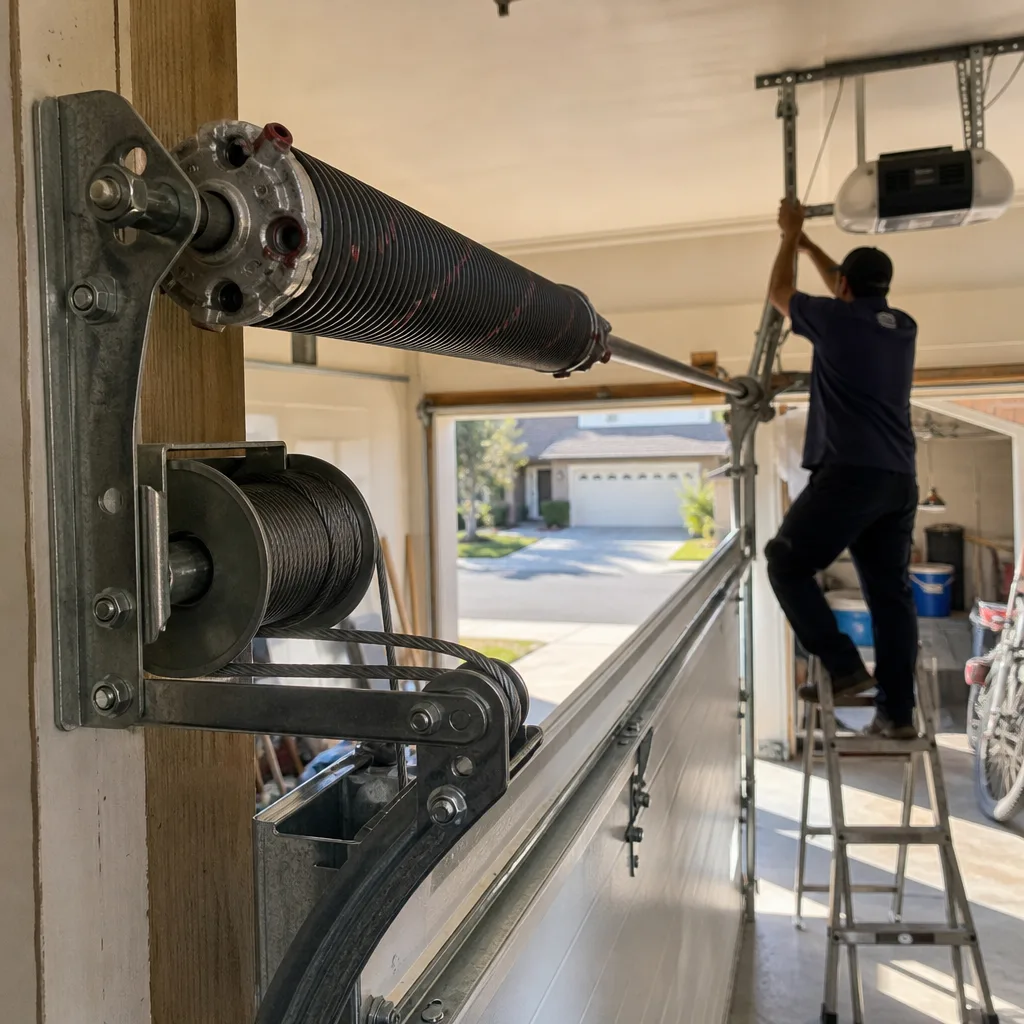
The most common cause is a broken or slipped extension spring cable. On doors with extension springs (the long springs that run parallel to the horizontal tracks), each side has a cable that runs through the spring and attaches to the door. When one cable stretches, snaps, or slips off its pulley, that side of the door loses support and drops. You can see this problem: one spring will be stretched out and the other will look normal. This is a professional repair because the springs and cables are under tension and the fix requires matching the new cable to the existing spring with precision.
The second cause is a torsion spring that’s lost tension on one side. This is harder to see but produces the same effect: the door cocks to one side as it moves. The fix is a spring re-tension or replacement, depending on the spring’s condition.
The third cause, and the one most often missed, is a track that’s out of vertical alignment. One track has shifted, forcing that side of the door to travel a slightly different path. The result looks like a door that “wobbles” more than it drops. Track realignment is a moderate fix: the track brackets get adjusted and re-secured, and the door usually needs a balance check afterward.
An uneven door strains every component: rollers wear unevenly, hinges twist, and the opener works against resistance on every cycle. If you notice unevenness, address it sooner rather than later. The longer it runs uneven, the more expensive the eventual repair.
Opener Runs But Door Doesn’t Move: The Disconnect
This is the most frustrating symptom for homeowners because the opener sounds fine. The motor runs, the chain or belt moves, but the door sits there like nothing happened. There are three possible causes, and two of them are cheap.
First, check the emergency release. That’s the red rope hanging from the opener rail. If someone pulled it (or it snagged on something), the door is disconnected from the opener carriage. Push the button and watch the carriage. If the carriage travels down the rail but the door stays put, the release was pulled. Re-engage it by pulling the release handle toward the door and running the opener until the carriage reconnects. This happens more often than you’d think: kids pulling the red rope, a ladder brushing against it, or someone using the garage for a project and disconnecting the door manually.
Second, check the drive coupler. This is the plastic or metal connection between the opener motor and the drive shaft. On older LiftMaster and Chamberlain models, this coupler is a designed failure point: if the door jams, the coupler breaks so the motor doesn’t burn out. A broken coupler means the motor spins but the shaft doesn’t turn. Replacing it is a straightforward but involved repair: the opener has to come down from the ceiling, and it’s easier with two people.
Third, look at the drive gear. Genie openers, especially screw-drive models, use a nylon drive gear that wears down over time. When it strips, the screw doesn’t turn even though the motor runs. The telltale sign is the screw shaft itself: if the motor runs and the screw doesn’t rotate, the gear is gone. It’s a manageable DIY part replacement if you’re comfortable with basic tools, but if you’d rather not open the opener housing, this is a fast professional call. We handle the full range of opener work for every major brand, so if you’re in Folsom, the drive gear replacement is something we do regularly for Genie, Chamberlain, and LiftMaster units.
If none of these three check out, the problem is inside the opener’s transmission, which means replacing the unit is usually more economical than repairing it. A new opener install includes the rail, the motor assembly, and safety sensor calibration, and it’s a standard Garage Door Installation in Folsom job.
Intermittent Problems: How to Document What You’re Seeing
Intermittent door problems are the hardest to diagnose because by the time a technician arrives, the door works. The opener opens it, the tracks guide it, and the springs do their job, and you’re left saying “well, it was doing it yesterday.” Here’s how to document the problem so a technician can actually use what you tell us.
Write down the exact sequence. What time of day did it happen? What was the temperature? Had the door been used earlier in the same hour, or had it sat closed for a while? In Folsom, we see heat-related intermittent problems all through July and August: components expand, clearances shrink, and a door that works fine at 8 AM binds at 3 PM. That pattern alone tells us a lot. If the problem only happens on hot afternoons, we’re looking for heat-stressed track joints, roller expansion, or a logic board that’s overheating.
Record what you were doing right before it happened. Had you just opened the garage after being away? Did the door partially open and then stop? Did you override it with the wall button, or did it resolve itself? The trigger matters more than the symptom when the symptom is intermittent.
Video the problem. Every smartphone has a camera. If the door is doing something odd, film it. A 15-second video of the door reversing mid-cycle is worth more than a three-minute phone description. We can see where it stops, how fast it’s moving, and whether it shudders before it stops. That often narrows the diagnosis before we even arrive.
Keep a log. If the problem happens once a week, that’s not random. That’s a pattern. Note the day, the time, the temperature, whether the door was last opened by remote or by wall button, and whether you had to do anything to get it working again. After two or three entries, the pattern usually emerges, and it’s a pattern that tells us what’s failing.
This documentation approach saves you money. The technician’s diagnostic time is shorter when the problem has been described precisely, and intermittent problems that are well-documented are often fixed in a single visit instead of requiring a second trip.
Red-Flag Symptoms: Stop Using the Door Now
Some symptoms mean you should stop operating the door immediately and call a professional. Continuing to use a door with these problems compounds the damage and can turn a $150 repair into a $1,500 replacement.
- A door that drops fast when you pull the release handle. A balanced door stays put at waist height when you open it manually. If it falls closed under its own weight, the spring has failed or lost tension. The door is now dead weight, and the opener is fighting it every cycle. Operating the door further risks burning out the opener motor and damaging the panels.
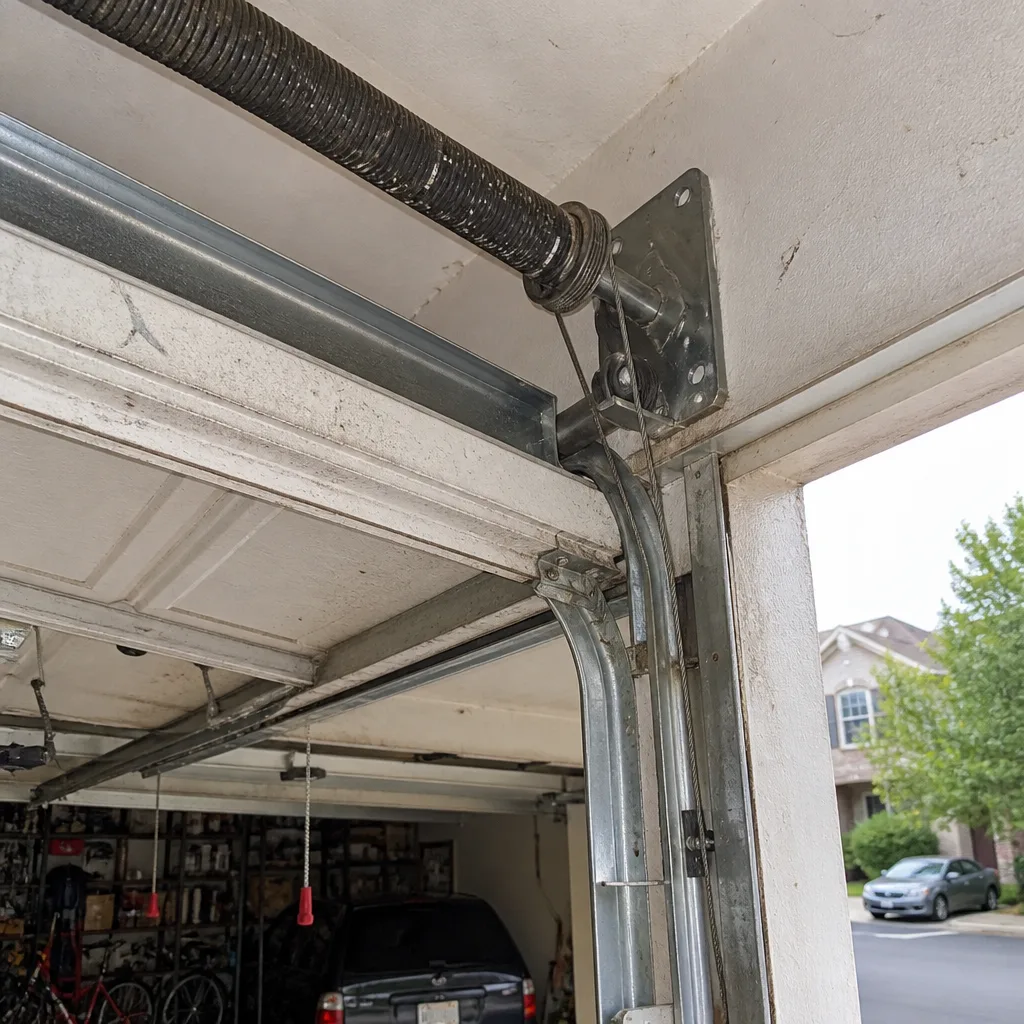
- Visible cable damage. The cables running along the sides of the door should be taut and free of fraying. If you see broken strands, a cable that’s off its pulley, or a cable that’s sagging, stop using the door. A cable that lets go while the door is moving can send the door crashing down. Cables are under tension and the repair involves the spring system: not a DIY task.
- The door binds and jerks at the same spot every cycle. This means a physical obstruction or a bent component is causing the door to catch. Each time it catches and releases, it’s stressing the opener, the panels, and the hinges. The obstruction needs to be identified and removed or the bent track straightened before normal operation resumes.
- You hear a sharp bang and then the door won’t move. That’s a torsion spring breaking. The spring is gone, and the door is now completely unbalanced. The opener cannot lift it. Do not try to force the door up: the spring is under high tension and the broken ends are dangerous. Call a professional who understands the spring system.
- The opener makes a grinding or straining sound but the door fights back. The opener’s force sensor is maxing out, which means something is seriously wrong with the door’s mechanical operation. Running the opener in this state strips the gear, burns the motor, or both. Stop using the door until the underlying mechanical issue is fixed.
Our technicians see these red-flag patterns every week in Folsom. The homeowners who stop using the door at the first sign of a serious problem end up paying a few hundred dollars for a repair. The ones who keep using it “just until it stops completely” end up replacing the whole system. Your door gives you warnings. Listen to them.
Common Mistakes to Avoid
- Lubricating with WD-40 or household oil. WD-40 is a water displacer, not a lubricant. It cleans gunk off but leaves metal surfaces dry within days. Household oils attract dust, and Folsom summers produce enough dust to turn oiled rollers into sandpaper. Use a garage-door-specific silicone or lithium spray lube.
- Adjusting spring tension by hand. Torsion springs and extension springs carry enough stored energy to break bones or kill. Never touch the spring assembly, never try to tighten or loosen it, and never remove the center bracket on a torsion spring system. If the spring is the problem, the repair belongs to a professional.
- Replacing only one spring when both are the same age. Springs wear at roughly the same rate. When one breaks, the other is close behind. Replacing only the broken one saves a little money today but means a second service call and a second labor charge in six months. Replace both and reset the clock.
- Forcing the door past a bind. If the door catches at a certain point and you push the wall button repeatedly to force it through, you’re not fixing anything. You’re grinding the obstruction deeper, bending the track further, and stressing the opener every time. Figure out what’s catching first.
- Ignoring noise because “it still works.” Noise is the door telling you something is wearing out. A roller that’s started grinding will eventually seize. A chain that’s slapping against the rail will eventually wear through its tensioner. Fix the noise while the part is still replaceable rather than after it fails and damages the components around it.
- Testing photo-eyes by waving your hand and calling it done. The beam alignment matters in three dimensions. The sensor needs to point exactly at its partner, and a dented bracket can skew it by a few degrees and defeat the beam intermittently. If the problem comes and goes, check whether the sensor bracket is loose enough to shift when the door vibrates.
See the difference
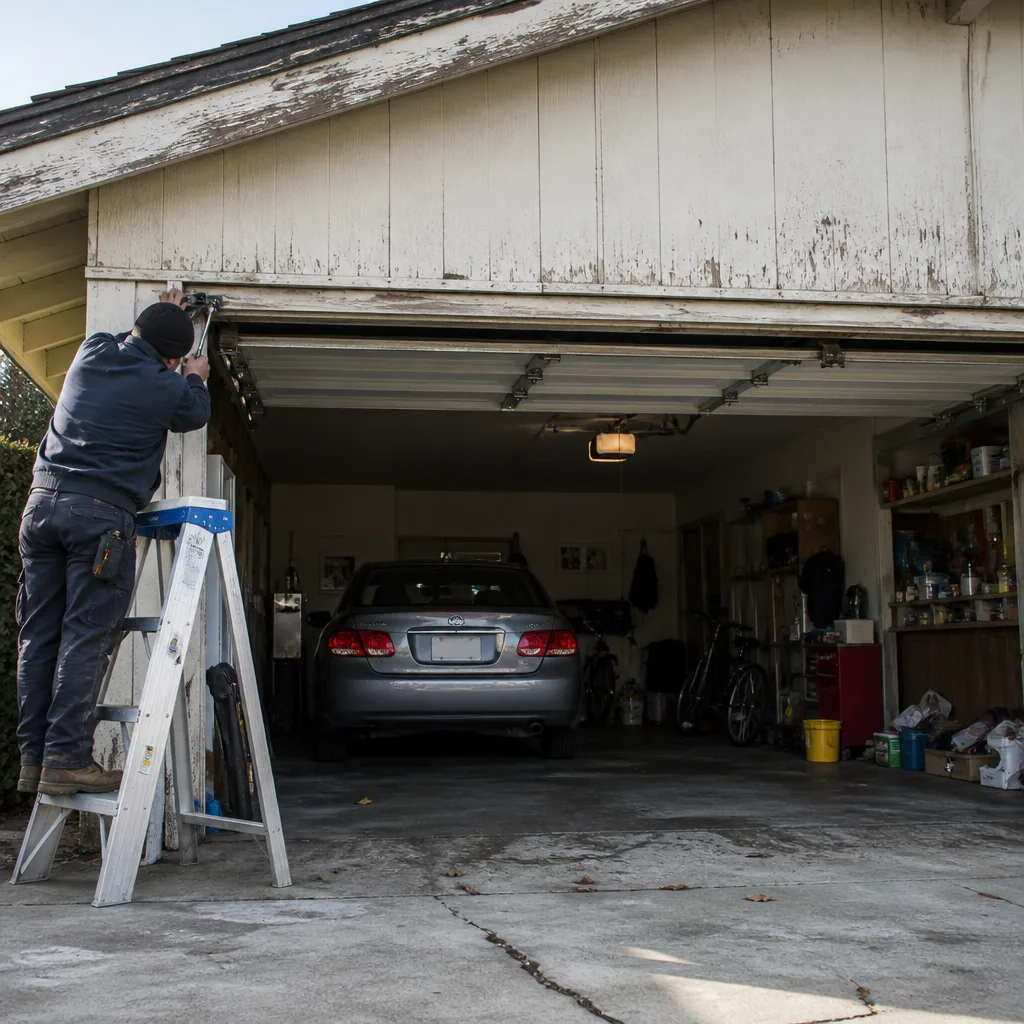 Before
 After
 Before
 After
 Before
 After
When to Call a Professional
Call a professional when the problem involves spring tension, cable replacement, track bending, or anything that requires the door’s balance to be checked. These systems are under load, and a mistake is dangerous. Call a professional when the opener’s internal components (gear, logic board, coupler) have failed, because opening the housing and swapping parts requires the right parts and the calibration that follows. Call a professional when you’ve tried the photo-eye alignment, cleared the obstructions, and checked the breaker, but the door still won’t operate: you’ve ruled out the cheap fixes, and the remaining causes are mechanical. Garage Door Service Folsom offers free estimates in Folsom. Call (877) 318-4983 for a door check or a repair quote anytime.
Frequently Asked Questions
The most common reason is a blocked or misaligned photo-eye beam, which makes the opener think something is in the door’s path. Check the sensor lights on both sides of the door and clear anything that might interrupt the beam. If the lights are on and the door still won’t close, the issue is the close-force or close-limit setting on the opener. Call (877) 318-4983 for a quick adjustment if you’re not comfortable making it yourself.
Garage door spring replacement in Folsom typically runs between $180 and $340 depending on the spring size, the door weight, and whether you replace one or both springs. Replacing both springs costs more than a single spring but is almost always the right financial choice, since the second spring is the same age and will fail soon. For an exact price on your door, call (877) 318-4983 and we’ll give you a written quote before any work begins.
Yes, most opener repairs are same-day jobs when the problem is a stripped gear, a broken coupler, a failed logic board, or a sensor alignment issue. We carry parts for LiftMaster, Chamberlain, Genie, and Raynor openers on the truck, and the repair typically takes under two hours. If you’re in Folsom or the surrounding area, Garage Door Opener Repair in Folsom is our core service. Call (877) 318-4983 to schedule.
The popping sound happens when the door’s hinges or rollers wear out, and the door panels shift as they round the bend in the track. Each pop is a panel joint flexing under load. It’s not an emergency, but the fix involves replacing the worn hinges or rollers, and ignoring it accelerates wear on the panels themselves.
Yes, operating the door manually is safe as long as the door is balanced. Pull the red emergency release cord and lift the door by hand. A balanced door stays at waist height when you let go. If it falls or is hard to lift, the spring has failed and you should stop using the door until a professional inspects it. Never attempt to adjust the springs yourself.
Mid-cycle reversal typically means the door is hitting resistance that the opener interprets as an obstruction. The usual causes are a seized roller, a bent track, or a door that’s out of balance and leaning against the track as it travels. A door that reverses only at the bottom point usually means the close-force setting needs adjustment. Both are fixable, and if you’re in the Folsom area, call (877) 318-4983 for a diagnosis and a free estimate.
The Bottom Line
Garage door troubleshooting works when you treat the door as a system that talks. The sound of the motor, the point where the door stops, the angle of the door when it’s partially open, the condition of the sensor lights, the presence or absence of cable wear: these are data points that point to a specific failed component. Most homeowners can fix photo-eye alignment, clear obstructions, reset the opener, and document intermittent problems. Everything involving springs, cables, and track geometry belongs in professional hands. Your garage door is the largest moving object in your home, and it does real work every single day. When something’s wrong, address it early. The repair is smaller, the cost is lower, and the door goes back to working before it becomes a bigger problem. For Garage Door Service Folsom home repairs, Garage Door Repair in Folsom, and everything else related to your door system, call (877) 318-4983 for a free estimate.
Written by the team at Garage Door Service Folsom, serving Folsom since 2016.